
Switch off
Oliver Optic
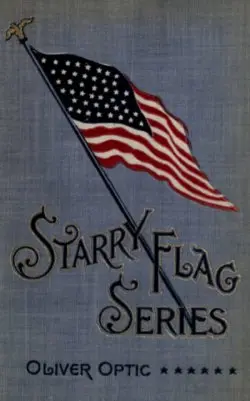
THE CLASSIC COLLECTION · 1896
"Down the River; Or, Buck Bradford and His Tyrants" by Oliver Optic is a novel written in the late 19th century. The story centers around Buck Bradford, a young boy who faces ongoing cruelty and tyrannical treatment from those around him, particularly the Fishley family, as he struggles to protect his deformed sister Flora and assert his own dignity. The book explores themes of self-reliance, morality, and the quest for freedom from oppression. At the start of the novel, we are introduced to Buck and his harsh circumstances living with the Fishley family, where he endures mistreatment from Ham Fishley, the son, and his parents. The opening chapter showcases Buck’s decision to stand up against Ham when ordered to perform menial tasks, flipping the dynamic of their oppressive relationship. Buck's internal conflict is highlighted as he tries to reconcile his desire for respect with his duty to care for Flora. A pivotal moment occurs when he defends her from the harsh treatment of Mrs. Fishley, escalating tensions that hint at further confrontations and challenges ahead for Buck as he navigates his precarious position in a world filled with tyrants.
Introduction adapted from the source catalogue; source summaries may be automatically generated.
Free to read · English · 59,545 words · No account needed
MAKE TIME FOR A GOOD BOOK
On by default. Untick to stop anonymous reading totals. Each page counts after 10 seconds in view. How this works.
Anonymous counting is on unless you have switched it off.
Although it was after eleven o'clock, Captain Fishley and his wife were still up, waiting for the arrival of the distinguished guest.
"Now, remember," said Squire Fishley, as I drove into the yard, and the captain came out at the back door.
"Don't be at all afraid of me," I replied.
"How are you, Moses?" exclaimed Captain Fishley, as, by the light of the lantern he carried in his hand, he saw that his brother had arrived.
"Pretty well, I thank you; but very wet and cold," answered the squire,
shivering.
"Well, I am glad to see you," added the postmaster, as he took the hand of the guest and helped him out of the wagon.
The squire was so chilled that he could hardly stand. So far as I could judge, he had entirely recovered from his debauch. The captain led the way into the house, and I followed them with the trunk and the mail-bag. Mrs. Fishley bestowed a cordial welcome upon her brother-in-law, and placed the rocking-chair before the stove, in which there was still a good fire.
"Why, you are as wet as though you had been in the river!" cried Mrs.
Fishley.
"It has been raining very hard," replied the squire, casting an anxious
glance at me.
"What made you so late?" asked the captain. "I expected you by nine
o'clock."
"I had some friends with me who were on the way to New Orleans, and I waited to see them off," answered the senator, with a shudder--not at the thought of his friends, perhaps, but on account of the chill which pervaded his frame.
"You'll catch your death a cold, Moses," interposed Mrs. Fishley. "I think you'd better take something, to guard against the chills."
"Yes; I'll give you a glass of corn whiskey, mixed with hot water," added the captain, taking up the suggestion.
"No, I think I won't take any," replied the squire, shaking his head.
"Hadn't you better?" persisted Mrs. Fishley. "It'll do you a heap of
good."
"Not to-night, thank you!"
"I don't believe in drinkin' liquor when a body's well; but when they're wet through, and shiverin' with cold as you are, Moses, it is good for 'em--only as a medicine, you know."
But not even as a medicine could Squire Fishley be induced to partake of any of the fire-water. He had drank corn whiskey enough for one day; and I think at that moment he loathed the thought of drinking it. He compromised the matter, being a politician, by offering to drink a dish of hot tea, which, I doubt not, was just as good for him as the "ardent" would have been.
Your reading position is saved on this browser. Take it to another device with a library code. Reading pages adapt to text, rather than matching a printed edition.
BEHIND THE BOOK
This eBook is for the use of anyone anywhere in the United States and most other parts of the world at no cost and with almost no restrictions whatsoever. You may copy it, give it away or re-use it under the terms of the Project Gutenberg License included with this eBook or online at www.gutenberg.org. If you are not located in the United States, you will have to check the laws of the country where you are located before using this eBook. Read the source licence.
The original source file, including credits and licence, is retained by this library. Request an original-format copy at no charge. Please include the book title and Project Gutenberg identifier #24283.
KEEP YOUR CURIOSITY GOING
Coulson Kernahan

Maurice Baring
Frances Wright
Cécile Tormay

Frederic Jesup Stimson

W. H. P. (William Henry Pope) Jarvis
