
Switch off
Oliver Optic
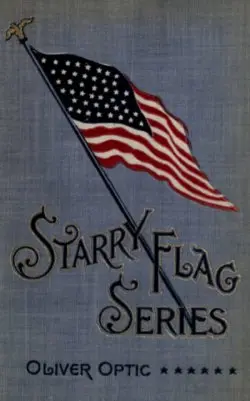
THE CLASSIC COLLECTION · 1896
"Down the River; Or, Buck Bradford and His Tyrants" by Oliver Optic is a novel written in the late 19th century. The story centers around Buck Bradford, a young boy who faces ongoing cruelty and tyrannical treatment from those around him, particularly the Fishley family, as he struggles to protect his deformed sister Flora and assert his own dignity. The book explores themes of self-reliance, morality, and the quest for freedom from oppression. At the start of the novel, we are introduced to Buck and his harsh circumstances living with the Fishley family, where he endures mistreatment from Ham Fishley, the son, and his parents. The opening chapter showcases Buck’s decision to stand up against Ham when ordered to perform menial tasks, flipping the dynamic of their oppressive relationship. Buck's internal conflict is highlighted as he tries to reconcile his desire for respect with his duty to care for Flora. A pivotal moment occurs when he defends her from the harsh treatment of Mrs. Fishley, escalating tensions that hint at further confrontations and challenges ahead for Buck as he navigates his precarious position in a world filled with tyrants.
Introduction adapted from the source catalogue; source summaries may be automatically generated.
Free to read · English · 59,545 words · No account needed
MAKE TIME FOR A GOOD BOOK
On by default. Untick to stop anonymous reading totals. Each page counts after 10 seconds in view. How this works.
Anonymous counting is on unless you have switched it off.
"Yes, sir, that was the amount I gave him," replied Squire Fishley; but I saw that he looked troubled.
"You gave him between forty and fifty dollars the first time?"
"Forty-six dollars, I think, was the exact amount."
"Could this have been the money which Ham Fishley saw the defendant
counting in the hay-loft?"
"I have no doubt it was, as I fix the time from the testimony of the
witnesses."
"Why did you pay the boy this large sum?" asked the justice.
"Because he had rendered me a very important service," answered the
senator, coloring deeply.
"What was that service?" continued the magistrate.
"I had the misfortune to fall into the river, and the young man saved my life," added Squire Fishley, now very much embarrassed.
"Ah, indeed!" said the justice on the bench, nodding his head in full
satisfaction.
"But the defendant refused to tell where he got the money, and the presumption was, that he stole it."
"I desired him not to mention the matter for reasons of my own."
"I submit, your honor," interposed Squire Pollard, "that this matter is foreign to the case. Squire Fishley testifies that he gave the defendant one hundred dollars, and that he desired the young man not to mention the matter. This testimony explains where the defendant obtained his money, and why he declined to tell where he got it. The material facts are all elicited."
Not only Squire Ward, but many others in the room, were very anxious to know why this silence had been imposed upon me. There was something dark about it, and the people were not satisfied. Squire Fishley was troubled, and, though my lawyer, who seemed to understand the matter,--I had told him nothing,--had influence enough to save him from any exposure, yet he was not content to leave the dark point in its present obscurity.
"There does not seem to be any good reason for this concealment," added
the justice.
"All the essential facts have come out, your honor," said Squire
Pollard.
"I wish to explain it fully," interposed the senator, very much to my surprise. "Since this event, I have been elected president of a total abstinence society. I took the pledge two months ago, on my return home from Torrentville."
"What has this to do with the case?" demanded the justice, impatiently.
Your reading position is saved on this browser. Take it to another device with a library code. Reading pages adapt to text, rather than matching a printed edition.
BEHIND THE BOOK
This eBook is for the use of anyone anywhere in the United States and most other parts of the world at no cost and with almost no restrictions whatsoever. You may copy it, give it away or re-use it under the terms of the Project Gutenberg License included with this eBook or online at www.gutenberg.org. If you are not located in the United States, you will have to check the laws of the country where you are located before using this eBook. Read the source licence.
The original source file, including credits and licence, is retained by this library. Request an original-format copy at no charge. Please include the book title and Project Gutenberg identifier #24283.
KEEP YOUR CURIOSITY GOING
Coulson Kernahan

Maurice Baring
Frances Wright
Cécile Tormay

Frederic Jesup Stimson

W. H. P. (William Henry Pope) Jarvis
