
Switch off
Oliver Optic
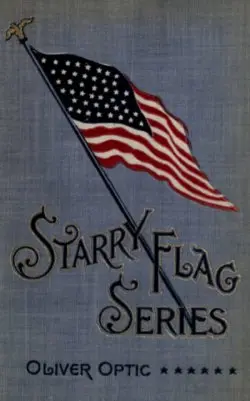
THE CLASSIC COLLECTION · 1896
"Down the River; Or, Buck Bradford and His Tyrants" by Oliver Optic is a novel written in the late 19th century. The story centers around Buck Bradford, a young boy who faces ongoing cruelty and tyrannical treatment from those around him, particularly the Fishley family, as he struggles to protect his deformed sister Flora and assert his own dignity. The book explores themes of self-reliance, morality, and the quest for freedom from oppression. At the start of the novel, we are introduced to Buck and his harsh circumstances living with the Fishley family, where he endures mistreatment from Ham Fishley, the son, and his parents. The opening chapter showcases Buck’s decision to stand up against Ham when ordered to perform menial tasks, flipping the dynamic of their oppressive relationship. Buck's internal conflict is highlighted as he tries to reconcile his desire for respect with his duty to care for Flora. A pivotal moment occurs when he defends her from the harsh treatment of Mrs. Fishley, escalating tensions that hint at further confrontations and challenges ahead for Buck as he navigates his precarious position in a world filled with tyrants.
Introduction adapted from the source catalogue; source summaries may be automatically generated.
Free to read · English · 59,545 words · No account needed
MAKE TIME FOR A GOOD BOOK
On by default. Untick to stop anonymous reading totals. Each page counts after 10 seconds in view. How this works.
Anonymous counting is on unless you have switched it off.
"I don't like the looks of this thing, Buck," added Clarence, shaking
his head.
"I know it don't look very well," I replied, rather sheepishly, for I realized that my brother had his suspicions.
"Why should a man give you a hundred dollars?"
"Because I saved his life," I answered, desperately.
"If you did, he ought to be the first one to give you the credit for the
noble deed."
"There's the hitch."
"So I think," said my brother, shaking his head.
"Clarence, I know Buckland is honest and true," interposed Flora. "He is the best brother that ever was, and you mustn't think hard of him."
"Perhaps you know more about it than I do, Flora; but it looks bad for him. Why a man should give him a hundred dollars for saving his life, and then not be willing that he should mention his name, passes my comprehension."
"The gentleman had been drinking a little too much, and that was what made him fall into the water," I added, goaded on to reveal thus much by the doubts and suspicions of my brother.
"Well, that makes it a little more plausible," replied Clarence. "Was there no one present when the man fell overboard?"
"I shall not say any more about it, whether you believe it or not," I
answered, rather indignantly. "I made a promise, and I intend to keep
it."
"I am satisfied the young man is honest, Mr. Bradford," said the
merchant.
"I know he is," added Emily, with an enthusiasm which was worth the
testimony of all the others.
"After the noble deed he has done, after risking his life to save that of an entire stranger, as he did for my daughter, I know he is not capable of robbing the mail," continued Mr. Goodridge.
"Saved your daughter?" asked Clarence, with an inquiring look at Emily
and her father.
Flora volunteered to tell the story of the events following the steamboat explosion, and my modesty will not permit me to set down the pleasant speeches which Emily added to the narrative.
"Well, Buck, I am willing to grant that you are a hero," said Clarence, good-naturedly; "and you have done things for which I should have been slow to give you the credit, if the facts were not fully attested by all these witnesses. So you have made a voyage from Torrentville to New Orleans on a raft?"
"I have, and brought Flora with me."
"You have proved yourself to be a smart boy, and I only wish you had left a better reputation behind you at Torrentville."
Your reading position is saved on this browser. Take it to another device with a library code. Reading pages adapt to text, rather than matching a printed edition.
BEHIND THE BOOK
This eBook is for the use of anyone anywhere in the United States and most other parts of the world at no cost and with almost no restrictions whatsoever. You may copy it, give it away or re-use it under the terms of the Project Gutenberg License included with this eBook or online at www.gutenberg.org. If you are not located in the United States, you will have to check the laws of the country where you are located before using this eBook. Read the source licence.
The original source file, including credits and licence, is retained by this library. Request an original-format copy at no charge. Please include the book title and Project Gutenberg identifier #24283.
KEEP YOUR CURIOSITY GOING
Coulson Kernahan

Maurice Baring
Frances Wright
Cécile Tormay

Frederic Jesup Stimson

W. H. P. (William Henry Pope) Jarvis
