Lucinda
Anthony Hope
THE CLASSIC COLLECTION · 1904
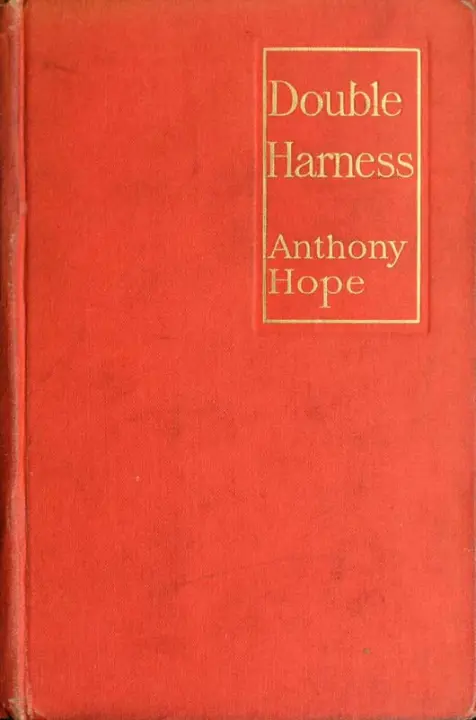
"Double Harness" by Anthony Hope is a novel written in the early 20th century. The story revolves around Grantley Imason and his fiancée Sibylla Chiddingfold, exploring themes of love, marriage, and societal expectations. The interactions between characters set the stage for a narrative that probes the complexities of relationships, particularly as they navigate the ups and downs of impending commitment against the backdrop of differing personalities and life experiences. The opening of the book introduces Tom Courtland, who is feeling burdened by his marriage and longs for freedom as he spends time with his friend Grantley Imason. Through their dialogue, the reader gets a glimpse of the societal pressures surrounding love and marriage, specifically focusing on Courtland's reluctance to return to his wife. The scene shifts to various characters, including Sibylla’s brother, Jeremy, who expresses skeptical views about marriage. This rich tapestry of characters and their conversations foreshadows a deeper exploration of romance and its challenges, particularly as Grantley's affection for Sibylla develops amidst societal scrutiny and personal dilemmas. The introduction sets a tone of reflective observation on the institution of marriage, laying the groundwork for the ensuing narrative.
Introduction adapted from the source catalogue; source summaries may be automatically generated.
Free to read · English · 119,780 words · No account needed
MAKE TIME FOR A GOOD BOOK
On by default. Untick to stop anonymous reading totals. Each page counts after 10 seconds in view. How this works.
Anonymous counting is on unless you have switched it off.
"I'm at the end of my patience," she said solemnly. "I'm sure anybody would be. You know what's happening as well as I do, and I intend to put an end to it."
"Oh, don't say that! I--well, I'm here just to prevent you from saying
that."
"To prevent me? You know what's happening? Do you know he's staying away from home again? What do the servants think? What must the children begin to think? Am I to be exposed to that?"
She looked very handsome and spirited, with just the right amount of colour in her cheeks and an animated sparkle in her eyes.
"Why, I could name the woman!" she exclaimed. "And so could you, I
daresay?"
"Don't make too much of it," he urged. "We're not children. He doesn't really care about the woman. It's only because he's unhappy."
"And whose fault is it he's unhappy?"
"And because of that he's being foolish--wasting all his money too, I'm
afraid."
"Oh, I've got my settlement. I shall be all right in case of
proceedings."
"Now pray don't think of proceedings, Lady Harriet."
"Not think of them! I've made up my mind to them. I wanted to ask you
how to set about it."
"But it would ruin his career; it would destroy his public position."
"I can't help that. He should have thought of that for himself."
"And then think of the girls!"
"Anything would be better than going on like this--yes, better for them
too."
John saw that he must face an explanation of his embassy. He got up and
stood on the hearthrug.
"I'm here as the friend of you both," he began.
The colour and the sparkle both grew brighter.
"Oh, are you?" said Lady Harriet.
"It comes to this. Tom's friends--I and one or two more--have been speaking seriously to him. We've got him to say that he's ready to drop--to drop what you very properly object to--and to make another effort to find a--a modus vivendi."
"I'm glad he's got so much decent feeling! Only it comes rather late. He wants me to forgive him, does he?"
"I don't think we can put it quite so simply as that." John risked a timid smile. "There must be a give-and-take, Lady Harriet--a give-and-take, you know."
"Well?" She was relapsing into that dangerous stillness of hers. She was very quiet, but her eyes shone very bright. Tom Courtland would have known the signs, so would the girls.
"We've got him to say what I've told you; but there must be something
from your side."
"What am I to do, John?" she asked, with deceptive meekness.
Your reading position is saved on this browser. Take it to another device with a library code. Reading pages adapt to text, rather than matching a printed edition.
Anthony Hope
Anthony Hope
Anthony Hope
Anthony Hope
BEHIND THE BOOK
This eBook is for the use of anyone anywhere in the United States and most other parts of the world at no cost and with almost no restrictions whatsoever. You may copy it, give it away or re-use it under the terms of the Project Gutenberg License included with this eBook or online at www.gutenberg.org. If you are not located in the United States, you will have to check the laws of the country where you are located before using this eBook. Read the source licence.
The original source file, including credits and licence, is retained by this library. Request an original-format copy at no charge. Please include the book title and Project Gutenberg identifier #42222.
KEEP YOUR CURIOSITY GOING
Coulson Kernahan

Maurice Baring
Frances Wright
Cécile Tormay

Frederic Jesup Stimson

W. H. P. (William Henry Pope) Jarvis