Lucinda
Anthony Hope
THE CLASSIC COLLECTION · 1904
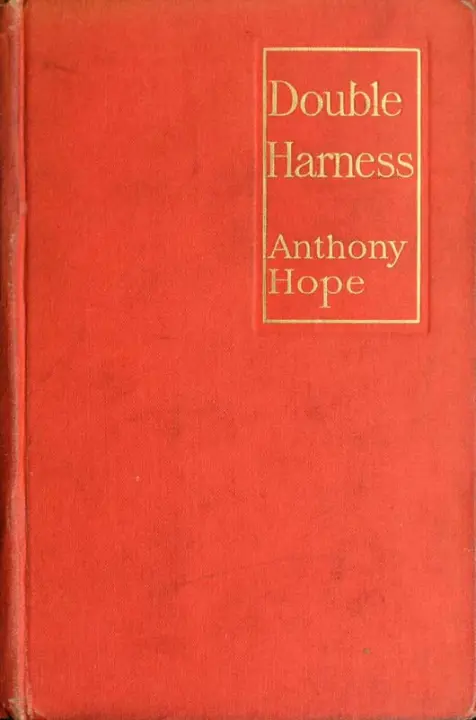
"Double Harness" by Anthony Hope is a novel written in the early 20th century. The story revolves around Grantley Imason and his fiancée Sibylla Chiddingfold, exploring themes of love, marriage, and societal expectations. The interactions between characters set the stage for a narrative that probes the complexities of relationships, particularly as they navigate the ups and downs of impending commitment against the backdrop of differing personalities and life experiences. The opening of the book introduces Tom Courtland, who is feeling burdened by his marriage and longs for freedom as he spends time with his friend Grantley Imason. Through their dialogue, the reader gets a glimpse of the societal pressures surrounding love and marriage, specifically focusing on Courtland's reluctance to return to his wife. The scene shifts to various characters, including Sibylla’s brother, Jeremy, who expresses skeptical views about marriage. This rich tapestry of characters and their conversations foreshadows a deeper exploration of romance and its challenges, particularly as Grantley's affection for Sibylla develops amidst societal scrutiny and personal dilemmas. The introduction sets a tone of reflective observation on the institution of marriage, laying the groundwork for the ensuing narrative.
Introduction adapted from the source catalogue; source summaries may be automatically generated.
Free to read · English · 119,780 words · No account needed
MAKE TIME FOR A GOOD BOOK
On by default. Untick to stop anonymous reading totals. Each page counts after 10 seconds in view. How this works.
Anonymous counting is on unless you have switched it off.
Jeremy's words showed true sympathy, and, moreover, a new absence of shame in expressing it; but Grantley did not accord them much apparent welcome. They came too near to confirming his suspicions; they harmonised too well with the soreness which remained from his impotent entreaties and unpersuasive caresses. Again without answering, he got up and lit his cigar.
"Oh, by the way," Jeremy went on, "while you were with Sibylla that girl from the rectory came up--you know, Dora Hutting--to ask after Sibylla and say they were all awfully sorry and anxious, and all that, you know."
"Very kind of them. I hope you told her so, and said what you could?"
"Yes, that's all right. The girl seems awfully fond of Sibylla,
Grantley. By Jove, when we got talking about her, she--she began to
cry!"
Grantley turned round, smiling at the unaccustomed note of pathos struck
by Jeremy's tone.
"Rather decent of her, wasn't it?" asked Jeremy.
"Very nice. Did you console her?"
"Oh, I didn't see what the devil I could say! Besides I didn't feel very comfortable--it was rather awkward."
"I believe the girl's afraid of me--she always seems to come here when I'm away. Is she a pleasant girl, Jeremy?"
"Oh, she--she seemed all right; and I--I liked the way she felt about
Sibylla."
"So do I, and I'll thank her for it. Is she getting at all prettier?"
"Well, I shouldn't call her bad-looking, don't you know!"
"She used to be a bit spotty," yawned Grantley.
"I don't think she's spotty now."
"Well, thank heaven for that anyhow!" said Grantley piously. "I hate spots above anything, Jeremy."
"She hasn't got any, I tell you," said Jeremy, distinctly annoyed.
Grantley smiled sleepily, threw himself on to his favourite couch, laid down his cigar, and closed his eyes. After the strain he was weary, and soon his regular breathing showed that he slept. Jeremy had got his pipe alight and sat smoking, from time to time regarding his brother-in-law's handsome features with an inquiring gaze. There was a new stir of feeling in Jeremy. A boy of strong intellectual bent, he had ripened slowly on the emotional side, and there had been nothing in the circumstances or chances of his life to quicken the process thus naturally very gradual. To-day something had come. He had been violently snatched from his quiet and his isolation, confronted with a crisis that commanded feeling, probed to the heart of his being by love and fear. Under this call from life nascent feelings grew to birth and suppressed impulses struggled for liberty and for power. He was not now resisting them nor turning from them. He was watching, waiting, puzzling about them, hiding them still from others, but no longer denying them to himself. He was wondering and astir. The manhood which had come upon him was a strange thing; the life that called him seemed now full of new and strange things. Through his fear and love for Sibylla he was entering on new realms of experience and of feeling. He sat smoking hard and marvelling that Grantley slept.
Your reading position is saved on this browser. Take it to another device with a library code. Reading pages adapt to text, rather than matching a printed edition.
Anthony Hope

Anthony Hope
Anthony Hope
Anthony Hope
BEHIND THE BOOK
This eBook is for the use of anyone anywhere in the United States and most other parts of the world at no cost and with almost no restrictions whatsoever. You may copy it, give it away or re-use it under the terms of the Project Gutenberg License included with this eBook or online at www.gutenberg.org. If you are not located in the United States, you will have to check the laws of the country where you are located before using this eBook. Read the source licence.
The original source file, including credits and licence, is retained by this library. Request an original-format copy at no charge. Please include the book title and Project Gutenberg identifier #42222.
KEEP YOUR CURIOSITY GOING
Coulson Kernahan

Maurice Baring
Frances Wright
Cécile Tormay

Frederic Jesup Stimson

W. H. P. (William Henry Pope) Jarvis