Lucinda
Anthony Hope
THE CLASSIC COLLECTION · 1904
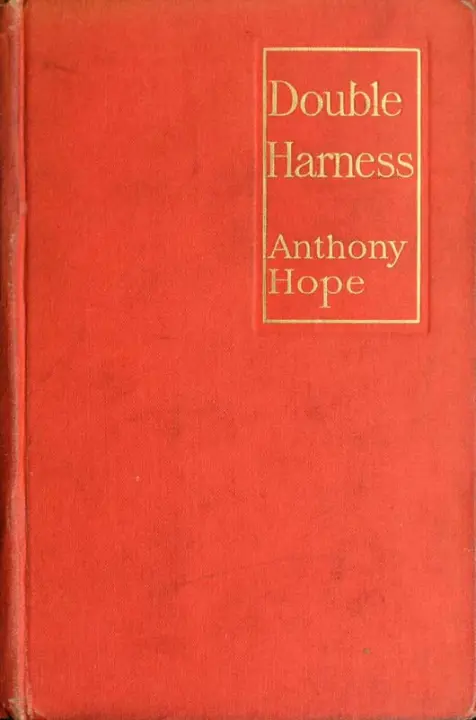
"Double Harness" by Anthony Hope is a novel written in the early 20th century. The story revolves around Grantley Imason and his fiancée Sibylla Chiddingfold, exploring themes of love, marriage, and societal expectations. The interactions between characters set the stage for a narrative that probes the complexities of relationships, particularly as they navigate the ups and downs of impending commitment against the backdrop of differing personalities and life experiences. The opening of the book introduces Tom Courtland, who is feeling burdened by his marriage and longs for freedom as he spends time with his friend Grantley Imason. Through their dialogue, the reader gets a glimpse of the societal pressures surrounding love and marriage, specifically focusing on Courtland's reluctance to return to his wife. The scene shifts to various characters, including Sibylla’s brother, Jeremy, who expresses skeptical views about marriage. This rich tapestry of characters and their conversations foreshadows a deeper exploration of romance and its challenges, particularly as Grantley's affection for Sibylla develops amidst societal scrutiny and personal dilemmas. The introduction sets a tone of reflective observation on the institution of marriage, laying the groundwork for the ensuing narrative.
Introduction adapted from the source catalogue; source summaries may be automatically generated.
Free to read · English · 119,780 words · No account needed
MAKE TIME FOR A GOOD BOOK
On by default. Untick to stop anonymous reading totals. Each page counts after 10 seconds in view. How this works.
Anonymous counting is on unless you have switched it off.
"In one word, is it fatal or likely to be fatal?"
Grantley was nearly at the end of his forced patience. He had looked for a man--he had, it seemed, found another old woman; so he angrily thought within himself as old Gardiner stumbled over his words and worried his whiskers.
"If I were to explain the case in detail----"
"Presently, doctor, presently. Just now I want the result--the position
of affairs, you know."
"For the moment, Mr. Imason, there is no danger to Mrs. Imason--I think I may say that. But the injury creates a condition of things which might, and in my judgment would, prove dangerous to her as time went on. I speak in view of her present condition."
"I see. Could that be obviated?"
Gardiner's nervousness increased.
"By an operation directed to remove the cause which would produce danger. It would be a serious, perhaps a dangerous, operation----"
"Is that the only way?"
"In my judgment the only way consistent with----"
A loud sob from Mrs. Mumple interrupted him. Grantley swore under his
breath.
"Go on," he said harshly.
"Consistent with the birth of the child, Mr. Imason."
"Ah!" At last he had got to the light, and the nervous old man had managed to deliver himself of his message. "I understand you now. Setting the birth of the child on one side, the matter would be simpler?"
"Oh, yes, much simpler--not, of course, without its----"
"And more free from danger?"
"Yes, though----"
"Practically free from danger to my wife?"
"Yes; I think I can say practically free in the case of so good a
subject as Mrs. Imason."
Grantley thought for a minute.
"You probably wouldn't object to my having another opinion?" he asked.
Relief was obvious on old Gardiner's face.
"I should welcome it," he said. "The responsibility in such a case is so
great that----"
"Tell me the best man, and I'll wire for him at once."
Even on this point Gardiner hesitated, till Grantley named a man known to everybody; him Gardiner at once accepted.
"Very well; and I'll see my wife as soon as you think it desirable." He paused a moment, and then went on: "If I understand the case right, I haven't a moment's hesitation in my mind. But I should like to ask you one question: am I right in supposing that your practice is to prefer the mother's life to the child's?"
"That's the British medical practice, Mr. Imason, where the alternative is as you put it. But there are, of course, degrees of danger, and these would influence----"
Your reading position is saved on this browser. Take it to another device with a library code. Reading pages adapt to text, rather than matching a printed edition.
Anthony Hope
Anthony Hope
Anthony Hope
Anthony Hope
BEHIND THE BOOK
This eBook is for the use of anyone anywhere in the United States and most other parts of the world at no cost and with almost no restrictions whatsoever. You may copy it, give it away or re-use it under the terms of the Project Gutenberg License included with this eBook or online at www.gutenberg.org. If you are not located in the United States, you will have to check the laws of the country where you are located before using this eBook. Read the source licence.
The original source file, including credits and licence, is retained by this library. Request an original-format copy at no charge. Please include the book title and Project Gutenberg identifier #42222.
KEEP YOUR CURIOSITY GOING
Coulson Kernahan

Maurice Baring
Frances Wright
Cécile Tormay

Frederic Jesup Stimson

W. H. P. (William Henry Pope) Jarvis