Lucinda
Anthony Hope
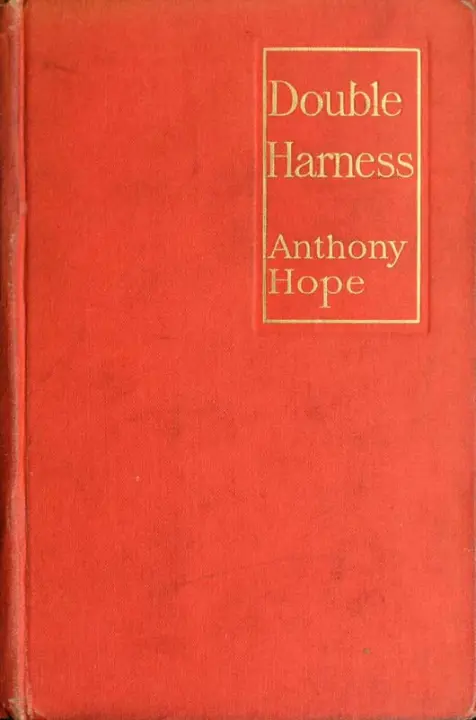
THE CLASSIC COLLECTION · 1904
"Double Harness" by Anthony Hope is a novel written in the early 20th century. The story revolves around Grantley Imason and his fiancée Sibylla Chiddingfold, exploring themes of love, marriage, and societal expectations. The interactions between characters set the stage for a narrative that probes the complexities of relationships, particularly as they navigate the ups and downs of impending commitment against the backdrop of differing personalities and life experiences. The opening of the book introduces Tom Courtland, who is feeling burdened by his marriage and longs for freedom as he spends time with his friend Grantley Imason. Through their dialogue, the reader gets a glimpse of the societal pressures surrounding love and marriage, specifically focusing on Courtland's reluctance to return to his wife. The scene shifts to various characters, including Sibylla’s brother, Jeremy, who expresses skeptical views about marriage. This rich tapestry of characters and their conversations foreshadows a deeper exploration of romance and its challenges, particularly as Grantley's affection for Sibylla develops amidst societal scrutiny and personal dilemmas. The introduction sets a tone of reflective observation on the institution of marriage, laying the groundwork for the ensuing narrative.
Introduction adapted from the source catalogue; source summaries may be automatically generated.
Free to read · English · 119,780 words · No account needed
MAKE TIME FOR A GOOD BOOK
On by default. Untick to stop anonymous reading totals. Each page counts after 10 seconds in view. How this works.
Anonymous counting is on unless you have switched it off.
A smile of pity, unmistakably mingled with contempt, followed Courtland into the shop. The tantrums of other men's wives are generally received with much the same mixture of scepticism and disdain as the witticisms of other parents' children. Both are seen large, very large indeed, by sufferers and admirers respectively.
The obligation of being as civil as he could to his wife caused Courtland to take three or four minutes in framing his telegram, and when he came out he found Grantley seated on the bench that stood by the inn and conversing with a young man who wore a very old coat and rough tweed knickerbockers. Grantley introduced him as Mr. Jeremy Chiddingfold, and Courtland knew that he was Sibylla's brother. Sibylla herself he had not yet seen. Jeremy had a shock of sandy hair, a wide brow, and a wide mouth; his eyes were rather protuberant, and his nose turned up, giving prominence to the nostrils.
"No family likeness, I hope?" Courtland found himself thinking; for though Jeremy was a vigorous, if not a handsome, masculine type, the lines were far from being those of feminine beauty.
"And he's enormously surprised and evidently rather shocked to hear I'm going to marry his sister--oh, we can talk away, Jeremy; Tom Courtland doesn't matter. He knows all the bad there is about me, and wants to know all the good there is about Sibylla."
One additional auditor by no means embarrassed Jeremy; perhaps not a
hundred would have.
"Though, of course, somebody must have married her, you know," Grantley went on, smiling and stretching himself luxuriously like a sleek indolent cat.
"I hate marriage altogether!" declared Jeremy.
Courtland turned to him with a quick jerk of his head.
"The deuce you do!" he said, laughing. "It's early in life to have come to that conclusion, Mr. Chiddingfold."
"Yes, yes, Jeremy, quite so; but----" Grantley began.
"It's an invention of priests," Jeremy insisted heatedly.
Courtland, scarred with fifteen years' experience of the institution thus roundly attacked, was immensely diverted, though his own feelings gave a rather bitter twist to his mirth. Grantley argued, or rather pleaded, with a deceptive gravity:
"But if you fall in love with a girl?"
"Heaven forbid!"
"Well, but the world must be peopled, Jeremy."
"Marriage isn't necessary to that, is it?"
"Oho!" whistled Courtland.
"We may concede the point--in theory," said Grantley; "in practice it's
more difficult."
"Because people won't think clearly and bravely!" cried Jeremy, with a thump on the bench. "Because they're hidebound, and, as I say, the priests heaven-and-hell them till they don't know where they are."
Your reading position is saved on this browser. Take it to another device with a library code. Reading pages adapt to text, rather than matching a printed edition.
Anthony Hope
Anthony Hope
Anthony Hope
Anthony Hope
BEHIND THE BOOK
This eBook is for the use of anyone anywhere in the United States and most other parts of the world at no cost and with almost no restrictions whatsoever. You may copy it, give it away or re-use it under the terms of the Project Gutenberg License included with this eBook or online at www.gutenberg.org. If you are not located in the United States, you will have to check the laws of the country where you are located before using this eBook. Read the source licence.
The original source file, including credits and licence, is retained by this library. Request an original-format copy at no charge. Please include the book title and Project Gutenberg identifier #42222.
KEEP YOUR CURIOSITY GOING
Coulson Kernahan

Maurice Baring
Frances Wright
Cécile Tormay

Frederic Jesup Stimson

W. H. P. (William Henry Pope) Jarvis