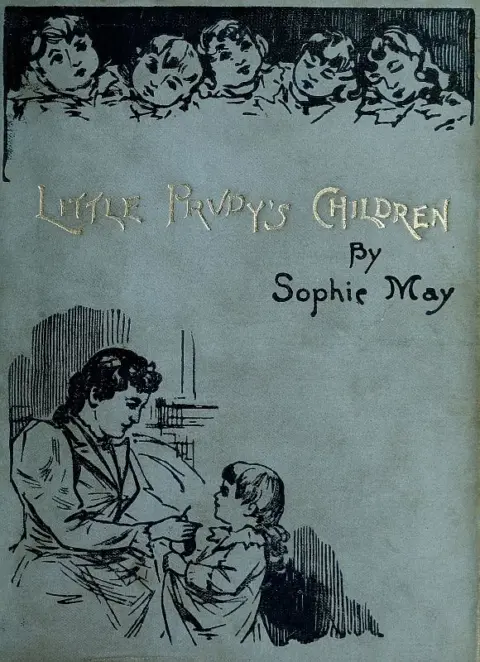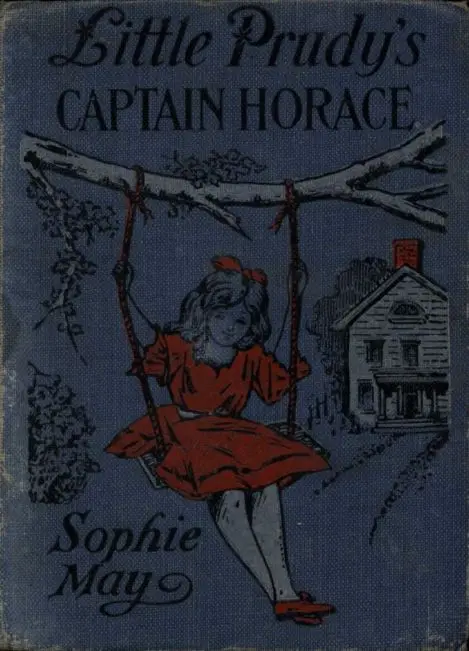
Little Prudy’s Captain Horace
Sophie May
THE CLASSIC COLLECTION · 1874
"Dotty Dimple at School" by Sophie May is a children's novel written in the late 19th century. The book follows the adventures of the young protagonist, Dotty Dimple, as she navigates her first days at school. Through her experiences, readers are likely to witness Dotty's lively imagination and her interactions with classmates, offering a humorous and heartfelt exploration of childhood challenges and friendships. At the start of the book, Dotty Dimple is introduced on her first day of school, filled with excitement and nervousness. Despite her sister Prudy's gentle reminders to behave, Dotty can't help but express her enthusiasm and curiosity about the school environment. As Dotty engages with her new teacher, Miss Parker, and classmates like Tate, she struggles to adjust to school rules while also grappling with the desire to fit in. The opening chapters reveal Dotty's mischievous spirit and her determination to grow up, providing a foundation for the charming and often humorous events that will unfold throughout her school days.
Introduction adapted from the source catalogue; source summaries may be automatically generated.
Free to read · English · 22,216 words · No account needed
MAKE TIME FOR A GOOD BOOK
On by default. Untick to stop anonymous reading totals. Each page counts after 10 seconds in view. How this works.
Anonymous counting is on unless you have switched it off.
When Dotty reached home her eyes were blazing. A few tears would have quenched their fire, but she had not the “gift of tears.” She ran all over the house to find her mother, and tell the story of the screw-up pencil; but Mrs. Parlin had gone out, and did not return till tea was ready. By that time Dotty was calmer, and her father only observed that her cheeks were unusually red.
“Well, chickie, how have things gone with you to-day? You have not had very good lessons, I fancy.”
“Yes, sir,” replied Dotty, in an excited tone. “I didn’t miss but one word, and that was the teacher’s fault; she put out ‘saw,’ but didn’t say whether it was ‘I saw John,’ or a thing to chop wood with; so of course, I spelled it s-e-w!”
Mr. Parlin laughed.
“Miss Parker should be more careful how she puts out words. Is it not surprising how everybody contrives to cheat my little daughter, while she herself so seldom makes mistakes?”
Dotty did not see that her papa was joking, and feeling very much pleased with his remarks, she was about to pour out the story of her trials, when Prudy said,--
“‘Saw? saw?’ Is that a preposition, papa, or an adverb?”
Mr. Parlin laughed again, and remarked to his wife that he thought their children were “growing very learned.”
“Prudy,” said he, “you are attending the grammar school. Do you study
grammar?”
“Yes, sir, and like it ever so much,” replied Prudy, brightly.
“Do you know what a verb is?”
“O, yes, sir; it’s a word that signifies to be, to act, or to be acted upon,” was the parrot-like reply.
“Very well. Now can you tell me what is the verb in this sentence: ‘John struck James with a big stick.’”
“O, yes, papa--big stick.”
“Indeed! Why so?”
“O, sir, because the stick was what he did it with. P’raps he wouldn’t have dared strike him at all if he hadn’t had any stick!”
“O, what an idea!” cried wise Susy.
But her father and mother were not at all disturbed by Prudy’s ignorance, and did not even try to set her right. In fact, they thought she was too young to study grammar.
“But all this while we have not heard from Dotty,” said Mrs. Parlin; “she began to speak a little while ago, and some of us interrupted her.”
“O, nothing, mamma, only Lina Rosenbug’s been stealing!”
“Stealing, Dotty!”
“Yes’m; my screw-up pencil.”
“Are you perfectly sure?”
“Yes, mamma; my pocket was next to her, and there’s where I put my
pencil.”
Your reading position is saved on this browser. Take it to another device with a library code. Reading pages adapt to text, rather than matching a printed edition.
BEHIND THE BOOK
This eBook is for the use of anyone anywhere in the United States and most other parts of the world at no cost and with almost no restrictions whatsoever. You may copy it, give it away or re-use it under the terms of the Project Gutenberg License included with this eBook or online at www.gutenberg.org. If you are not located in the United States, you will have to check the laws of the country where you are located before using this eBook. Read the source licence.
The original source file, including credits and licence, is retained by this library. Request an original-format copy at no charge. Please include the book title and Project Gutenberg identifier #48951.
KEEP YOUR CURIOSITY GOING
Coulson Kernahan

Maurice Baring
Frances Wright
Cécile Tormay

Frederic Jesup Stimson

W. H. P. (William Henry Pope) Jarvis