THE CLASSIC COLLECTION✦A dead man’s diaryCLASSIC FREE BOOKS
A dead man’s diary
Coulson Kernahan
THE CLASSIC COLLECTION · 1906
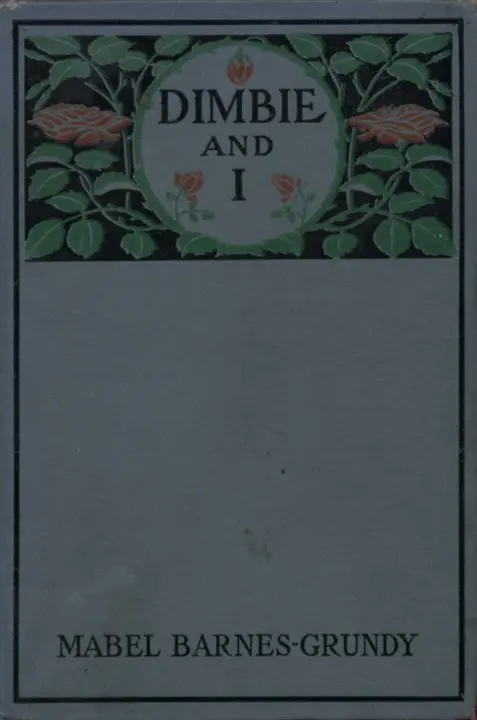
"Dimbie and I—and Amelia" by Mabel Barnes-Grundy is a novel written in the early 20th century. The story follows the life of Marguerite Westover as she navigates her recent marriage to Dimbie, exploring her feelings of happiness and fulfillment while also dealing with the comical complications of daily life, including her eccentric household help, Amelia. The novel appears to blend humor with domestic themes, focusing on Marguerite's relationships and her domestic adventures. The opening of the novel introduces Marguerite basking in the spring sunshine, filled with anticipation for her husband Dimbie's return after an absence due to family matters. As she reflects on her deep affection for him and her contrasting feelings towards her father, Peter, the reader gets a glimpse into her lively and humorous character. Furthermore, Marguerite reveals her playful spirit through anecdotes about Dimbie and her domestic life, including her interactions with Amelia, the servant whose unique approaches sometimes sow chaos. The stage is set for a lighthearted but insightful exploration of marriage and domesticity in early 20th-century England, with hints of the challenges and joys that await them.
Introduction adapted from the source catalogue; source summaries may be automatically generated.
Free to read · English · 77,700 words · No account needed
MAKE TIME FOR A GOOD BOOK
On by default. Untick to stop anonymous reading totals. Each page counts after 10 seconds in view. How this works.
Anonymous counting is on unless you have switched it off.
"Not at all," she reassured me. "I only want to impress you before it is too late. I have one more case. A poor girl wrote a book called Awakenings, or some such title. A reviewer on an ultra-superior, provincial paper, the Damchester Guardian I think it was, cut it to pieces with the cleverness, cruelty and ruthlessness of extreme youth. The critic must have been young, for only youth is really hard. There was not a good word for it; it was described as maudlin, sentimental twaddle. The girl--she was a fool of course, but we can't all be born clever--committed suicide. This was a bit of rare good luck for her publisher, for he got an advertisement for nothing, and sold forty thousand copies of the book in three months."
Nanty paused for breath. John, the coachman, looked respectfully ahead and pretended he didn't mind waiting; and I called her attention to our bank of crocuses.
"Don't like crocuses," she said.
I laughed.
"Still obstinate?"
"No," I replied, "I gave up my book over my second cup of tea."
"Dear Marguerite," she said, kissing me. "I am sure you will make your
husband very happy."
"I hope so."
"You're bound to, if you are as earnest as all that about it. Your face looks like--like--a toadstool!"
"Thank you," I laughed.
"I'm not going to say pretty things to you. You get quite enough from that silly Dimbie of yours. But now tell me before I go, just to satisfy my curiosity, what is your reason for wishing to write this book? I always thought you such a simple child."
I closed the carriage door and looked away.
She leaned forward and turned my face round.
"Why, she's actually blushing!" she ejaculated.
"Home," I said to John, wresting my face away.
"But it's not home," she contradicted, "and won't be home till you tell me why you are blushing like a peony."
"Nanty," I cried, "you are too bad."
"Marguerite, why are you looking so guilty and ashamed?"
"I'm not," I said stoutly.
"You are."
"Why should I look ashamed?"
"That's what I want to get at. I ask you the simplest question, upon which your countenance becomes that of a criminal run to earth."
"Pictorial exaggeration," I said lightly. "And, Nanty, I'm catching cold. Remember it is only March."
"Take this rug," she replied coolly. "I shall not let you go till you give me your reason for wishing to appear in print."
"But I don't," I said with heat.
"You said you did."
Your reading position is saved on this browser. Take it to another device with a library code. Reading pages adapt to text, rather than matching a printed edition.
BEHIND THE BOOK
This eBook is for the use of anyone anywhere in the United States and most other parts of the world at no cost and with almost no restrictions whatsoever. You may copy it, give it away or re-use it under the terms of the Project Gutenberg License included with this eBook or online at www.gutenberg.org. If you are not located in the United States, you will have to check the laws of the country where you are located before using this eBook. Read the source licence.
The original source file, including credits and licence, is retained by this library. Request an original-format copy at no charge. Please include the book title and Project Gutenberg identifier #47003.
KEEP YOUR CURIOSITY GOING
Coulson Kernahan

Maurice Baring
Frances Wright
Cécile Tormay

Frederic Jesup Stimson

W. H. P. (William Henry Pope) Jarvis