THE CLASSIC COLLECTION✦A dead man’s diaryCLASSIC FREE BOOKS
A dead man’s diary
Coulson Kernahan
THE CLASSIC COLLECTION · 1906
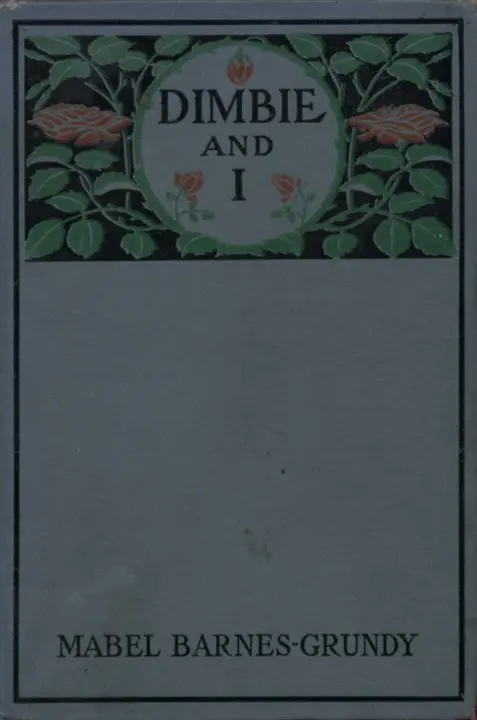
"Dimbie and I—and Amelia" by Mabel Barnes-Grundy is a novel written in the early 20th century. The story follows the life of Marguerite Westover as she navigates her recent marriage to Dimbie, exploring her feelings of happiness and fulfillment while also dealing with the comical complications of daily life, including her eccentric household help, Amelia. The novel appears to blend humor with domestic themes, focusing on Marguerite's relationships and her domestic adventures. The opening of the novel introduces Marguerite basking in the spring sunshine, filled with anticipation for her husband Dimbie's return after an absence due to family matters. As she reflects on her deep affection for him and her contrasting feelings towards her father, Peter, the reader gets a glimpse into her lively and humorous character. Furthermore, Marguerite reveals her playful spirit through anecdotes about Dimbie and her domestic life, including her interactions with Amelia, the servant whose unique approaches sometimes sow chaos. The stage is set for a lighthearted but insightful exploration of marriage and domesticity in early 20th-century England, with hints of the challenges and joys that await them.
Introduction adapted from the source catalogue; source summaries may be automatically generated.
Free to read · English · 77,700 words · No account needed
MAKE TIME FOR A GOOD BOOK
On by default. Untick to stop anonymous reading totals. Each page counts after 10 seconds in view. How this works.
Anonymous counting is on unless you have switched it off.
"Oh, no," I replied, "I am quite English with just a few foreign
tastes." I covertly dropped the radish down the side of the couch as I
spoke.
"Where were you born?"
"I was born in Dorking, I mean Westmoreland," I said wanderingly. I was debating as to what had come over Amelia.
"So you are north-country really?" Her voice was patronising.
"Yes," I returned, "isn't it interesting?"
She again regarded me with suspicion.
"North-country people are becoming quite rare. Perhaps you have noticed it? Everybody comes from the south."
She did not speak.
"And you," I inquired gently, "are you a native of Pine Tree Valley?"
"No," she replied shortly, "but I have lived here ever since I was a
girl."
"So long?" I said thoughtlessly. And she rose and offered me her hand, which felt like a non-committal Bath oliver.
"It has been so kind of you to come to see me," I said, shaking the
biscuit up and down.
She unbent a little.
"I will try to come again, but won't promise. My days are so full. Do you know any of the people here?"
"No," I admitted.
"The Honourable Mrs. Parkin-Dervis not called?"
"No."
She looked perplexed and annoyed.
"But she told me she was coming. She heard that you were confined to
the house."
"She's not been," I said. "I am sorry. I suppose she always leads the way in the question of calling upon new people. But you needn't feel you have committed yourself. You see, I shan't be able to return your call, so please don't feel you must come again unless you want to."
"It's not that," she said; "but, you see, my days are so full."
"Of course they are," I agreed warmly. "I shall quite understand, Mrs. Cobbold. I'm so sorry Amelia is not here to show you out, but were I to ring the tortoise for ten minutes she wouldn't come. She is chopping wood--perhaps you hear her. Amelia never takes the slightest notice of anybody when she is chopping wood--they are Hudson's Dry Soap boxes--the more one rings the louder she chops."
"If she were my maid," said Mrs. Cobbold, "I'd make her----"
"No, you wouldn't," I interrupted. "You think you would, but you wouldn't. We thought the same when she first came to us, but now we don't. Good-bye."
Through an unfortunate accident the tortoise rang loudly as I spoke. I caught my sleeve in its tail, and it sounded as though I were cheering Mrs. Cobbold's departure. She left the house with a flounce and a flourish. We may meet again in another world, but I am certainly not on Mrs. Cobbold's visiting list in this.
Your reading position is saved on this browser. Take it to another device with a library code. Reading pages adapt to text, rather than matching a printed edition.
BEHIND THE BOOK
This eBook is for the use of anyone anywhere in the United States and most other parts of the world at no cost and with almost no restrictions whatsoever. You may copy it, give it away or re-use it under the terms of the Project Gutenberg License included with this eBook or online at www.gutenberg.org. If you are not located in the United States, you will have to check the laws of the country where you are located before using this eBook. Read the source licence.
The original source file, including credits and licence, is retained by this library. Request an original-format copy at no charge. Please include the book title and Project Gutenberg identifier #47003.
KEEP YOUR CURIOSITY GOING
Coulson Kernahan

Maurice Baring
Frances Wright
Cécile Tormay

Frederic Jesup Stimson

W. H. P. (William Henry Pope) Jarvis