THE CLASSIC COLLECTION✦A dead man’s diaryCLASSIC FREE BOOKS
A dead man’s diary
Coulson Kernahan
THE CLASSIC COLLECTION · 1906
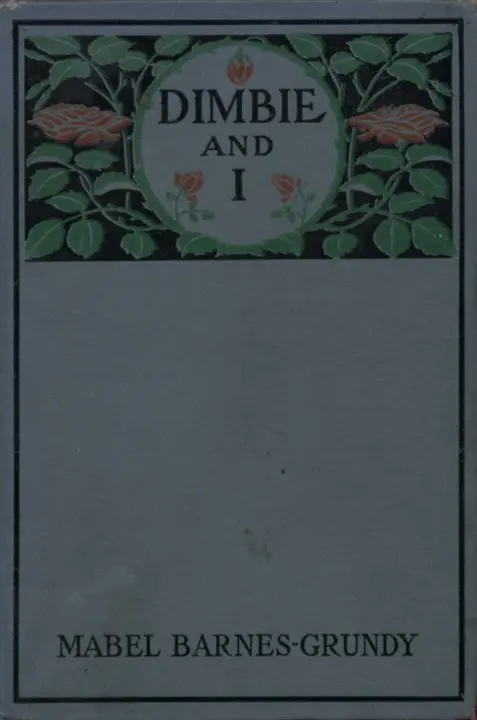
"Dimbie and I—and Amelia" by Mabel Barnes-Grundy is a novel written in the early 20th century. The story follows the life of Marguerite Westover as she navigates her recent marriage to Dimbie, exploring her feelings of happiness and fulfillment while also dealing with the comical complications of daily life, including her eccentric household help, Amelia. The novel appears to blend humor with domestic themes, focusing on Marguerite's relationships and her domestic adventures. The opening of the novel introduces Marguerite basking in the spring sunshine, filled with anticipation for her husband Dimbie's return after an absence due to family matters. As she reflects on her deep affection for him and her contrasting feelings towards her father, Peter, the reader gets a glimpse into her lively and humorous character. Furthermore, Marguerite reveals her playful spirit through anecdotes about Dimbie and her domestic life, including her interactions with Amelia, the servant whose unique approaches sometimes sow chaos. The stage is set for a lighthearted but insightful exploration of marriage and domesticity in early 20th-century England, with hints of the challenges and joys that await them.
Introduction adapted from the source catalogue; source summaries may be automatically generated.
Free to read · English · 77,700 words · No account needed
MAKE TIME FOR A GOOD BOOK
On by default. Untick to stop anonymous reading totals. Each page counts after 10 seconds in view. How this works.
Anonymous counting is on unless you have switched it off.
"You must excuse my servant," I said apologetically when Amelia had vanished. "She is utterly untrained but invaluable." I held out my hand as I spoke, which the lady touched coldly.
"My name is Mrs. Cobbold, and I live at the Old Grange," she announced
with a trumpet note.
"Oh, of course, Amelia forgot to mention it," I said politely.
"She didn't know it." She was aggrieved now.
"She could hardly mention it then," I said smiling, wishing to cheer her up. But this simple and natural comment appeared to have the opposite effect, for her brow lowered, and the jet butterfly in her bonnet quivered ominously.
"I have called because I heard you were a--an invalid, Mrs. Westover--that you were confined to your couch."
Her deportment dared me to contradict her.
"It is very kind of you," I said pacifically.
"Not kindness, but duty."
"Which makes your effort all the more praise-worthy," I said gently.
She looked at me sharply--through her pince-nez which gripped her nose very tightly--suspiciously almost, but she misunderstood me. I had not intended to be sarcastic. I was really touched at the sacrifice she was evidently making on my behalf. I felt she was a district visitor--probably the right hand of the vicar of the parish. She must need refreshment. She wore the look of one whose tongue clove to the roof of her mouth.
I rang the tortoise, and requested Amelia to bring tea.
"No tea for me, thank you," Mrs. Cobbold quickly interposed.
"I'm sorry," I said. "Perhaps you won't object to my having a cup?"
"Certainly not, but I never take anything between meals."
She seemed quite proud about this.
"Really!" I murmured interestedly. "But tea is a meal with me."
There was a pause. I could hear Amelia singing, "Now we shan't be long," which meant she was reaching out the best tea-things. The best tea-things appear to uplift her in a curious way. Perhaps by using them she feels we are gradually rising to the social status of the Tompkinses, who had an "at home" day with netted d'oyleys, and tea handed round by Amelia herself on a silver salver.
I wondered if Mrs. Cobbold could hear her singing. I felt sure she would strongly disapprove of any maid indulging in such vocal flights, and in spite of myself I laughed. Our eyes met: hers were green and hard, and in their depths I discovered that she disapproved of the mistress more than of the singing maid.
I smiled again--I couldn't help it; and then I racked my brain for something interesting and polite to say.
Mrs. Cobbold forestalled me.
Your reading position is saved on this browser. Take it to another device with a library code. Reading pages adapt to text, rather than matching a printed edition.
BEHIND THE BOOK
This eBook is for the use of anyone anywhere in the United States and most other parts of the world at no cost and with almost no restrictions whatsoever. You may copy it, give it away or re-use it under the terms of the Project Gutenberg License included with this eBook or online at www.gutenberg.org. If you are not located in the United States, you will have to check the laws of the country where you are located before using this eBook. Read the source licence.
The original source file, including credits and licence, is retained by this library. Request an original-format copy at no charge. Please include the book title and Project Gutenberg identifier #47003.
KEEP YOUR CURIOSITY GOING
Coulson Kernahan

Maurice Baring
Frances Wright
Cécile Tormay

Frederic Jesup Stimson

W. H. P. (William Henry Pope) Jarvis