THE CLASSIC COLLECTION✦A dead man’s diaryCLASSIC FREE BOOKS
A dead man’s diary
Coulson Kernahan
THE CLASSIC COLLECTION · 1906
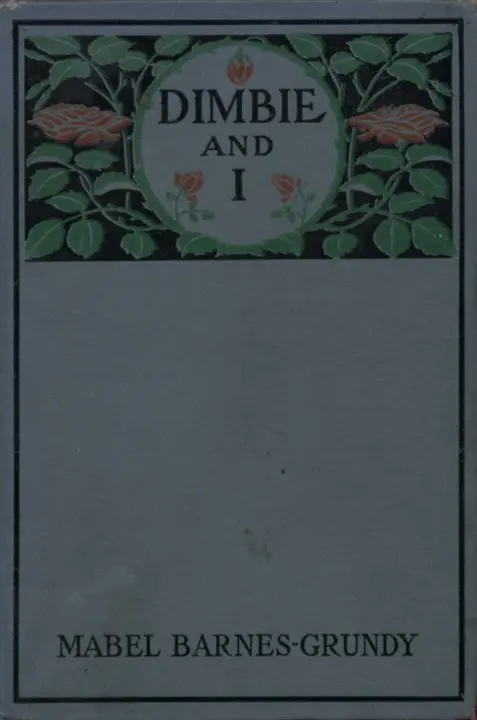
"Dimbie and I—and Amelia" by Mabel Barnes-Grundy is a novel written in the early 20th century. The story follows the life of Marguerite Westover as she navigates her recent marriage to Dimbie, exploring her feelings of happiness and fulfillment while also dealing with the comical complications of daily life, including her eccentric household help, Amelia. The novel appears to blend humor with domestic themes, focusing on Marguerite's relationships and her domestic adventures. The opening of the novel introduces Marguerite basking in the spring sunshine, filled with anticipation for her husband Dimbie's return after an absence due to family matters. As she reflects on her deep affection for him and her contrasting feelings towards her father, Peter, the reader gets a glimpse into her lively and humorous character. Furthermore, Marguerite reveals her playful spirit through anecdotes about Dimbie and her domestic life, including her interactions with Amelia, the servant whose unique approaches sometimes sow chaos. The stage is set for a lighthearted but insightful exploration of marriage and domesticity in early 20th-century England, with hints of the challenges and joys that await them.
Introduction adapted from the source catalogue; source summaries may be automatically generated.
Free to read · English · 77,700 words · No account needed
MAKE TIME FOR A GOOD BOOK
On by default. Untick to stop anonymous reading totals. Each page counts after 10 seconds in view. How this works.
Anonymous counting is on unless you have switched it off.
"Oh!" I said, shocked. Dimbie was staring at the sky.
"Yes; sad, wasn't it? But she was eighty-seven. And I am sure, could she have had the choice, she would have preferred a sudden, practically painless death to a long, lingering illness."
"So did you build this aerodrome on purpose to finish her off?" I
inquired with interest.
Dimbie smothered a laugh, and the man looked at me thoughtfully, but
didn't seem offended.
"Well, no," he replied, "I can hardly say that. I merely meant that it was just a bit of luck for my mother. I hope, by the way, I am not disturbing you."
"Not very much," I answered, before Dimbie could speak.
"That's right. I don't like being de trop, or in the way; get
yourself disliked."
There seemed to be nothing to say to this, and Dimbie and I peeped at one another and endeavoured not to laugh.
The stranger looked at us thoughtfully, benevolently almost. His face was extremely thin and worn, his hands delicate, and his boots too large for him. There was a refinement about his whole personality above the ordinary, and I liked him.
"Have some lunch?" Dimbie said, beginning to unbend. "There isn't any pie left, but there's lots of bread and cheese and some fruit."
"No, thank you. I have some lunch in my pocket, so with your permission I will eat it with you."
He produced an envelope, and taking out a brown lozenge began to suck it. When he had finished this he extracted a second, and then a third. Then from his coat pocket he produced a tin cup, dipped it into a stream which feeds the pool, drank, returned it to his pocket, and leant back in a finished way.
"Is that all you are going to have?" I couldn't resist asking in
astonishment.
"Yes," he said. "Being a balloonist, I am obliged to eat sparingly, so take my meat in a concentrated form. I'm one of the thinnest men in Great Britain, and usually wear two coats to hide my lean appearance. Would you like to feel my ribs?"
He asked this simple though somewhat unusual question in exactly the same way as a man might ask you to see his Velasquez.
"No, thank you," we both said together.
"They're worth feeling," he said, a little disappointed.
We assured him of our belief in his veracity.
"A bit prudish, eh?" He turned towards me.
"Not in the least," I replied indignantly; "but to be quite candid, I'm not very interested in your ribs. You see, we don't know you very well yet," I added, to soften the blow.
"Where do you live?" he asked.
Your reading position is saved on this browser. Take it to another device with a library code. Reading pages adapt to text, rather than matching a printed edition.
BEHIND THE BOOK
This eBook is for the use of anyone anywhere in the United States and most other parts of the world at no cost and with almost no restrictions whatsoever. You may copy it, give it away or re-use it under the terms of the Project Gutenberg License included with this eBook or online at www.gutenberg.org. If you are not located in the United States, you will have to check the laws of the country where you are located before using this eBook. Read the source licence.
The original source file, including credits and licence, is retained by this library. Request an original-format copy at no charge. Please include the book title and Project Gutenberg identifier #47003.
KEEP YOUR CURIOSITY GOING
Coulson Kernahan

Maurice Baring
Frances Wright
Cécile Tormay

Frederic Jesup Stimson

W. H. P. (William Henry Pope) Jarvis