THE CLASSIC COLLECTION✦A dead man’s diaryCLASSIC FREE BOOKS
A dead man’s diary
Coulson Kernahan
THE CLASSIC COLLECTION · 1906
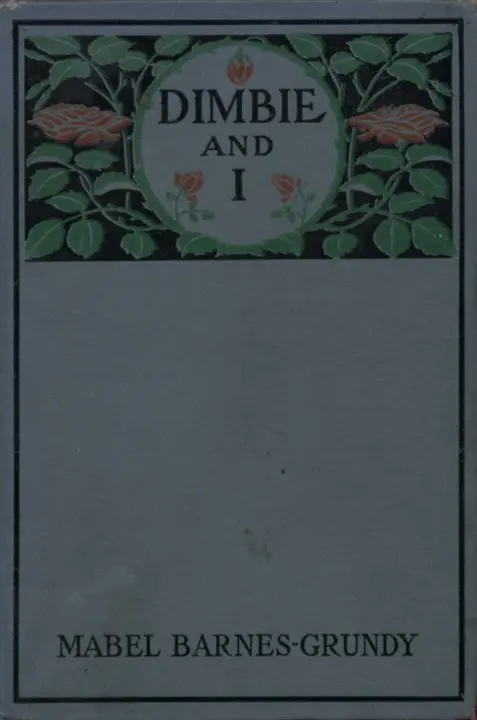
"Dimbie and I—and Amelia" by Mabel Barnes-Grundy is a novel written in the early 20th century. The story follows the life of Marguerite Westover as she navigates her recent marriage to Dimbie, exploring her feelings of happiness and fulfillment while also dealing with the comical complications of daily life, including her eccentric household help, Amelia. The novel appears to blend humor with domestic themes, focusing on Marguerite's relationships and her domestic adventures. The opening of the novel introduces Marguerite basking in the spring sunshine, filled with anticipation for her husband Dimbie's return after an absence due to family matters. As she reflects on her deep affection for him and her contrasting feelings towards her father, Peter, the reader gets a glimpse into her lively and humorous character. Furthermore, Marguerite reveals her playful spirit through anecdotes about Dimbie and her domestic life, including her interactions with Amelia, the servant whose unique approaches sometimes sow chaos. The stage is set for a lighthearted but insightful exploration of marriage and domesticity in early 20th-century England, with hints of the challenges and joys that await them.
Introduction adapted from the source catalogue; source summaries may be automatically generated.
Free to read · English · 77,700 words · No account needed
MAKE TIME FOR A GOOD BOOK
On by default. Untick to stop anonymous reading totals. Each page counts after 10 seconds in view. How this works.
Anonymous counting is on unless you have switched it off.
"Wheel me to the drawing-room," I whispered to him, "you don't go so fast as Amelia; and put me right in the window, so that I may see you all coming down the path."
"What a lovely Marguerite!" he murmured, shutting the door. "I must kiss my little wife. Why, even your cushions are gold! You look like a golden lily."
"The carriages are waiting," I said.
"I shall come home the very minute I have given Jane away; I shan't wait to the end. You will be lonely."
And Dimbie little knew how earnestly during the next quarter of an hour I longed for the loneliness he had predicted. Never had I more fervently yearned to be by myself, for as soon as ever Jane and Dimbie had driven away the Help appeared. She came slowly and deliberately into the room and seated herself on a chair opposite to the couch. She wore the black crêpe bonnet, a black dress, black kid gloves, and she carried a black parasol and a prayer-book.
"Good afternoon," I said politely.
"Good afternoon," she returned.
"Are you going--to a funeral?"
She stared at me with hard, black eyes.
"I've come to the reception."
"Oh!" I said.
"Master said me and 'Melia could hear their health drunk--the bride and
bridegroom's."
"But they are not here yet."
"No," she said, still staring at me unwaveringly.
"Where's Amelia?" The Help alarmed me.
"'Melia's gone to the wedding, and then she's going to run 'ome before the others to make the tea and coffee."
"Couldn't you make it?" I cried with sudden relief.
"No, 'Melia's going to make it. She said I was to look after you and see that you wanted for nothin'."
"I don't require anything, thank you; if I do, I will ring."
She did not move.
I closed my eyes.
"I do not require anything at present, thank you," I repeated.
There was no movement, and I opened my eyes. The Help was still staring at me unflinchingly--not a flicker of an eyelid, not a movement of a muscle.
I felt I was going to scream.
"Don't you think,--perhaps, it would be advisable--will you be so good as to see to the potatoes?"
I clasped and unclasped my hands feverishly.
"What pertaters?"
"Oh--er--the potatoes we are going to eat."
"We're not goin' to eat no pertaters. 'Melia never told me. There's to be tea, coffee, jelly, and champagne."
"But shan't we require some later on with our dinner?"
She shook her head.
"It's to be 'igh tea. There'll be no time for dinner."
"But I should like potatoes."
The Help looked doubtful.
"I love potatoes."
Your reading position is saved on this browser. Take it to another device with a library code. Reading pages adapt to text, rather than matching a printed edition.
BEHIND THE BOOK
This eBook is for the use of anyone anywhere in the United States and most other parts of the world at no cost and with almost no restrictions whatsoever. You may copy it, give it away or re-use it under the terms of the Project Gutenberg License included with this eBook or online at www.gutenberg.org. If you are not located in the United States, you will have to check the laws of the country where you are located before using this eBook. Read the source licence.
The original source file, including credits and licence, is retained by this library. Request an original-format copy at no charge. Please include the book title and Project Gutenberg identifier #47003.
KEEP YOUR CURIOSITY GOING
Coulson Kernahan

Maurice Baring
Frances Wright
Cécile Tormay

Frederic Jesup Stimson

W. H. P. (William Henry Pope) Jarvis