THE CLASSIC COLLECTION✦A dead man’s diaryCLASSIC FREE BOOKS
A dead man’s diary
Coulson Kernahan
THE CLASSIC COLLECTION · 1906
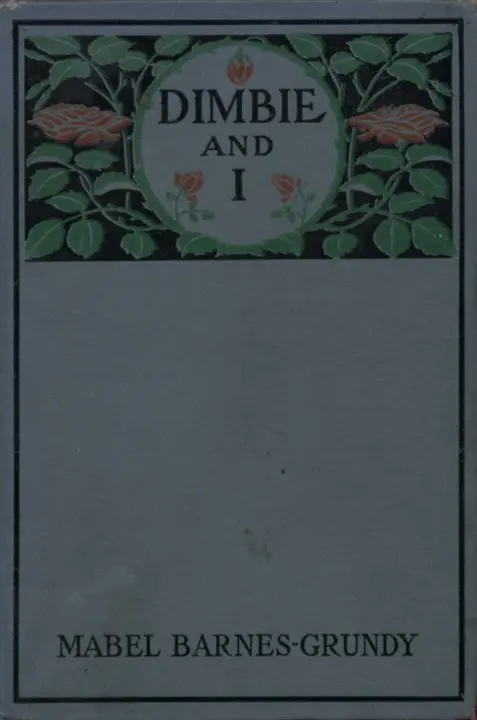
"Dimbie and I—and Amelia" by Mabel Barnes-Grundy is a novel written in the early 20th century. The story follows the life of Marguerite Westover as she navigates her recent marriage to Dimbie, exploring her feelings of happiness and fulfillment while also dealing with the comical complications of daily life, including her eccentric household help, Amelia. The novel appears to blend humor with domestic themes, focusing on Marguerite's relationships and her domestic adventures. The opening of the novel introduces Marguerite basking in the spring sunshine, filled with anticipation for her husband Dimbie's return after an absence due to family matters. As she reflects on her deep affection for him and her contrasting feelings towards her father, Peter, the reader gets a glimpse into her lively and humorous character. Furthermore, Marguerite reveals her playful spirit through anecdotes about Dimbie and her domestic life, including her interactions with Amelia, the servant whose unique approaches sometimes sow chaos. The stage is set for a lighthearted but insightful exploration of marriage and domesticity in early 20th-century England, with hints of the challenges and joys that await them.
Introduction adapted from the source catalogue; source summaries may be automatically generated.
Free to read · English · 77,700 words · No account needed
MAKE TIME FOR A GOOD BOOK
On by default. Untick to stop anonymous reading totals. Each page counts after 10 seconds in view. How this works.
Anonymous counting is on unless you have switched it off.
"Hush!" I said, "I am going to wake him."
Jane sat down and watched with interest.
"Dimbie! Dimbie, dear, would you mind waking up?"
"He doesn't always sleep quite so heavily as this," I explained apologetically. "It has been such a warm, enervating day."
"Dimbie, will you stop snoring."
Still no answer.
Loudly I rang the tortoise, and he was on his feet in an instant,
blinkingly staring at Jane.
"It's not a fire or an accident," I said; "it's Miss Fairbrother."
With the first of Jane's wholesome, heartsome smiles I knew that his conquest had begun. They shook hands, and he apologised for being caught in such an attitude.
"It enabled me to have a good look at Marguerite's husband, of whom I have heard so much," said Jane frankly.
"And what do you think of him?" Dimbie asked with a twinkle.
"I must reserve my judgment till later. It may be a case of cruelty, desertion, and wife beating. Appearances are so deceitful. And no faith should be placed in a young wife's estimate of her husband."
He pushed his hammock chair towards her.
"Won't you take this; it is more comfortable. And were Marg's letters
very tiresome?"
"Well, she didn't say much about you." Jane wore an air of "May God forgive me!" "But what little she did write of you was mostly to the good."
Dimbie laughed, and began to enjoy himself.
"Before you begin to talk," I said, "would you like a wash or have tea
first?"
"Tea, please."
I rang the bell.
"I'm quite anxious to see the young person with the tea-rose slippers," observed Jane, removing her hat and running her fingers through her soft, luxuriant hair, which was parted on one side.
"She doesn't wear them now. We have had a lot of money left us," I said, studying the expressive face in front of me, which had changed so little.
"Does she run about barefoot?"
"Oh, no! What I mean is that we can afford now to give her nice, kid slippers." I struggled to keep my mind on Amelia, and not on Jane's pretty, cool, grey linen gown which was inset with beautiful, Irish crochet lace.
"It isn't mercerised cotton," I thought aloud.
"It's one of my best frocks," said Jane, following my eyes. "Do you think it suitable for my years, Marguerite?"
"I should wear it to-morrow," I said impulsively, and then stopped
awkwardly.
"Why to-morrow?" she asked in surprise. "Are you having a party?"
"Only Marg's medical m----"
Your reading position is saved on this browser. Take it to another device with a library code. Reading pages adapt to text, rather than matching a printed edition.
BEHIND THE BOOK
This eBook is for the use of anyone anywhere in the United States and most other parts of the world at no cost and with almost no restrictions whatsoever. You may copy it, give it away or re-use it under the terms of the Project Gutenberg License included with this eBook or online at www.gutenberg.org. If you are not located in the United States, you will have to check the laws of the country where you are located before using this eBook. Read the source licence.
The original source file, including credits and licence, is retained by this library. Request an original-format copy at no charge. Please include the book title and Project Gutenberg identifier #47003.
KEEP YOUR CURIOSITY GOING
Coulson Kernahan

Maurice Baring
Frances Wright
Cécile Tormay

Frederic Jesup Stimson

W. H. P. (William Henry Pope) Jarvis