THE CLASSIC COLLECTION✦A dead man’s diaryCLASSIC FREE BOOKS
A dead man’s diary
Coulson Kernahan
THE CLASSIC COLLECTION · 1906
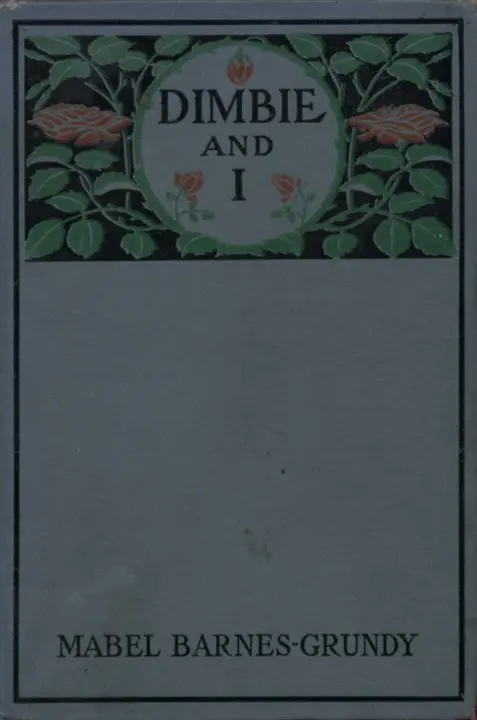
"Dimbie and I—and Amelia" by Mabel Barnes-Grundy is a novel written in the early 20th century. The story follows the life of Marguerite Westover as she navigates her recent marriage to Dimbie, exploring her feelings of happiness and fulfillment while also dealing with the comical complications of daily life, including her eccentric household help, Amelia. The novel appears to blend humor with domestic themes, focusing on Marguerite's relationships and her domestic adventures. The opening of the novel introduces Marguerite basking in the spring sunshine, filled with anticipation for her husband Dimbie's return after an absence due to family matters. As she reflects on her deep affection for him and her contrasting feelings towards her father, Peter, the reader gets a glimpse into her lively and humorous character. Furthermore, Marguerite reveals her playful spirit through anecdotes about Dimbie and her domestic life, including her interactions with Amelia, the servant whose unique approaches sometimes sow chaos. The stage is set for a lighthearted but insightful exploration of marriage and domesticity in early 20th-century England, with hints of the challenges and joys that await them.
Introduction adapted from the source catalogue; source summaries may be automatically generated.
Free to read · English · 77,700 words · No account needed
MAKE TIME FOR A GOOD BOOK
On by default. Untick to stop anonymous reading totals. Each page counts after 10 seconds in view. How this works.
Anonymous counting is on unless you have switched it off.
"Yes," I returned, running my fingers through his wavy hair, "you're very cross. How long do you think you will continue to be so?"
"Till Miss Fairbrother has gone. Marg, I don't want to be a surly beast, but, oh, I do wish I had never consented to that Indian woman's coming."
"If I tell you something will you promise to keep it secret--either till the day after to-morrow, Thursday, or forever?"
"There's rather a wide difference between the two periods of time."
"Yes, but there is a reason for it. Will you promise?"
"All right."
"I mean a faithful promise. You have a rather trying habit of slipping things out. This must be an on-my-oath promise."
"On-my-oath, world-without-end promise," repeated Dimbie.
"Dr. Renton wishes to marry Jane Fairbrother."
"The deuce he does!"
"Yes," I said, enjoying his astonishment.
"But he doesn't know her."
"He has known her for years. He knew her when she lived with us, but she went to India before he could make up his mind to speak to her. Now he is coming on Thursday."
"And he will take her away just when she is going to be useful to us,
selfish beast!"
I smiled behind my hand.
"Dear Dimbie," I said, "I always thought men the most contrary creatures, having lived under Peter's roof for some years, but never quite so contrary as I now find them to be."
"What do you mean?"
"I mean that here you have been making yourself extremely disagreeable about Miss Fairbrother's visit, and the moment someone comes along and says he will remove the incubus you turn equally nasty."
"I don't want you to be disappointed. For myself, I am only too jolly thankful that she won't be here long."
"But she may. I am not sure that she will accept Dr. Renton."
"I am."
"Why?"
"Most women accept the first man who asks 'em."
I swelled with indignation, and I rang the tortoise to emphasise my
righteous anger.
"The conversation is finished," I said.
"No, it isn't," contradicted Dimbie.
"I repeat that it is." I shut my eyes.
"You've beautiful eyelashes--look like a fringe on your cheeks, and they all curl up at the ends, Marg."
An interval of silence.
"I didn't say you would rush at a man. I meant most women."
More silence.
"Don't you think I'm right?"
"Your ignorance of women is only equalled by your colossal conceit. The conversation, I again repeat, is at an end."
"And once again I assert that it isn't. I wish to discuss the matrimonial prospects of Dr. Renton and Miss Fairbrother."
"You must discuss them with yourself."
"Can't."
"You must take back what you said."
"Shan't."
Your reading position is saved on this browser. Take it to another device with a library code. Reading pages adapt to text, rather than matching a printed edition.
BEHIND THE BOOK
This eBook is for the use of anyone anywhere in the United States and most other parts of the world at no cost and with almost no restrictions whatsoever. You may copy it, give it away or re-use it under the terms of the Project Gutenberg License included with this eBook or online at www.gutenberg.org. If you are not located in the United States, you will have to check the laws of the country where you are located before using this eBook. Read the source licence.
The original source file, including credits and licence, is retained by this library. Request an original-format copy at no charge. Please include the book title and Project Gutenberg identifier #47003.
KEEP YOUR CURIOSITY GOING
Coulson Kernahan

Maurice Baring
Frances Wright
Cécile Tormay

Frederic Jesup Stimson

W. H. P. (William Henry Pope) Jarvis