THE CLASSIC COLLECTION✦A dead man’s diaryCLASSIC FREE BOOKS
A dead man’s diary
Coulson Kernahan
THE CLASSIC COLLECTION · 1906
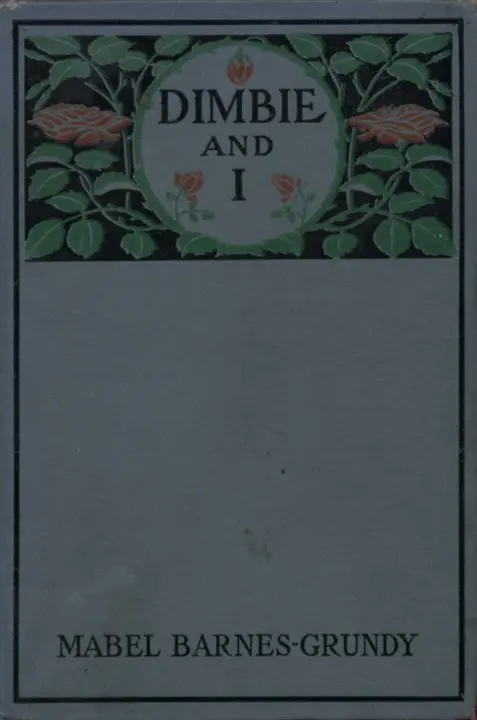
"Dimbie and I—and Amelia" by Mabel Barnes-Grundy is a novel written in the early 20th century. The story follows the life of Marguerite Westover as she navigates her recent marriage to Dimbie, exploring her feelings of happiness and fulfillment while also dealing with the comical complications of daily life, including her eccentric household help, Amelia. The novel appears to blend humor with domestic themes, focusing on Marguerite's relationships and her domestic adventures. The opening of the novel introduces Marguerite basking in the spring sunshine, filled with anticipation for her husband Dimbie's return after an absence due to family matters. As she reflects on her deep affection for him and her contrasting feelings towards her father, Peter, the reader gets a glimpse into her lively and humorous character. Furthermore, Marguerite reveals her playful spirit through anecdotes about Dimbie and her domestic life, including her interactions with Amelia, the servant whose unique approaches sometimes sow chaos. The stage is set for a lighthearted but insightful exploration of marriage and domesticity in early 20th-century England, with hints of the challenges and joys that await them.
Introduction adapted from the source catalogue; source summaries may be automatically generated.
Free to read · English · 77,700 words · No account needed
MAKE TIME FOR A GOOD BOOK
On by default. Untick to stop anonymous reading totals. Each page counts after 10 seconds in view. How this works.
Anonymous counting is on unless you have switched it off.
"Colours. We were just considering what would best suit a man with
iron-grey hair."
"But I'm not grey," said Dimbie.
"No, dear."
"Well, what do you mean?"
"I was just considering another man for the moment. Another man's appearance for an occasion on which he is anxious to look unusually well and young."
"He must be a conceited ass!" quoth Dimbie, getting up and strolling after Jumbles, who with arched back and stately tread marched away, refusing to be turned into a common performing clown at any man's bidding.
We laughed outright.
"May I--may I talk to you about it?" I asked.
He nodded.
"When would you like to see her?"
"To-morrow evening if you'll let me."
I considered this.
"Say the day after."
"Why?"
"Because if--if she says 'Yes' she'll cease to take any further interest in me. I've grown selfish, and I should so like to have her all to myself for the first evening."
"Very well," he agreed somewhat grudgingly.
"You see, after waiting for eight years one day----"
"Will seem longer than the whole lot put together," he said
despondently.
"Well, come late to-morrow night, after supper."
"No, I'll try to hold out." He smiled a little. "If she--well, if she refuses me, I shall have had all the longer blissful looking forward to meeting her again. And if she should say 'No' it will serve me right."
"I somehow don't think she'll refuse you, though, as you say, it would certainly serve you right."
"Yes, I know it would." In his eyes lay an anxious, almost wistful look, which touched me. His rugged face had softened to a semblance of youth, his voice was less gruff.
"Women don't forget easily. If she ever cared for you----" I began.
Dimbie was returning.
"Dimbie," I called, "you might climb over into the frog-pond field and bring me some marguerites."
"Aren't they over?"
"If they are bring me some loosestrife and, scabious and anything you can find. I long for some wild-flowers."
Lazily he threw a leg over the fence and disappeared.
"He'll be away some time now. Dimbie never does anything quickly; he is slow and thorough, and he will endeavour to find the largest daisies in the field."
"I suppose when I--if I were ever married my wife"--he stumbled over the words--"might ask me to pick daisies for her?"
"Perhaps. But a great deal depends upon the man. I cannot imagine my father picking flowers for mother; he would more likely throw them at her."
Dr. Renton smiled. He had known Peter as long as I.
"I wonder whether you will find Miss Fairbrother much changed? She is eight years older, you know."
Your reading position is saved on this browser. Take it to another device with a library code. Reading pages adapt to text, rather than matching a printed edition.
BEHIND THE BOOK
This eBook is for the use of anyone anywhere in the United States and most other parts of the world at no cost and with almost no restrictions whatsoever. You may copy it, give it away or re-use it under the terms of the Project Gutenberg License included with this eBook or online at www.gutenberg.org. If you are not located in the United States, you will have to check the laws of the country where you are located before using this eBook. Read the source licence.
The original source file, including credits and licence, is retained by this library. Request an original-format copy at no charge. Please include the book title and Project Gutenberg identifier #47003.
KEEP YOUR CURIOSITY GOING
Coulson Kernahan

Maurice Baring
Frances Wright
Cécile Tormay

Frederic Jesup Stimson

W. H. P. (William Henry Pope) Jarvis