THE CLASSIC COLLECTION✦A dead man’s diaryCLASSIC FREE BOOKS
A dead man’s diary
Coulson Kernahan
THE CLASSIC COLLECTION · 1906
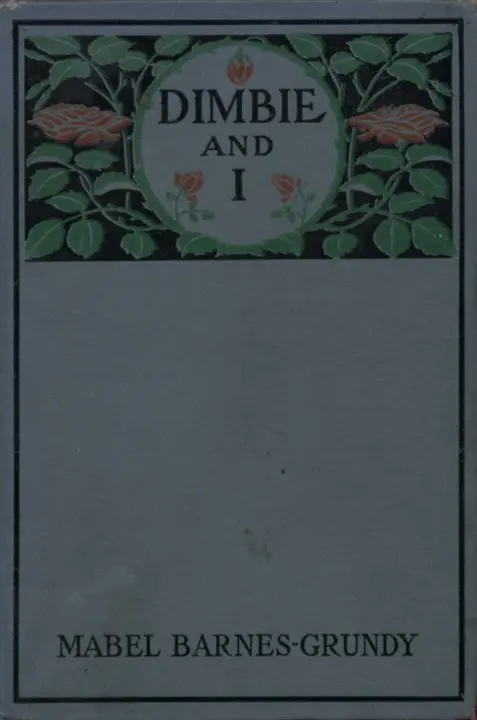
"Dimbie and I—and Amelia" by Mabel Barnes-Grundy is a novel written in the early 20th century. The story follows the life of Marguerite Westover as she navigates her recent marriage to Dimbie, exploring her feelings of happiness and fulfillment while also dealing with the comical complications of daily life, including her eccentric household help, Amelia. The novel appears to blend humor with domestic themes, focusing on Marguerite's relationships and her domestic adventures. The opening of the novel introduces Marguerite basking in the spring sunshine, filled with anticipation for her husband Dimbie's return after an absence due to family matters. As she reflects on her deep affection for him and her contrasting feelings towards her father, Peter, the reader gets a glimpse into her lively and humorous character. Furthermore, Marguerite reveals her playful spirit through anecdotes about Dimbie and her domestic life, including her interactions with Amelia, the servant whose unique approaches sometimes sow chaos. The stage is set for a lighthearted but insightful exploration of marriage and domesticity in early 20th-century England, with hints of the challenges and joys that await them.
Introduction adapted from the source catalogue; source summaries may be automatically generated.
Free to read · English · 77,700 words · No account needed
MAKE TIME FOR A GOOD BOOK
On by default. Untick to stop anonymous reading totals. Each page counts after 10 seconds in view. How this works.
Anonymous counting is on unless you have switched it off.
"Yes, that was my husband," I said steadily.
She looked about the garden, as though Dimbie were concealed behind the sweet-pea hedge or hidden among the rhubarb, and I had difficulty in suppressing my laughter.
"Even if you are a prisoner--poor thing--perhaps your husband would join our little coterie. What is his bent? What line does he take?"
Her conversation was mysterious, but here was a plain, simple question
easily understood.
"The South-Western he used to take," I said; "but now----"
She eyed me a little coldly.
"I was not referring to railway lines," she interrupted. "I meant in what movement, art, thought, work, is he specially interested?"
"Oh," I said in confusion, "I beg your pardon. I don't think there is anything very special. My husband is rather a lazy man. He enjoys walking, and, oh," I added with inspiration, "he likes gardening."
"Gardening has been overdone," she said firmly. "Charming subject, communing with Nature and all that sort of thing; but we have had Elizabeth, Alfred Austin, Mrs. Earle, Dean Hole, and a host of others."
"My husband does not commune with Nature, he kills slugs," I retorted. "Besides, none of the people you have mentioned have gardened for us. Elizabeth may fall into ecstasies of astonishment at the unique sight of a crocus in bloom in February, Alfred Austin may converse most charmingly with his verbenas and lavender, but they don't know where Dimbie has planted our celery."
She made a gesture of impatience.
"You don't seem to understand me, but I will endeavour to explain. You see, a few of us here have formed ourselves into a little band of----"
"Musicians," I said pleasantly. I was listening to Amelia's rendering of "Now we shan't be long," and had not quite followed the gist of Mrs. Winderby's conversation.
"I was not going to say 'musicians,'" she contradicted, "though musical people are members of our club. We are literary--I am literary" (a pause)--"artistic, scientific. We have formed ourselves into a club, and meet at each other's houses once a week."
"It sounds most interesting and improving," I observed. "I know a scientific man. He invented an aerodrome which killed his mother, and he goes about in a balloon, and----"
"We only have gentlemen in our club."
"But he is a gentleman. He is the great----"
She leaned forward and stared at me intently.
"What's the matter?" I asked, "an insect crawling over me?"
"More than that."
"More than that!" I cried, nervously clutching at my gown. "Is it a
wasp?"
Your reading position is saved on this browser. Take it to another device with a library code. Reading pages adapt to text, rather than matching a printed edition.
BEHIND THE BOOK
This eBook is for the use of anyone anywhere in the United States and most other parts of the world at no cost and with almost no restrictions whatsoever. You may copy it, give it away or re-use it under the terms of the Project Gutenberg License included with this eBook or online at www.gutenberg.org. If you are not located in the United States, you will have to check the laws of the country where you are located before using this eBook. Read the source licence.
The original source file, including credits and licence, is retained by this library. Request an original-format copy at no charge. Please include the book title and Project Gutenberg identifier #47003.
KEEP YOUR CURIOSITY GOING
Coulson Kernahan

Maurice Baring
Frances Wright
Cécile Tormay

Frederic Jesup Stimson

W. H. P. (William Henry Pope) Jarvis