THE CLASSIC COLLECTION✦A dead man’s diaryCLASSIC FREE BOOKS
A dead man’s diary
Coulson Kernahan
THE CLASSIC COLLECTION · 1906
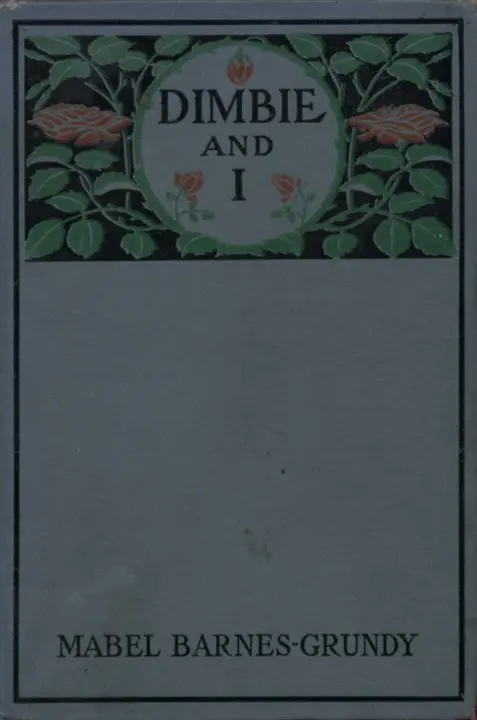
"Dimbie and I—and Amelia" by Mabel Barnes-Grundy is a novel written in the early 20th century. The story follows the life of Marguerite Westover as she navigates her recent marriage to Dimbie, exploring her feelings of happiness and fulfillment while also dealing with the comical complications of daily life, including her eccentric household help, Amelia. The novel appears to blend humor with domestic themes, focusing on Marguerite's relationships and her domestic adventures. The opening of the novel introduces Marguerite basking in the spring sunshine, filled with anticipation for her husband Dimbie's return after an absence due to family matters. As she reflects on her deep affection for him and her contrasting feelings towards her father, Peter, the reader gets a glimpse into her lively and humorous character. Furthermore, Marguerite reveals her playful spirit through anecdotes about Dimbie and her domestic life, including her interactions with Amelia, the servant whose unique approaches sometimes sow chaos. The stage is set for a lighthearted but insightful exploration of marriage and domesticity in early 20th-century England, with hints of the challenges and joys that await them.
Introduction adapted from the source catalogue; source summaries may be automatically generated.
Free to read · English · 77,700 words · No account needed
MAKE TIME FOR A GOOD BOOK
On by default. Untick to stop anonymous reading totals. Each page counts after 10 seconds in view. How this works.
Anonymous counting is on unless you have switched it off.
Amelia really is no more pleased at the prospect of Jane's visit than Dimbie, although she has so thoroughly cleansed the spare room. She talks to me in this strain--
"Miss Fairbrother's not going to dress you, mum?"
"Of course not."
"And she won't be wanting to order the dinners?"
"I am sure she won't. Besides," with a sly smile, "I thought I
ordered the dinners."
Amelia considered this, and with the wisdom of a diplomatist said--
"Of course you do, mum."
"I thought so," I agreed.
Amelia looked at me--one of the halibut looks--and continued, "And I won't have her messing about the kitchen." Had she overheard Dimbie's remark?
"Miss Fairbrother would not dream of messing about the kitchen. Miss Fairbrother is not used to kitchens and flue-brushes and 'sweetening' ovens with lime."
"Oh, of course, if she's a grand lady!" Amelia's nose tilted in the
air.
"She's not a grand lady; but her work in life has lain in channels otherwise than kitchens. She teaches, she used to teach me."
"Oh----!"
I took up the paper.
"She can't know much, then!"
Now I am sure Amelia had no intention of being in the least rude.
"That depends upon what you mean by much," I said.
She began to walk away.
Unaccountably I yearned to know her definition of knowledge.
"What do you think constitutes 'knowing much'?"
She looked at me without understanding.
"What do you mean by saying Miss Fairbrother won't know much?"
"Well, she won't."
"Granted that," I was becoming impatient, "but what sort of things
won't she know?"
"She'll know nothing useful."
"Amelia," I said despairingly, "if anyone can walk round and round a
circle you can."
She batted her eyes and regarded the ceiling in complete vacancy.
Once again I tried.
"Will you tell me the things you consider not useful?"
"Lessons and maps and 'broidery work."
"Maps?"
"We was made to do maps in Mile End Road."
"What sort of maps?"
"Heurope in red paint."
"Don't you mean the British possessions?"
"That was it--America and----"
"But America doesn't belong to us," I interrupted.
She closed her eyes in intense boredom, but I was not to be snubbed.
"What do you call useful?"
"Gettin' bailiffs out of a house when they thinks they's settled in."
"Oh!" I said.
"I've got two lots out."
"Was it at the Tompkinses'?" I whispered.
"Tompkinses was as respectable as you, mum," she said, mildly indignant.
"Oh, I beg your--I mean the Tompkinses' pardon."
"They had salmon--lots of it."
"The bailiffs?" I knew I had been stupid the moment the words were uttered, but it was too late.
"I'm speaking of Tompkinses, mum."
"Of course you are."
Your reading position is saved on this browser. Take it to another device with a library code. Reading pages adapt to text, rather than matching a printed edition.
BEHIND THE BOOK
This eBook is for the use of anyone anywhere in the United States and most other parts of the world at no cost and with almost no restrictions whatsoever. You may copy it, give it away or re-use it under the terms of the Project Gutenberg License included with this eBook or online at www.gutenberg.org. If you are not located in the United States, you will have to check the laws of the country where you are located before using this eBook. Read the source licence.
The original source file, including credits and licence, is retained by this library. Request an original-format copy at no charge. Please include the book title and Project Gutenberg identifier #47003.
KEEP YOUR CURIOSITY GOING
Coulson Kernahan

Maurice Baring
Frances Wright
Cécile Tormay

Frederic Jesup Stimson

W. H. P. (William Henry Pope) Jarvis