THE CLASSIC COLLECTION✦A dead man’s diaryCLASSIC FREE BOOKS
A dead man’s diary
Coulson Kernahan
THE CLASSIC COLLECTION · 1906
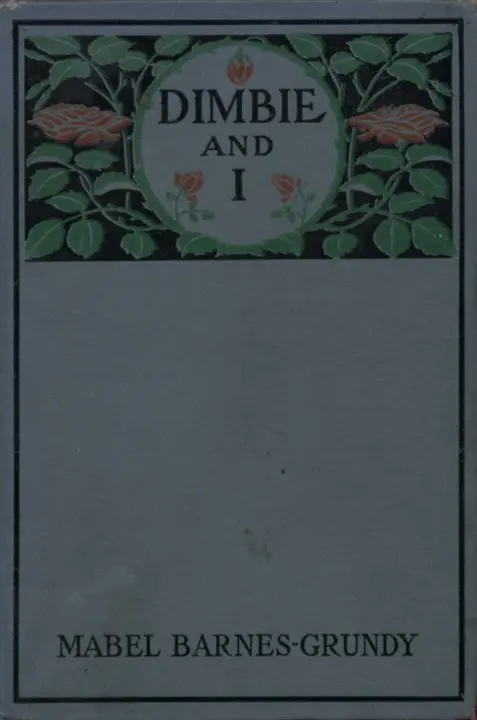
"Dimbie and I—and Amelia" by Mabel Barnes-Grundy is a novel written in the early 20th century. The story follows the life of Marguerite Westover as she navigates her recent marriage to Dimbie, exploring her feelings of happiness and fulfillment while also dealing with the comical complications of daily life, including her eccentric household help, Amelia. The novel appears to blend humor with domestic themes, focusing on Marguerite's relationships and her domestic adventures. The opening of the novel introduces Marguerite basking in the spring sunshine, filled with anticipation for her husband Dimbie's return after an absence due to family matters. As she reflects on her deep affection for him and her contrasting feelings towards her father, Peter, the reader gets a glimpse into her lively and humorous character. Furthermore, Marguerite reveals her playful spirit through anecdotes about Dimbie and her domestic life, including her interactions with Amelia, the servant whose unique approaches sometimes sow chaos. The stage is set for a lighthearted but insightful exploration of marriage and domesticity in early 20th-century England, with hints of the challenges and joys that await them.
Introduction adapted from the source catalogue; source summaries may be automatically generated.
Free to read · English · 77,700 words · No account needed
MAKE TIME FOR A GOOD BOOK
On by default. Untick to stop anonymous reading totals. Each page counts after 10 seconds in view. How this works.
Anonymous counting is on unless you have switched it off.
Dimbie now tried to catch her eye, but she still wouldn't be caught.
"Amelia," I said gently.
She became deaf as well as blind.
"The Tompkinses set a good example which all householders might follow with great advantage to themselves. It is simply suicidal"--the Professor had now quite forgotten Nanty--"it is simply suicidal the manner in which they neglect their drains, ignore their drains. And their ignorance on drains is usually colossal, only exceeded by the ignorance and stupidity of the men who lay them. I quite expected to find your main drain running beneath your drawing-room.
"You almost seem disappointed that it isn't," I said.
He smiled.
"Do you know where it is?"
"No--o."
"Do you know where your gas-meter is?"
"We haven't one, we use lamps and candles."
"Ah, well, you wouldn't know if you had. Women never know these things." He spoke despondently.
"I am not overwhelmed at our ignorance," I said laughing. "I don't see why we should know. Surely the knowledge of gas and water is a man's business?"
"I do not agree with you at all." He spoke with extreme rapidity. "Women use them as much as men, they should therefore understand something of their working."
"Do you know where the pearl buttons for your flannel shirt are kept?"
I asked quietly.
Dimbie suppressed a chuckle.
"I didn't know I used them."
"How do you suppose your shirt remains fastened? At the present moment the button on your left wrist-band is cracked across the centre. You must replace it with a new one on your return home."
The Professor laughed good-humouredly.
"You had me there," he said.
"They always have us," quoth Dimbie. "Haven't you found it so?"
The Professor stole a sly glance at Nanty.
"Not always," he said softly.
He was evidently recovering from his embarrassment by leaps and bounds.
A smile flickered across Nanty's lips. She did not return the look, but she unbent ever so little.
"What do you think of women, Professor? You have told us what you think about drains and creeper-covered cottages, let us have your opinion of the fair sex." Dimbie looked wicked. With unusual perspicacity he smelt a rat, and now he meant to run it to earth.
"What do I think of women! I--I--" (the Professor was now undoubtedly flurried) "I don't think anything of them."
"That is a little rude and unkind of you," I said.
"Eh, what?"
"That you should not think anything of them. Are they so very
unworthy?"
The poor man looked worried.
"I--I think I must go now."
Your reading position is saved on this browser. Take it to another device with a library code. Reading pages adapt to text, rather than matching a printed edition.
BEHIND THE BOOK
This eBook is for the use of anyone anywhere in the United States and most other parts of the world at no cost and with almost no restrictions whatsoever. You may copy it, give it away or re-use it under the terms of the Project Gutenberg License included with this eBook or online at www.gutenberg.org. If you are not located in the United States, you will have to check the laws of the country where you are located before using this eBook. Read the source licence.
The original source file, including credits and licence, is retained by this library. Request an original-format copy at no charge. Please include the book title and Project Gutenberg identifier #47003.
KEEP YOUR CURIOSITY GOING
Coulson Kernahan

Maurice Baring
Frances Wright
Cécile Tormay

Frederic Jesup Stimson

W. H. P. (William Henry Pope) Jarvis