THE CLASSIC COLLECTION✦A dead man’s diaryCLASSIC FREE BOOKS
A dead man’s diary
Coulson Kernahan
THE CLASSIC COLLECTION · 1906
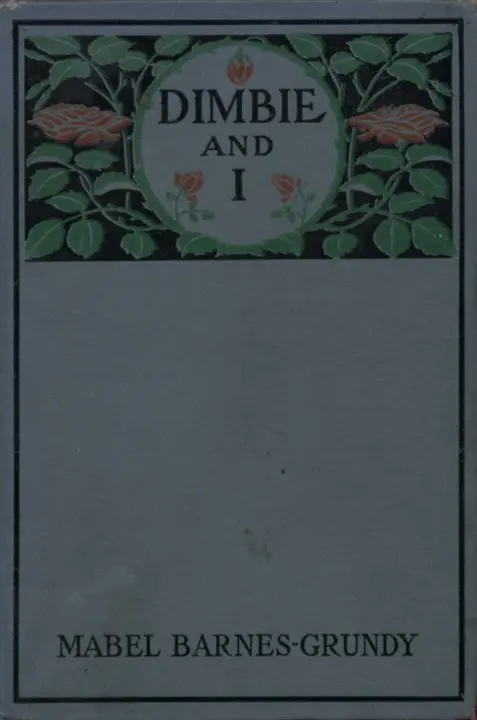
"Dimbie and I—and Amelia" by Mabel Barnes-Grundy is a novel written in the early 20th century. The story follows the life of Marguerite Westover as she navigates her recent marriage to Dimbie, exploring her feelings of happiness and fulfillment while also dealing with the comical complications of daily life, including her eccentric household help, Amelia. The novel appears to blend humor with domestic themes, focusing on Marguerite's relationships and her domestic adventures. The opening of the novel introduces Marguerite basking in the spring sunshine, filled with anticipation for her husband Dimbie's return after an absence due to family matters. As she reflects on her deep affection for him and her contrasting feelings towards her father, Peter, the reader gets a glimpse into her lively and humorous character. Furthermore, Marguerite reveals her playful spirit through anecdotes about Dimbie and her domestic life, including her interactions with Amelia, the servant whose unique approaches sometimes sow chaos. The stage is set for a lighthearted but insightful exploration of marriage and domesticity in early 20th-century England, with hints of the challenges and joys that await them.
Introduction adapted from the source catalogue; source summaries may be automatically generated.
Free to read · English · 77,700 words · No account needed
MAKE TIME FOR A GOOD BOOK
On by default. Untick to stop anonymous reading totals. Each page counts after 10 seconds in view. How this works.
Anonymous counting is on unless you have switched it off.
"We shall be able to use them for cider, perhaps." His voice was
mocking.
"And I don't want to leave the ants; they're so interesting."
"I suppose no other garden contains ants?"
"And look at the roses! Have you ever seen trees bloom more freely?"
"Roses--in England--are, of course, extremely rare."
"Dimbie," I said, "if you mock me again I shall----"
"Kiss me, sweetheart," and he held his face to mine.
"I shall not kiss you until you promise faithfully you will not
transplant me to another garden. I--I don't want to go yet awhile,
Dimbie."
"But what shall we do with our money? There is nothing to spend it on
here," he argued.
"Oh, I could soon run through it, given the opportunity. I should first of all buy new shoes for Amelia--lovely, respectable, black, kid shoes, with neat bows and low heels."
"Would they cost seven and sixpence?" he asked ironically.
"Quite," I returned gravely.
He walked up and down the lawn impatiently.
"But tell me why," he said after a time, standing still in front of me, "why, Marguerite, my poor white daisy, you are so anxious to remain here?"
"Because----" I paused. Ah, no, I must not tell him yet; it is not time. Besides, after all, it may only be my foolish fancy. "Because," I continued, "to take me away from the garden that I love, from our pretty cottage, would be to tear out my heart-strings. Perhaps you will think it sentiment, Dimbie, but I want to finish our year here--our wonderful year. Into the branches and green lace-work of the trees, into the dewy grass, into the sweet-peas and roses, into the beech--which is always so kind and friendly--into the frog-pond, and, above all, into our much-loved apple tree, are woven a thousand beautiful associations and memories. The memories, you will say, will remain with us, be with us wherever we go; but they are not yet complete. This is only August. We have four months left to finish our year. Into those four months may be crowded much happiness, much simple, quiet joy, and the storehouse of our 'looking back' will be full to the brim and running over. Let us finish our year here--you and I and Amelia--and then----"
I turned away to hide my face.
"And then----?"
"Why then," I said softly, "I will do whatever is required of me."
He sat down beside me.
"Your will will always be mine, Marguerite."
I shook my head.
"You and everybody will turn me into the most selfish creature that ever breathed if I let you have your way."
Your reading position is saved on this browser. Take it to another device with a library code. Reading pages adapt to text, rather than matching a printed edition.
BEHIND THE BOOK
This eBook is for the use of anyone anywhere in the United States and most other parts of the world at no cost and with almost no restrictions whatsoever. You may copy it, give it away or re-use it under the terms of the Project Gutenberg License included with this eBook or online at www.gutenberg.org. If you are not located in the United States, you will have to check the laws of the country where you are located before using this eBook. Read the source licence.
The original source file, including credits and licence, is retained by this library. Request an original-format copy at no charge. Please include the book title and Project Gutenberg identifier #47003.
KEEP YOUR CURIOSITY GOING
Coulson Kernahan

Maurice Baring
Frances Wright
Cécile Tormay

Frederic Jesup Stimson

W. H. P. (William Henry Pope) Jarvis