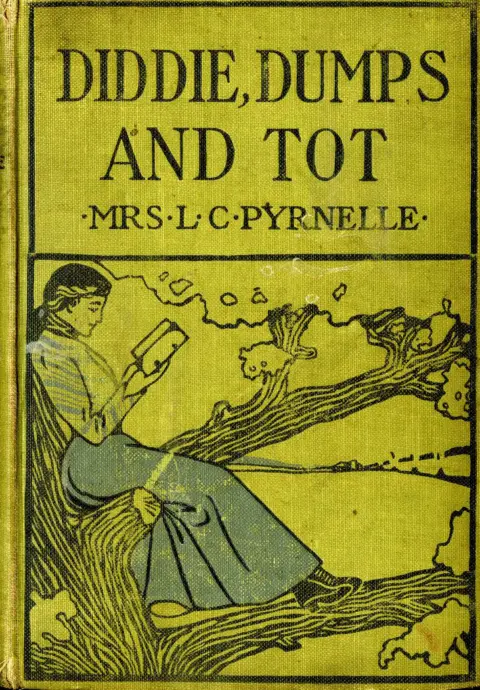
Diddie, Dumps, and Tot; Or, Plantation Child-Life
Louise Clarke Pyrnelle
THE CLASSIC COLLECTION · 1882
"Diddie, Dumps & Tot; or, Plantation Child-Life" by Louise Clarke Pyrnelle is a fictional narrative that captures the childhood experiences of three little girls on a Southern plantation in the mid-19th century. The story unfolds through the adventures of Diddie, Dumps, and Tot, who interact affectionately with the enslaved individuals on their plantation, showcasing the complexities of their relationships in a historical context. The narrative aims to preserve the folk stories, games, and traditions of Southern slaves, reflecting a formative period that the author sought to immortalize. The opening of the book introduces Diddie, Dumps, and Tot, the daughters of Major Waldron, who live in a big house surrounded by both beautiful gardens and their enslaved caregivers, including the nurturing 'Mammy' and various other figures who help raise them. The description paints a vivid picture of plantation life and the closeness between the children and their caregivers. As the story progresses, we learn about their playful interactions, festive celebrations, and the lessons they receive from the adults around them. The text establishes a nostalgic tone as it explores the contrasts and connections between the lives of the white children and the enslaved individuals, illustrating a world soon to change.
Introduction adapted from the source catalogue; source summaries may be automatically generated.
Free to read · English · 43,376 words · No account needed
MAKE TIME FOR A GOOD BOOK
On by default. Untick to stop anonymous reading totals. Each page counts after 10 seconds in view. How this works.
Anonymous counting is on unless you have switched it off.
and Uncle Snake-bit Bob came up the ditch bank with an armful of
white-oak splits.
"Yer'd better git outn dat water," he called, as soon as he saw the children. "Yer'll all be havin' de croup nex'. Git out, I tell yer! Efn yer don't, I gwine straight an' tell yer pa."
It needed no second bidding, and the little girls scrambled up the bank, and, drying their feet as best they could upon their skirts, they put on their shoes and stockings.
"What are you doin', Uncle Bob?" called Diddie.
"I'm jes er cuttin' me er few willers fur ter make baskit-handles outn."
"Can't we come an' look at yer?" asked Diddie.
"Yes, honey, efn yer wants ter," replied Uncle Bob, mightily pleased. "You're all pow'ful fon' er dis ole nigger; you're allers wantin' ter be roun' him."
"It's 'cause you always tell us tales, an' don't quar'l with us," replied Diddie, as the children drew near the old man, and watched him cut the long willow branches.
"Uncle Bob," asked Dumps, "what was that you was singin' 'bout the jay
bird?"
"Lor', honey, hit wuz jes 'boutn 'im dyin' wid de hookin'-coff; but yer better lef' dem jay birds erlone; yer needn' be er wantin' ter hyear boutn 'em."
"Why, Uncle Bob?"
"Caze, honey, dem jay birds dey cyars news ter de deb'l, dey do; an' yer better not fool 'long 'em."
"Do they tell him everything?" asked Diddie, in some solicitude.
"Dat dey do! Dey tells 'im e'bything dey see you do wat ain't right; dey cyars hit right erlong ter de deb'l."
"Uncle Bob," said Dumps, thoughtfully, "s'posin' they wuz some little girls l-o-n-g time ergo what stole ernuther little girl outn the winder, an' then run'd erway, an' waded in er ditch, what they Mammy never would let 'em; efn er jay bird would see 'em, would he tell the deb'l nuthin' erbout it?"
"Lor', honey, dat 'ud be jes nuts fur 'im; he'd light right out wid it; an' he wouldn't was'e no time, nuther, he'd be so fyeard he'd furgit part'n it."
"I don't see none 'bout hyear," said Dumps, looking anxiously up at the trees. "They don't stay 'bout hyear much, does they, Uncle Bob?"
"I seed one er settin' on dat sweet-gum dar ez I come up de ditch," said Uncle Bob. "He had his head turnt one side, he did, er lookin' mighty hard at you chil'en, an' I 'lowed ter myse'f now I won'er wat is he er watchin' dem chil'en fur? but, den, I knowed you chil'en wouldn't do nuffin wrong, an' I knowed he wouldn't have nuffin fur ter tell."
Your reading position is saved on this browser. Take it to another device with a library code. Reading pages adapt to text, rather than matching a printed edition.
Louise Clarke Pyrnelle
BEHIND THE BOOK
This eBook is for the use of anyone anywhere in the United States and most other parts of the world at no cost and with almost no restrictions whatsoever. You may copy it, give it away or re-use it under the terms of the Project Gutenberg License included with this eBook or online at www.gutenberg.org. If you are not located in the United States, you will have to check the laws of the country where you are located before using this eBook. Read the source licence.
The original source file, including credits and licence, is retained by this library. Request an original-format copy at no charge. Please include the book title and Project Gutenberg identifier #17146.
KEEP YOUR CURIOSITY GOING
Cécile Tormay

Moritz Busch
Coulson Kernahan
John L. Ransom

Maurice Baring
Frances Wright