THE CLASSIC COLLECTION✦My diaries, being a personal narrative of events 1888-1914, Part 2 (1900-1914)CLASSIC FREE BOOKS
My diaries, being a personal narrative of events 1888-1914, Part 2 (1900-1914)
Wilfrid Scawen Blunt
THE CLASSIC COLLECTION · 1913
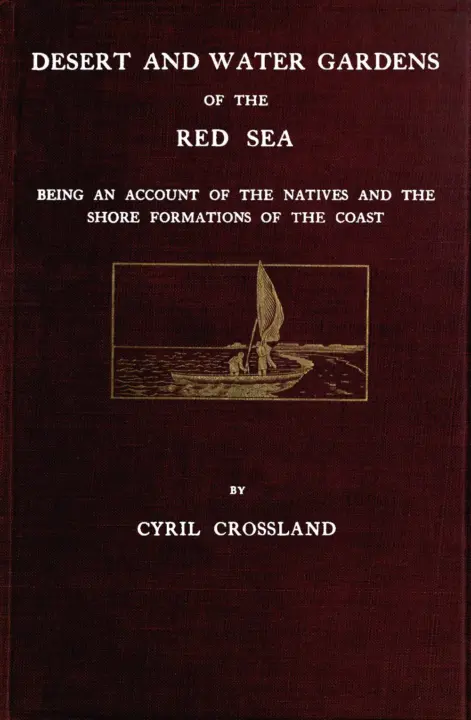
"Desert and Water Gardens of the Red Sea" by Cyril Crossland is a scientific publication written in the early 20th century. This work explores the little-known coast of the Red Sea, focusing on its native peoples and unique shore formations. Crossland, a marine biologist, aims to provide information not only about the geography and ecology of the area but also about its cultural context and the beauty of its natural landscapes. The opening of the book begins with a detailed description of the Red Sea coast as seen through the author's eyes during an arrival by sea. Crossland paints vivid imagery of the coast's sandstone cliffs, fringing reefs, and coral gardens. He reflects on his initial misconceptions about the region, highlighting the stark desert backdrop that houses sparse vegetation and unique flora emerging after winter rains. His account sets the stage for a deeper exploration of the geological and biological features of the area, as well as the intricate connection between the environment and the lives of the local peoples. Through this introduction, readers are drawn into a blend of scientific observation and personal experience, creating a rich tapestry that promises further insights into both the physical and cultural landscapes of the Red Sea.
Introduction adapted from the source catalogue; source summaries may be automatically generated.
Free to read · English · 55,869 words · No account needed
MAKE TIME FOR A GOOD BOOK
On by default. Untick to stop anonymous reading totals. Each page counts after 10 seconds in view. How this works.
Anonymous counting is on unless you have switched it off.
Climate, alternations of desert and sea conditions — Hot sand-bearing winds — Rainfall — Peculiarities of the tide — Canal-like shape of Red Sea — The great Rift Valley — Origin of the “Brothers” and “Daedalus Reef” — “Emerald Island” — The coast and reefs — Maritime plain — Its coral border — Recent nature of internal structure of coral rock — Elevation of coastline — Foundations of the reefs — Previous theories inadmissible — Rawaya peninsula — Three steps on sides of Rift Valley — Successive elevations — Harbours — Problem of their origin — A natural promenade — Coast-wise travel — The Shubuk labyrinth — Summary of history of the Red Sea 118
Pl. I, Fig. 1. Coast of the inside cover Anglo-Egyptian Sudan at beginning
„ II, „ 2. Map of Red Sea „ „ „ end
„ III, „ 3. A sandstorm frontispiece
Fig. 4. Plan of Suakin harbour etc. 11
„ 5. Suakin, the Customs House and Government buildings „
Pl. IV, Fig. 6. Suakin, a mosque (Photo. by W. H. Lake, Esq.) to face 13
„ V, „ 7. „ the causeway and town gate „ 14
„ V, „ 8. „ one of Kitchener’s forts „ „
„ V, „ 9. Sunset on the Red Sea „ „
„ VI, „ 10. Portrait of a young Hamite „ 15
„ VII, „ 11. An Arabian Sea captain „ 16
„ VII, „ 12. A Bishari „ „
„ VII, „ 13. Negro ex-slave „ „
„ VIII, „ 14. Old Mabrûk, from Zanzibar „ 20
„ VIII, „ 15. Hamitic woman „ „
„ IX, „ 16. Elderly Bishari „ 23
„ X, „ 17. A veteran seaman „ 25
„ X, „ 18. Mutton fat hair dressing „ „
„ X, „ 19. Daggers and amulet „ „
„ X, „ 20. A woman’s hand „ „
„ XI, „ 21. Our camel postman with native arms „ 28
„ XII, „ 22. Prayer at a Shêkh’s grave „ 36
„ XII, „ 23. Boys with amulets and lucky stone „ „
„ XIII, „ 24. A prophet’s tomb „ 38
„ XIII, „ 25. A mediaeval tomb „ „
„ XIV, Figs. 26 and 27. Water carriers „ 50
„ XV, Fig. 28. Tent houses „ 54
„ XVI, „ 29. Goats feeding on thorn bushes „ 56
„ XVI, Figs. 30 and 31. Native utensils „ „
„ XVII, „ 32 and 33. Arabian sword dance „ 57
„ XVII, Fig. 34. Hamitic wedding dance „ „
Pl. XVIII, „ 35. Pearling canoes under sail „ 60
„ XVIII, „ 36. A pilgrim sambûk „ „
Fig. 37. Outline of rigging of a sambûk „
„ 38. Diagram of halyard 61
„ 39. Laden sambûk under sail 62
Pl. XIX, Fig. 40. Hamitic fisherman to face 65
„ XIX, „ 41. Small pearling gatîra „ „
„ XIX, „ 42. Large pearling sambûk with ten canoes „ „
„ XX, Figs. 43 to 46. The operations of a pearl fisher „ 66
„ XXI, Fig. 47. Pearl-divers „ 71
„ XXII, „ 48. Spinning goats’ hair „ 74
„ XXIII, „ 49. Weaving hair cloth „ 80
„ XXIII, „ 50. A marriageable girl „ „
„ XXIV, „ 51. Baby girl with lamb „ 82
„ XXV, Figs. 52 to 57. Sea-anemones and corals „ 84
„ XXVI, Fig. 58. Some stony corals „ 88
„ XXVII, „ 59. A simple colonial coral „ 89
„ XXVIII, „ 60. Common reef building corals „ 91
„ XXIX, Figs. 61 to 63. The mushroom corals „ 92
„ XXX, „ 64 and 65. Stony seaweeds „ 100
„ XXXI, „ 66 to 70. Corals bored by molluscs and sponges „ 102
Diagram 1. Features of a fringing reef 104
Pl. XXXII, Fig. 71. Reef flat and undercut cliffs, Rawaya to face 104
Diagram 2. The building of a reef 105
„ 3. Further growth of the reef 106
„ 4. The abrasion of the coast „
„ 5. Formation of fringing reef 107
Pl. XXXIII, Fig. 72. Portion of a reef flat to face 108
„ XXXIII, „ 73. The under surface of the same stone „ „
„ XXXIV, „ 74. A fringing reef in sandstone, Cape Verde Islands „ 110
Your reading position is saved on this browser. Take it to another device with a library code. Reading pages adapt to text, rather than matching a printed edition.
BEHIND THE BOOK
This eBook is for the use of anyone anywhere in the United States and most other parts of the world at no cost and with almost no restrictions whatsoever. You may copy it, give it away or re-use it under the terms of the Project Gutenberg License included with this eBook or online at www.gutenberg.org. If you are not located in the United States, you will have to check the laws of the country where you are located before using this eBook. Read the source licence.
The original source file, including credits and licence, is retained by this library. Request an original-format copy at no charge. Please include the book title and Project Gutenberg identifier #71230.
KEEP YOUR CURIOSITY GOING
Wilfrid Scawen Blunt
Wilfrid Scawen Blunt

E. W. (Edgar Watson) Howe
Francis Greenleaf Allinson & Anne C. E. (Anne Crosby Emery) Allinson
Cyrenus Cole

John Martineau