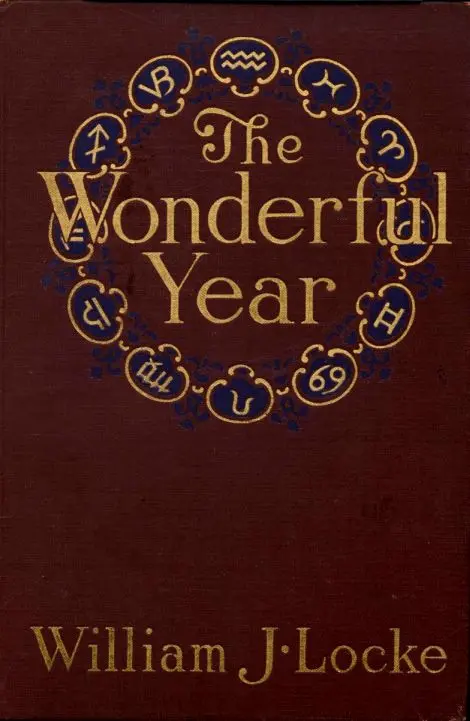
The Wonderful Year
William John Locke
THE CLASSIC COLLECTION · 1897
"Derelicts" by William John Locke is a novel written in the late 19th century. The book explores themes of isolation, redemption, and the search for connection through its lead character, Stephen Joyce, a man grappling with the shame of his past as a former convict. Since his release, he navigates the harsh realities of life as he attempts to reclaim his place in society while yearning for friendship and understanding. The opening of the novel introduces Stephen Joyce as he sits despondently on the steps of a grand but deserted house in Holland Park, a poignant symbol of his lost past. We learn about his former life, filled with promise and affection, which has been shattered by his time in prison. Despite his self-loathing, a glimmer of hope emerges when he unexpectedly encounters Yvonne Latour, a former friend who recognizes him and offers her friendship. Their interaction showcases Joyce's internal struggle, juxtaposed against Yvonne's warmth and kindness, setting the stage for a complex exploration of guilt, desire for redemption, and the power of human connection as the story unfolds.
Introduction adapted from the source catalogue; source summaries may be automatically generated.
Free to read · English · 78,249 words · No account needed
MAKE TIME FOR A GOOD BOOK
On by default. Untick to stop anonymous reading totals. Each page counts after 10 seconds in view. How this works.
Anonymous counting is on unless you have switched it off.
“What about the sea-sick girls to-day?”
“I would n’t touch any of ’em with a ten-foot pole,” replied the misogynist, with bitter scorn. “I never was in an engagement where there was such an inferior lot of ladies. I don’t know where the management picked them up. And to think of the number of nice girls in London simply starving for work.”
“They seem right enough,” said Joyce, indifferently.
“Gad! You should have been with me in ‘Mother Goose’ at Leeds this winter. I was playing one of the men in the moon--they noticed me from the front. You should have seen the slap-up lot we had there. What kind of shop were you in for the winter?”
“I was in another walk of life,” replied Joyce, with a curl of his lips.
At that moment the call-boy’s voice was heard in the passages: “Beginners for the first act;” and then he appeared himself at the door.
“Everybody on the stage.”
They trooped out, up the narrow stairs and along the dusty passages and through the wings on to the stage, where they were met by the ladies of the chorus, who came on from the other side; and then all grouped themselves in their customary attitudes under the stage-manager’s eye. Joyce was posed, second on the left, with a girl resting her head on his knee. He greeted her as she took her place.
“How are you to-night, Miss Stevens?” he whispered.
“Oh, badly. The heat in the dressing-room is awful.”
“So it is in ours. It is a wonder we don’t all melt together in a sticky
lump.”
“It is the worst arranged theatre I was ever in.”
“I am sorry,” said Joyce, “you look tired.”
“Hush--the orchestra--”
The curtain rose slowly, revealing the glare of the footlights and the vague cavernous darkness of the auditorium, seen shimmering, as they reclined on the stage, through the band of unbumed gases above the jets.
The opening chorus began with its nodding-mandarin business, followed by eccentric evolutions. Then the tenor came on alone. He jostled Joyce who was standing near the entrance.
“Damn it, don’t take up all the stage,” he muttered irritably under cover of the radiant expression demanded by the business.
He broke into his song, the chorus lining the sides. Then two minor characters appeared, and after some dialogue, interrupted by Chinese exclamations of delight on the part of the chorus, the latter danced off in pairs.
“I do call that cheek,” said Miss Stevens, as soon as they had reached the wings, “why could n’t he look where he was going to?”
“Yes, it was his fault,” said Joyce.
Your reading position is saved on this browser. Take it to another device with a library code. Reading pages adapt to text, rather than matching a printed edition.
William John Locke
William John Locke
William John Locke
William John Locke
BEHIND THE BOOK
This eBook is for the use of anyone anywhere in the United States and most other parts of the world at no cost and with almost no restrictions whatsoever. You may copy it, give it away or re-use it under the terms of the Project Gutenberg License included with this eBook or online at www.gutenberg.org. If you are not located in the United States, you will have to check the laws of the country where you are located before using this eBook. Read the source licence.
The original source file, including credits and licence, is retained by this library. Request an original-format copy at no charge. Please include the book title and Project Gutenberg identifier #55927.
KEEP YOUR CURIOSITY GOING
Coulson Kernahan

Maurice Baring
Frances Wright
Cécile Tormay

Frederic Jesup Stimson

W. H. P. (William Henry Pope) Jarvis