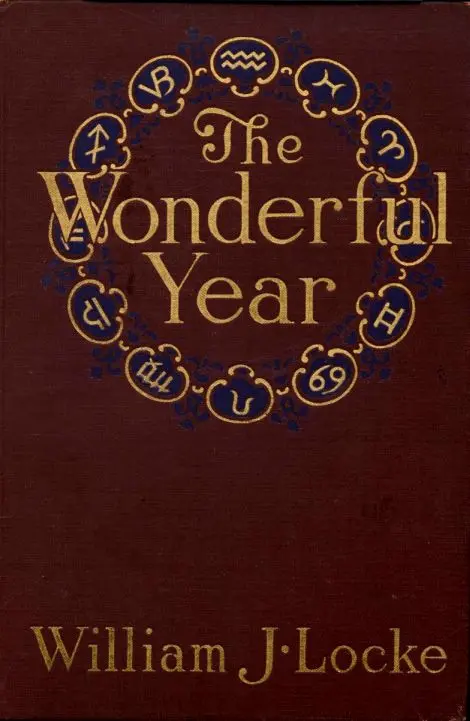
The Wonderful Year
William John Locke
THE CLASSIC COLLECTION · 1897
"Derelicts" by William John Locke is a novel written in the late 19th century. The book explores themes of isolation, redemption, and the search for connection through its lead character, Stephen Joyce, a man grappling with the shame of his past as a former convict. Since his release, he navigates the harsh realities of life as he attempts to reclaim his place in society while yearning for friendship and understanding. The opening of the novel introduces Stephen Joyce as he sits despondently on the steps of a grand but deserted house in Holland Park, a poignant symbol of his lost past. We learn about his former life, filled with promise and affection, which has been shattered by his time in prison. Despite his self-loathing, a glimmer of hope emerges when he unexpectedly encounters Yvonne Latour, a former friend who recognizes him and offers her friendship. Their interaction showcases Joyce's internal struggle, juxtaposed against Yvonne's warmth and kindness, setting the stage for a complex exploration of guilt, desire for redemption, and the power of human connection as the story unfolds.
Introduction adapted from the source catalogue; source summaries may be automatically generated.
Free to read · English · 78,249 words · No account needed
MAKE TIME FOR A GOOD BOOK
On by default. Untick to stop anonymous reading totals. Each page counts after 10 seconds in view. How this works.
Anonymous counting is on unless you have switched it off.
Is all this true?” asked Yvonne, mournfully.
“Yes, worse luck,” replied Joyce, looking up from his Sunday newspaper.
“It is very dreadful,” said Yvonne.
She was finishing “The Wasters,” Joyce’s lately published novel. It was not a success. Its cultivated style received recognition everywhere, but the unrelieved pessimism, powerfully as it was presented, repelled most readers. He was inclined to be depressed at its reception. To Yvonne, however, it was a revelation. She closed the book with a sigh, and remained for some time gazing absently at the cover. Then she rose in her quick way.
“Let us go out--into the sunshine--or I shall cry. I feel miserable,
Stephen.”
“On account of that wretched book?”
“That and other things. Take me to Regent’s Park--to see the flowers.”
He assented gladly and Yvonne went to put on her things. Shortly afterwards they were side by side on the garden seat of a westward bound omnibus.
“I feel better,” said Yvonne, breathing in the summer air. “Don’t you?”
“It is nice,” answered Joyce. “I shall be better pleased when we are out of these joyless streets. The Pentonville Road on a Sunday is depressing. I haven’t seen a smile on a human face since we have been out. What grey lives people lead.”
“But they can’t all be unhappy,” she said.
The ’bus stopped for a moment. Three or four young roughs, in Sunday clothes, with coarse, animal faces and discordant speech passed by below on the pavement, and noisily greeted a couple of quiet-looking girls, evidently acquaintances.
“These seem cheerful enough,” said Yvonne.
Joyce shrugged his shoulders.
“Did it ever occur to you what misery men of that type work in the world? By the laws of their class they will all marry--and marry young. Fancy a woman’s life in the hands of any of those fellows.”
The ’bus moved on. Yvonne was silent.
His tone was that of the book she had just been reading. She stole a side glance at him. His face in repose was always sad and brooding. To-day she seemed to read more clearly in it the lines that the breaking of the spirit had caused. She identified him with the characters in the sordid scenes he had described. Presently she laid her hand lightly on his arm.
“Do you think we live a very grey life--now?”
“You have a very hard, dull, monotonous life,” he replied.
“I don’t,” said Yvonne stoutly. “I am very pleased and contented. I only want one thing to make me perfectly happy.”
“So does every one. The one thing just makes the difference. It’s the one thing we can’t possibly get.”
Your reading position is saved on this browser. Take it to another device with a library code. Reading pages adapt to text, rather than matching a printed edition.
William John Locke
William John Locke
William John Locke
William John Locke
BEHIND THE BOOK
This eBook is for the use of anyone anywhere in the United States and most other parts of the world at no cost and with almost no restrictions whatsoever. You may copy it, give it away or re-use it under the terms of the Project Gutenberg License included with this eBook or online at www.gutenberg.org. If you are not located in the United States, you will have to check the laws of the country where you are located before using this eBook. Read the source licence.
The original source file, including credits and licence, is retained by this library. Request an original-format copy at no charge. Please include the book title and Project Gutenberg identifier #55927.
KEEP YOUR CURIOSITY GOING
Coulson Kernahan

Maurice Baring
Frances Wright
Cécile Tormay

Frederic Jesup Stimson

W. H. P. (William Henry Pope) Jarvis