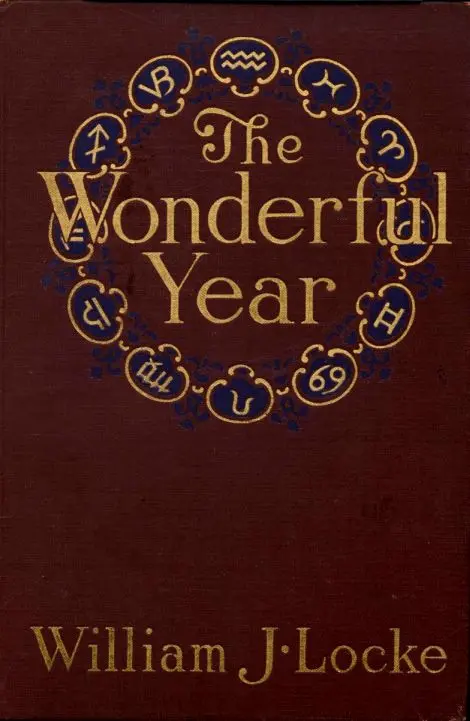
The Wonderful Year
William John Locke
THE CLASSIC COLLECTION · 1897
"Derelicts" by William John Locke is a novel written in the late 19th century. The book explores themes of isolation, redemption, and the search for connection through its lead character, Stephen Joyce, a man grappling with the shame of his past as a former convict. Since his release, he navigates the harsh realities of life as he attempts to reclaim his place in society while yearning for friendship and understanding. The opening of the novel introduces Stephen Joyce as he sits despondently on the steps of a grand but deserted house in Holland Park, a poignant symbol of his lost past. We learn about his former life, filled with promise and affection, which has been shattered by his time in prison. Despite his self-loathing, a glimmer of hope emerges when he unexpectedly encounters Yvonne Latour, a former friend who recognizes him and offers her friendship. Their interaction showcases Joyce's internal struggle, juxtaposed against Yvonne's warmth and kindness, setting the stage for a complex exploration of guilt, desire for redemption, and the power of human connection as the story unfolds.
Introduction adapted from the source catalogue; source summaries may be automatically generated.
Free to read · English · 78,249 words · No account needed
MAKE TIME FOR A GOOD BOOK
On by default. Untick to stop anonymous reading totals. Each page counts after 10 seconds in view. How this works.
Anonymous counting is on unless you have switched it off.
“You have not changed,” he said, with grave tenderness. “You are still the same sweet flower-like woman that was my wife. And I have not changed. I have longed for you all through these bitter, lonely years. Do you know why I left Fulminster?”
“No,” murmured Yvonne.
“Because it grew unbearable--without you. I thought a changed scene and new responsibilities would fill my thoughts. I was mistaken. And added to my want of you was remorse for harshness in that terrible hour.”
“I have only thought of your kindness, Everard,” said Yvonne, with tears in her eyes. His emotion impressed her deeply with a sense of his suffering.
He rose, came forward and bent over her chair.
“Will you come back with me, Yvonne?”
She would have given worlds to be away; to have, at least, a few hours to consider her answer. He expected it at once. Feminine instinct desperately sought evasion.
“I shall be of no use to you. I can’t sing any more. Listen.”
She turned sideways in her chair, and drawing back her head far from him, began, with a smile, the “Aria” of the Angel in the Elijah. The grave man drew himself up, shocked to the heart. He had not realised what the loss of her voice meant. Instead of the pure dove-notes that had stirred the passion of his manhood, nothing came from her lips but toneless, wheezing sounds. She stopped, bravely tried to laugh, but the laugh was choked in a sob and she burst into tears.
“Come back with me, my darling,” he said, bending down again. “I will love you all the more tenderly.”
Yvonne dried her eyes in her impulsive way.
“I am foolish,” she said. “Crying can’t mend it.”
“I will devote the rest of my life to making compensation,” said the Bishop. “Come, Yvonne.”
“Oh, give me time to answer you, Everard,” she cried, driven to bay at last. “It is all so strange and sudden.”
He left her side, with a kind of sigh, and resumed his former seat. He was somewhat disappointed. He had not contemplated the chance of her refusal. A glance, however, round the shabby, low-ceilinged room reassured him. The coarse, not immaculate tablecloth, the homely crockery, the half-emptied potted-meat tins on the table, the threadbare hearthrug at his feet--all spoke, if not of poverty, at least of very narrow means. She could not surely hesitate. But she did.
“Take your time--of course,” he said, crossing his gaitered legs. There was a short silence. At last she said, with a little quiver of the lip:--
Your reading position is saved on this browser. Take it to another device with a library code. Reading pages adapt to text, rather than matching a printed edition.
William John Locke
William John Locke
William John Locke
William John Locke
BEHIND THE BOOK
This eBook is for the use of anyone anywhere in the United States and most other parts of the world at no cost and with almost no restrictions whatsoever. You may copy it, give it away or re-use it under the terms of the Project Gutenberg License included with this eBook or online at www.gutenberg.org. If you are not located in the United States, you will have to check the laws of the country where you are located before using this eBook. Read the source licence.
The original source file, including credits and licence, is retained by this library. Request an original-format copy at no charge. Please include the book title and Project Gutenberg identifier #55927.
KEEP YOUR CURIOSITY GOING
Coulson Kernahan

Maurice Baring
Frances Wright
Cécile Tormay

Frederic Jesup Stimson

W. H. P. (William Henry Pope) Jarvis