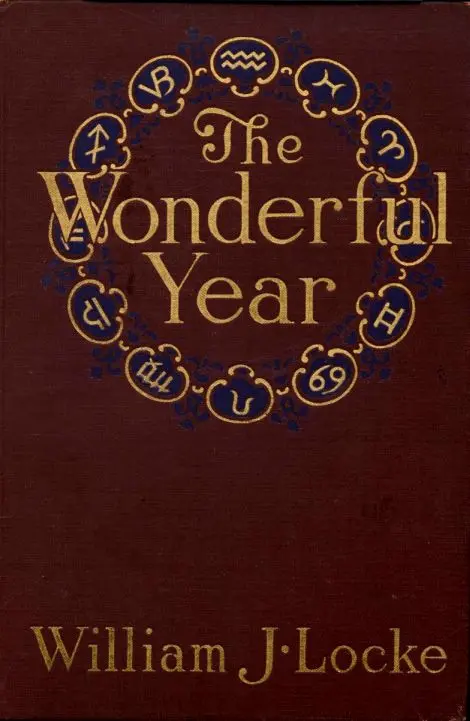
The Wonderful Year
William John Locke
THE CLASSIC COLLECTION · 1897
"Derelicts" by William John Locke is a novel written in the late 19th century. The book explores themes of isolation, redemption, and the search for connection through its lead character, Stephen Joyce, a man grappling with the shame of his past as a former convict. Since his release, he navigates the harsh realities of life as he attempts to reclaim his place in society while yearning for friendship and understanding. The opening of the novel introduces Stephen Joyce as he sits despondently on the steps of a grand but deserted house in Holland Park, a poignant symbol of his lost past. We learn about his former life, filled with promise and affection, which has been shattered by his time in prison. Despite his self-loathing, a glimmer of hope emerges when he unexpectedly encounters Yvonne Latour, a former friend who recognizes him and offers her friendship. Their interaction showcases Joyce's internal struggle, juxtaposed against Yvonne's warmth and kindness, setting the stage for a complex exploration of guilt, desire for redemption, and the power of human connection as the story unfolds.
Introduction adapted from the source catalogue; source summaries may be automatically generated.
Free to read · English · 78,249 words · No account needed
MAKE TIME FOR A GOOD BOOK
On by default. Untick to stop anonymous reading totals. Each page counts after 10 seconds in view. How this works.
Anonymous counting is on unless you have switched it off.
It was a sultry night. He had come out for a stroll down Upper Street and High Street, before going to bed. Outside the Angel, the limit of his walk, he lingered a moment and was looking with idle interest at the great block of omnibuses, when he became aware that a poorly-dressed woman was standing by him, gazing rigidly into his face. He started, tried to fix her identity.
“Good God! It is you!” said the woman.
Then he remembered. It was Annie Stevens, the girl who had betrayed him so miserably to the theatrical company years before.
“Won’t you speak to me?” she asked, somewhat humbly, as he remained
silent.
“You recall a very bitter time to me,” said Joyce.
“Do you think it is any sweeter to me?” she asked.
And then, with a quick glance round at an approaching policeman:--
“Walk on a little way with me, will you?”
He hesitated for a moment, but a beseeching look in her eyes touched him. Her presence at that place, at that hour, spoke of tragedy. She had never been pretty. Now she had grown thin and hard-featured.
“You need n’t fear I’m going to ask you for anything--you of all people in the world. Of course, if you don’t want to be seen with me, don’t come. You can’t hurt me. I’m past that. But I’d like to speak with you for a minute or two.”
He had moved on with her while she was talking. Then there were a few
moments’ silence.
“Well?” he enquired. “What do you wish to say?”
“God knows--anything--just to ask you, perhaps, whether you’re right again. I have thought of you enough.”
He glanced at her curiously.
“Why have you come to this?”
“Why did you go to prison?” she retorted.
“I did wrong and was punished for it.”
“So did I. This is my punishment. After you had gone, I could have torn my heart out. I went on the drink--could n’t get engagements--went downhill. I can’t go much lower, can I? If you want revenge, you ’ve got it.”
She tossed her head in her old, defiant way. Joyce, perceiving her association of himself in her downfall, felt somewhat moved with pity.
“God knows, revenge is the last thing I want. On the contrary, I am distressed to see you come to this. If I could help you, I would do so. But that, you know as well as I, is out of my power.”
Your reading position is saved on this browser. Take it to another device with a library code. Reading pages adapt to text, rather than matching a printed edition.
William John Locke
William John Locke
William John Locke
William John Locke
BEHIND THE BOOK
This eBook is for the use of anyone anywhere in the United States and most other parts of the world at no cost and with almost no restrictions whatsoever. You may copy it, give it away or re-use it under the terms of the Project Gutenberg License included with this eBook or online at www.gutenberg.org. If you are not located in the United States, you will have to check the laws of the country where you are located before using this eBook. Read the source licence.
The original source file, including credits and licence, is retained by this library. Request an original-format copy at no charge. Please include the book title and Project Gutenberg identifier #55927.
KEEP YOUR CURIOSITY GOING
Coulson Kernahan

Maurice Baring
Frances Wright
Cécile Tormay

Frederic Jesup Stimson

W. H. P. (William Henry Pope) Jarvis