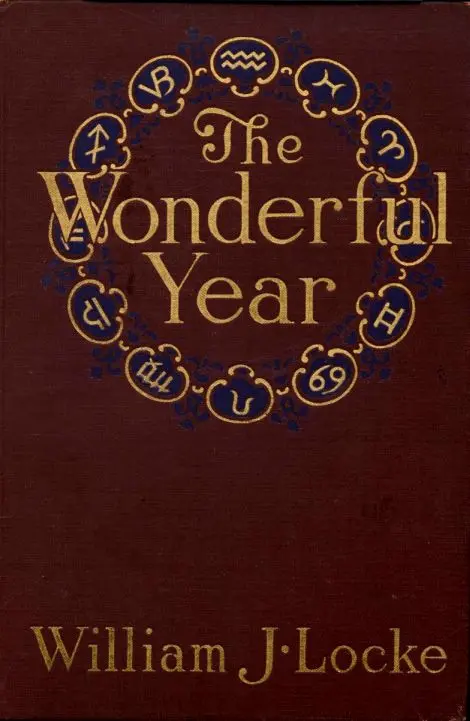
The Wonderful Year
William John Locke
THE CLASSIC COLLECTION · 1897
"Derelicts" by William John Locke is a novel written in the late 19th century. The book explores themes of isolation, redemption, and the search for connection through its lead character, Stephen Joyce, a man grappling with the shame of his past as a former convict. Since his release, he navigates the harsh realities of life as he attempts to reclaim his place in society while yearning for friendship and understanding. The opening of the novel introduces Stephen Joyce as he sits despondently on the steps of a grand but deserted house in Holland Park, a poignant symbol of his lost past. We learn about his former life, filled with promise and affection, which has been shattered by his time in prison. Despite his self-loathing, a glimmer of hope emerges when he unexpectedly encounters Yvonne Latour, a former friend who recognizes him and offers her friendship. Their interaction showcases Joyce's internal struggle, juxtaposed against Yvonne's warmth and kindness, setting the stage for a complex exploration of guilt, desire for redemption, and the power of human connection as the story unfolds.
Introduction adapted from the source catalogue; source summaries may be automatically generated.
Free to read · English · 78,249 words · No account needed
MAKE TIME FOR A GOOD BOOK
On by default. Untick to stop anonymous reading totals. Each page counts after 10 seconds in view. How this works.
Anonymous counting is on unless you have switched it off.
“What has the furniture to do with it?”
“Why it is yours, is n’t it?”
“How, mine?”
“The bill of sale,” replied Yvonne seriously.
“Oh, you dear little goose,” cried Joyce, “you don’t suppose I am going to sell you up!”
“Why not--if you need the money? The furniture is all your own.”
“How can it be when I don’t claim it?”
Yvonne shook her head. Ordinarily the most easily swayed of women, now and then she was inconvincible. She had got it into her head that the furniture had lapsed by sheer law of England into his possession, and no argument could move her. He explained that he could renew the bill. She dismissed the explanation with a little foreign gesture.
“I own nothing in the world but what I stand up in,” she persisted.
“Then you’re worse off than ever,” said Joyce.
“I am,” she said despondently. “Is n’t it strange to want money! I never knew what it was before.”
There was an odd pathos in her face that touched him.
“Cheer up, little woman. Nothing is ever so bad as it looks.”
Comforting words were nice, but they did not change the position. Money had to be obtained. Where was it to come from?
“I suppose I must write to Everard, since your letter has miscarried.”
“Letters don’t miscarry nowadays,” said Joyce. “They don’t even do so in novels. Still, you had better write. I wish you felt you need n’t.”
“So do I.”
“We shall have to part as soon as he cables a remittance.”
“Oh, I wish we could get along as we are,” said Yvonne. “I have been so happy here with you.”
“Then let us fight it out between us,” exclaimed Joyce resolutely. “You ’ll soon be able to get some singing lessons, and I ’ll find a situation as railway porter, or something, and we ’ll rub along somehow till better times.”
“Oh, you don’t know how much gladder I should be!” cried Yvonne with a sparkle in her eyes. “If I only could earn something--not be a drag upon you! Oh, I would sooner lead the life of a poor, poor woman, in the humblest way, than take Everard’s money--you know that.”
“We can’t go on living here,” said Joyce, gently.
“Of course not. We will go to much cheaper rooms and live like working-folks. I can do lots of things, lay fires, make pastry--”
“Dumplings will be as far as we can get,” said Joyce.
“Well, then, they ’ll be beautiful dumplings,” said Yvonne.
Your reading position is saved on this browser. Take it to another device with a library code. Reading pages adapt to text, rather than matching a printed edition.
William John Locke
William John Locke
William John Locke
William John Locke
BEHIND THE BOOK
This eBook is for the use of anyone anywhere in the United States and most other parts of the world at no cost and with almost no restrictions whatsoever. You may copy it, give it away or re-use it under the terms of the Project Gutenberg License included with this eBook or online at www.gutenberg.org. If you are not located in the United States, you will have to check the laws of the country where you are located before using this eBook. Read the source licence.
The original source file, including credits and licence, is retained by this library. Request an original-format copy at no charge. Please include the book title and Project Gutenberg identifier #55927.
KEEP YOUR CURIOSITY GOING
Coulson Kernahan

Maurice Baring
Frances Wright
Cécile Tormay

Frederic Jesup Stimson

W. H. P. (William Henry Pope) Jarvis