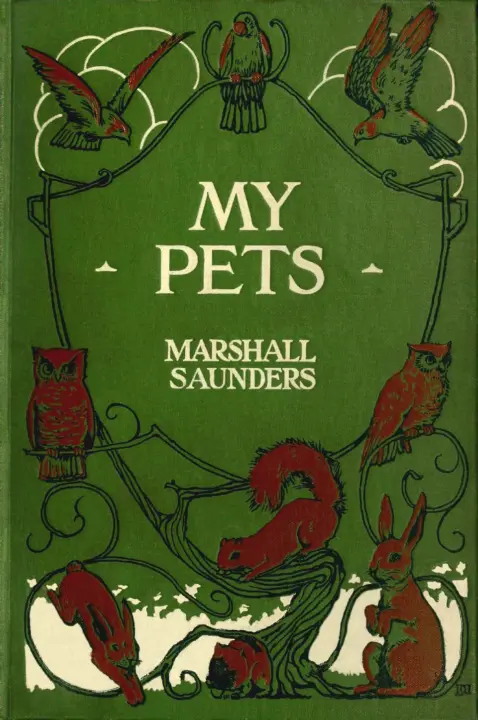
My pets
Marshall Saunders
THE CLASSIC COLLECTION · 1899
"Deficient Saints: A Tale of Maine" by Marshall Saunders is a novel written in the early 20th century. Set in the quaint town of Rossignol, Maine, the story revolves around Mrs. Hippolyta Prymmer, a somewhat eccentric widow obsessively maintaining a 'death-book' that catalogs deceased acquaintances. As she navigates her life among other townsfolk, including her newly-returned son Justin and his unexpected wife Derrice, the narrative explores themes of family, societal expectations, and the peculiarities of life in a close-knit community. The beginning of the story introduces Mrs. Prymmer engrossed in her death-book as she muses about her past marriages. We learn about her son, Justin, who surprises her by returning home with his new wife, Derrice, causing considerable upheaval in her life. Their interactions highlight the generational and ideological clash between Mrs. Prymmer and her modern daughter-in-law, who represents a break from traditional expectations. The opener sets a comedic yet poignant tone, drawing readers into the dynamics of family relationships while hinting at the complexities and challenges ahead.
Introduction adapted from the source catalogue; source summaries may be automatically generated.
Free to read · English · 88,409 words · No account needed
MAKE TIME FOR A GOOD BOOK
On by default. Untick to stop anonymous reading totals. Each page counts after 10 seconds in view. How this works.
Anonymous counting is on unless you have switched it off.
"'Hark from the tombs a doleful sound,' I suppose, or, 'High o'er my soul damnation's waves do roll.'"
"Miss Gastonguay," interposed Aurelia, "those are very old hymns; no
one sings them now."
"What did you sing?" persisted Miss Gastonguay.
"We sang something beginning 'Jesus, lover of my soul,'" murmured
Derrice.
"Never mind the rest. Tell me how the meeting impressed you. It was
your first, I suppose."
"Yes, I never was at anything of the kind before. May I speak freely?" and she doubtfully scanned her audience.
"Of course," said her hostess.
"I am new to what is called religious life. It seemed marvellous to me that men could get up one after another--and even women--and talk so openly of what was in their hearts."
"Cant,--a great lot of it, cant and rubbish. They would cheat you the
next day."
"My husband would not cheat," said Derrice, mildly.
"He is an exception."
"I will tell you what I thought," said the girl, encouraged by Aurelia's breathless admiration and Mr. Huntington's subdued interest. "It seemed to me that they were out of themselves,--that their strength to reveal their faults was supernatural. I never before heard people say, 'I am imperfect,--I do not lead as holy a life as I might,' and they were very full of pity. They spoke of doing more good to others."
"Words only, not deeds."
"My husband visits the poor," said Derrice, sturdily.
"Well now, young lady, what do you think of me? I am not religious, I play cards all day on Sunday if I choose. I do not believe in what you call revealed religion. What is to become of me?"
"It would be hard for me to believe anything against you," replied
Derrice, with quiet grace.
"But what will become of me when I die? Your preachers send me right down, down, down,--direct. What do you think about it?"
Derrice silently appealed to Mr. Huntington, but he would not reply, though his kind smile urged her on.
"Where am I going?" pursued Miss Gastonguay.
"How can I tell?"
"But you have your little narrow creed all made up. Saints this way, sinners that. I am no saint, yet I am not an out-and-out sinner."
Derrice stirred uneasily in her seat, and earnestly longed for her husband. At last a solution of the difficulty occurred to her. "What kind of people do you like to be with in this world, Miss Gastonguay?"
Her hostess looked around the table. The way of sinners, the seat of the scornful, had never been hers. These people about her board were all serious, thoughtful, and worthy of respect.
Your reading position is saved on this browser. Take it to another device with a library code. Reading pages adapt to text, rather than matching a printed edition.
Marshall Saunders
Marshall Saunders
Marshall Saunders
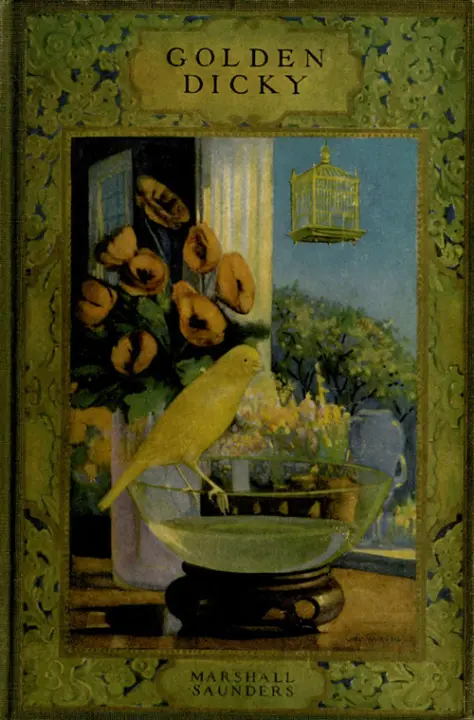
Marshall Saunders
BEHIND THE BOOK
This eBook is for the use of anyone anywhere in the United States and most other parts of the world at no cost and with almost no restrictions whatsoever. You may copy it, give it away or re-use it under the terms of the Project Gutenberg License included with this eBook or online at www.gutenberg.org. If you are not located in the United States, you will have to check the laws of the country where you are located before using this eBook. Read the source licence.
The original source file, including credits and licence, is retained by this library. Request an original-format copy at no charge. Please include the book title and Project Gutenberg identifier #52783.
KEEP YOUR CURIOSITY GOING
Coulson Kernahan

Maurice Baring
Frances Wright
Cécile Tormay

Frederic Jesup Stimson

W. H. P. (William Henry Pope) Jarvis