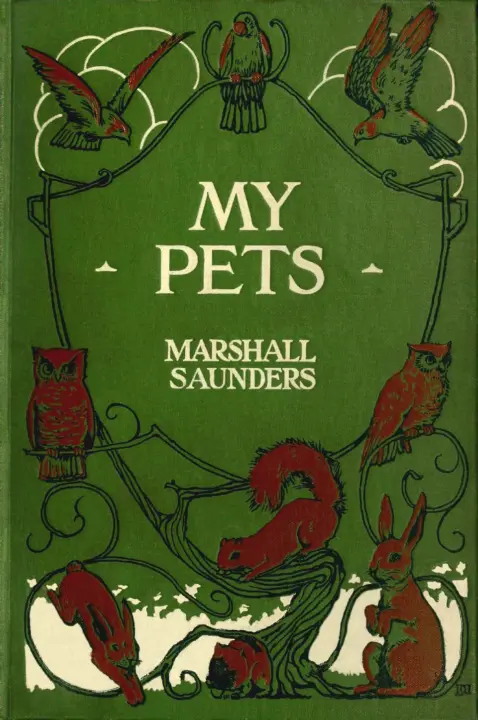
My pets
Marshall Saunders
THE CLASSIC COLLECTION · 1899
"Deficient Saints: A Tale of Maine" by Marshall Saunders is a novel written in the early 20th century. Set in the quaint town of Rossignol, Maine, the story revolves around Mrs. Hippolyta Prymmer, a somewhat eccentric widow obsessively maintaining a 'death-book' that catalogs deceased acquaintances. As she navigates her life among other townsfolk, including her newly-returned son Justin and his unexpected wife Derrice, the narrative explores themes of family, societal expectations, and the peculiarities of life in a close-knit community. The beginning of the story introduces Mrs. Prymmer engrossed in her death-book as she muses about her past marriages. We learn about her son, Justin, who surprises her by returning home with his new wife, Derrice, causing considerable upheaval in her life. Their interactions highlight the generational and ideological clash between Mrs. Prymmer and her modern daughter-in-law, who represents a break from traditional expectations. The opener sets a comedic yet poignant tone, drawing readers into the dynamics of family relationships while hinting at the complexities and challenges ahead.
Introduction adapted from the source catalogue; source summaries may be automatically generated.
Free to read · English · 88,409 words · No account needed
MAKE TIME FOR A GOOD BOOK
On by default. Untick to stop anonymous reading totals. Each page counts after 10 seconds in view. How this works.
Anonymous counting is on unless you have switched it off.
Upon crossing the threshold of the house, Derrice found herself in an interior evidently copied from the French. The floors were of hard wood, a few handsome rugs lay about them; there was an abundance of carving and gilding in the drawing-room that they entered, two gilt clocks, two mirrors, and a trio of high-backed yellow silk sofas. A number of white and gold spindle-legged chairs stood in various graceful attitudes about the room; there were but few hangings and draperies, and scarcely a cushion to be seen.
"I hate dust," said Miss Gastonguay, in an explanatory way, "and upholstered furniture and gewgaws all over parlour walls make me ill. The Japanese are the only people who know how to furnish a house. You like this room, don't you?"
"Very much," said Derrice, going up to an aromatic fire of small sticks, burning on a white-tiled hearth.
"These spring winds nip like pincers," said Miss Gastonguay, stretching out her own hands to the blaze, and stifling a yawn. "Dear me, I wish five o'clock would come."
Derrice slightly raised her eyebrows.
"That is only the second question you have asked," said Miss Gastonguay. "Yes, I always have tea at five,--a fashion I picked up in England. Whether I am here, or not, the tray comes in. If I don't get it, the twins have it."
"Ah,--you have children in the house."
"Yes, a pair, sixty-two and sixty-five,--brothers, former small and well-to-do storekeepers in the town--ruined by drink--housed in the asylum for the poor--rescued by me--faithful, but tiresome servants ever since. There's one of them."
An old serving-man came tiptoeing into the room. He pretended not to see Miss Gastonguay for an instant, then he started affectedly, made her a little bow, and, going to a distant corner, brought from it a tiny white table, and set it before her. Then lifting the top of a white silk ottoman, he drew from a box inside an exquisitely embroidered cloth, that he spread over the table.
Derrice, whose life for the last few days had been one of tedious monotony, watched with interest this self-conscious high priest, who, with his air of profound mystery, so slowly forwarded the ceremonies connected with the brewing of a cup of tea.
"Has Miss Chelda come in yet, Prosperity?" asked Miss Gastonguay,
abruptly.
"No, ma'am," he said, hanging his head like a sheepish, fooling boy,
and hurrying from the room.
"Let us have the table in the window," exclaimed Miss Gastonguay, "so we can take in the view," and at imminent danger of upsetting it she seized the fragile article of furniture and dragged it across the room.
Your reading position is saved on this browser. Take it to another device with a library code. Reading pages adapt to text, rather than matching a printed edition.
Marshall Saunders
Marshall Saunders
Marshall Saunders
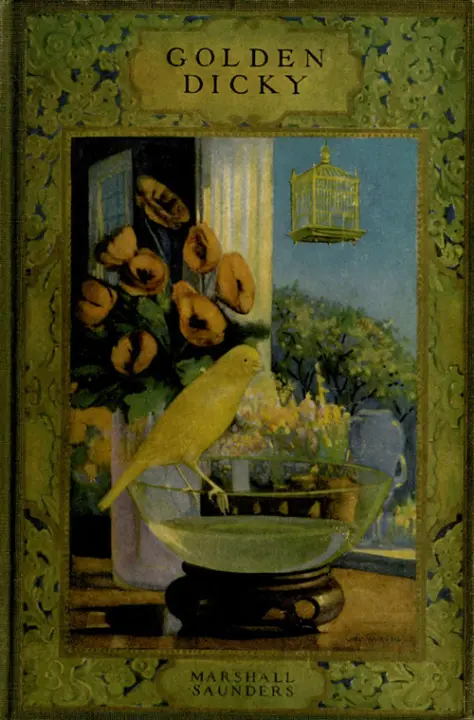
Marshall Saunders
BEHIND THE BOOK
This eBook is for the use of anyone anywhere in the United States and most other parts of the world at no cost and with almost no restrictions whatsoever. You may copy it, give it away or re-use it under the terms of the Project Gutenberg License included with this eBook or online at www.gutenberg.org. If you are not located in the United States, you will have to check the laws of the country where you are located before using this eBook. Read the source licence.
The original source file, including credits and licence, is retained by this library. Request an original-format copy at no charge. Please include the book title and Project Gutenberg identifier #52783.
KEEP YOUR CURIOSITY GOING
Coulson Kernahan

Maurice Baring
Frances Wright
Cécile Tormay

Frederic Jesup Stimson

W. H. P. (William Henry Pope) Jarvis