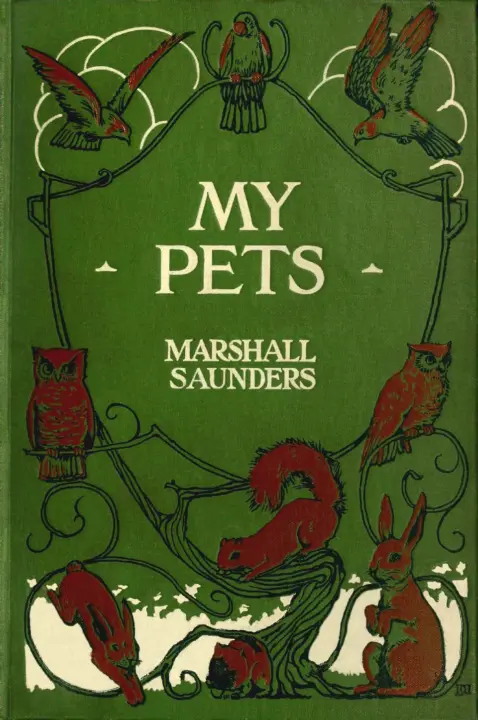
My pets
Marshall Saunders
THE CLASSIC COLLECTION · 1899
"Deficient Saints: A Tale of Maine" by Marshall Saunders is a novel written in the early 20th century. Set in the quaint town of Rossignol, Maine, the story revolves around Mrs. Hippolyta Prymmer, a somewhat eccentric widow obsessively maintaining a 'death-book' that catalogs deceased acquaintances. As she navigates her life among other townsfolk, including her newly-returned son Justin and his unexpected wife Derrice, the narrative explores themes of family, societal expectations, and the peculiarities of life in a close-knit community. The beginning of the story introduces Mrs. Prymmer engrossed in her death-book as she muses about her past marriages. We learn about her son, Justin, who surprises her by returning home with his new wife, Derrice, causing considerable upheaval in her life. Their interactions highlight the generational and ideological clash between Mrs. Prymmer and her modern daughter-in-law, who represents a break from traditional expectations. The opener sets a comedic yet poignant tone, drawing readers into the dynamics of family relationships while hinting at the complexities and challenges ahead.
Introduction adapted from the source catalogue; source summaries may be automatically generated.
Free to read · English · 88,409 words · No account needed
MAKE TIME FOR A GOOD BOOK
On by default. Untick to stop anonymous reading totals. Each page counts after 10 seconds in view. How this works.
Anonymous counting is on unless you have switched it off.
Aurelia's face at once took a rapt expression. Delicate waves of colour flowed over it, and in a sweet, thin tone of intense admiration she extended one hand in Miss Gastonguay's direction, and exclaimed, "I admire to give the character of such a woman to a stranger. Mrs. Mercer, this is the favourite of the town. Everybody loves her, everybody trusts her. She will speak sharply, but her tongue is always honest, and even when it is giving deserved reproof there will be tears in her kind eyes. I am proud to have this chance of telling Miss Gastonguay that I love her for her goodness to the poor of this town.--She is--"
"Pony," cried Miss Gastonguay, with a furiously red face, and jigging at the lines, "will you get up?"
The pony, however, had found some delectable morsel in the gutter, and while nosing it refused to budge, thereby forcing his mistress to listen to the tide of Aurelia's eloquence, which was not easily stopped.
"When there is sickness or death," she went on, rapidly, "who is first at the bedside? Always Miss Gastonguay. She pretends not to care,--she laughs at the ministers and rarely goes to church,--but she is, I verily believe, one of the best Christians in the town. She obeys the commands of Christ,--some day she will own herself a humble follower of the One who came to minister to the lowly."
"Pony," cried Miss Gastonguay, in despair, "now I am going to beat you for the first time in my life," and leaning over the dashboard she whacked him so soundly with her umbrella that, after giving one startled glance behind, he fled madly down the street, overturning a heap of tin pans on the curbstone, and frightening a number of people who fancied that a runaway was upon them.
Derrice, clutching her hat, gave one glance behind, and saw Aurelia still standing on the sidewalk, her hand outstretched, her lips moving, her attitude that of an inspired prophetess.
Miss Gastonguay's face was still red to her ears, and she did not speak until they had passed several churches, two schoolhouses, a theatre, many shops, and the city hall, and had entered on a road bordered by shabby houses. Then she waved her hand, and said, briefly, "Our neighbours, the mill hands, the most honest people in town, but, like the Gastonguays, not fashionable; and there is our house," she went on, when they reached a place where four roads met, and the car line stopped.
"You have a charming situation," replied Derrice, keenly interested in the long, narrow house, built after the fashion of a French château.
Your reading position is saved on this browser. Take it to another device with a library code. Reading pages adapt to text, rather than matching a printed edition.
Marshall Saunders
Marshall Saunders
Marshall Saunders
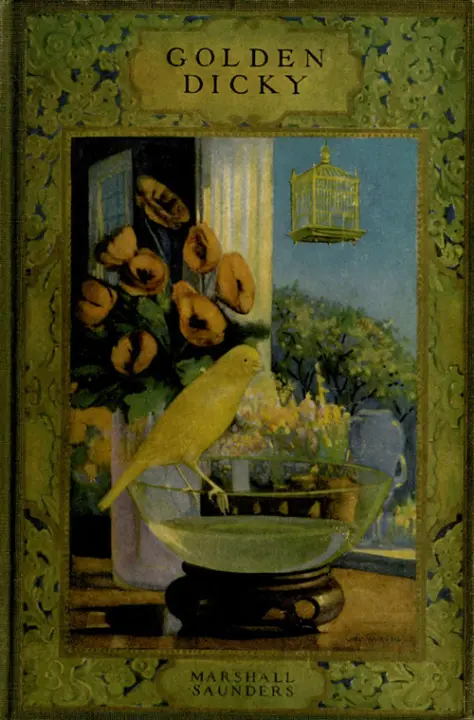
Marshall Saunders
BEHIND THE BOOK
This eBook is for the use of anyone anywhere in the United States and most other parts of the world at no cost and with almost no restrictions whatsoever. You may copy it, give it away or re-use it under the terms of the Project Gutenberg License included with this eBook or online at www.gutenberg.org. If you are not located in the United States, you will have to check the laws of the country where you are located before using this eBook. Read the source licence.
The original source file, including credits and licence, is retained by this library. Request an original-format copy at no charge. Please include the book title and Project Gutenberg identifier #52783.
KEEP YOUR CURIOSITY GOING
Coulson Kernahan

Maurice Baring
Frances Wright
Cécile Tormay

Frederic Jesup Stimson

W. H. P. (William Henry Pope) Jarvis