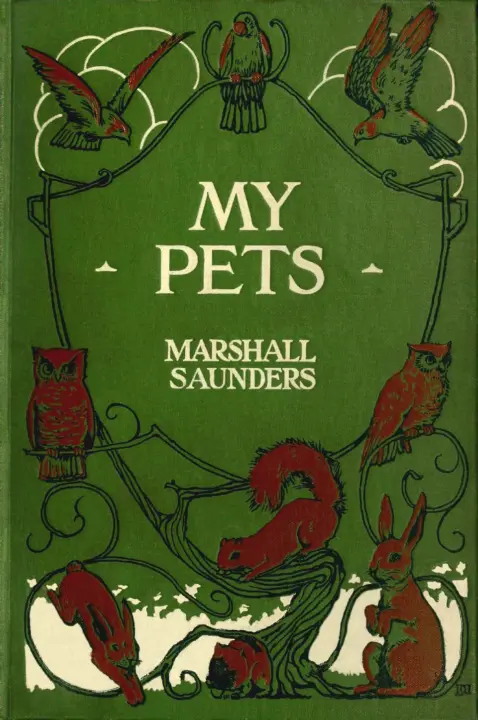
My pets
Marshall Saunders
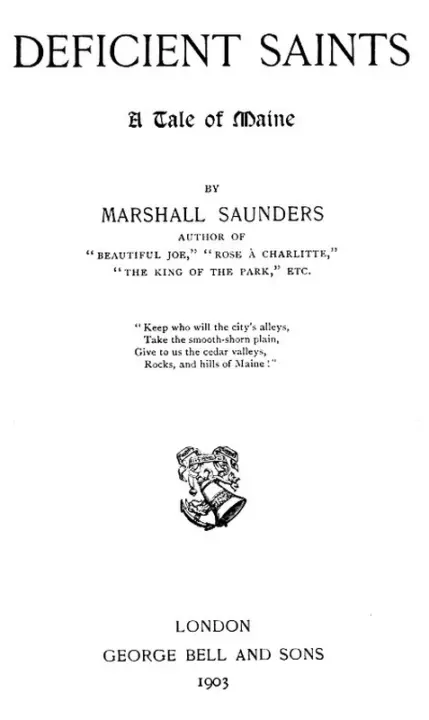
THE CLASSIC COLLECTION · 1899
"Deficient Saints: A Tale of Maine" by Marshall Saunders is a novel written in the early 20th century. Set in the quaint town of Rossignol, Maine, the story revolves around Mrs. Hippolyta Prymmer, a somewhat eccentric widow obsessively maintaining a 'death-book' that catalogs deceased acquaintances. As she navigates her life among other townsfolk, including her newly-returned son Justin and his unexpected wife Derrice, the narrative explores themes of family, societal expectations, and the peculiarities of life in a close-knit community. The beginning of the story introduces Mrs. Prymmer engrossed in her death-book as she muses about her past marriages. We learn about her son, Justin, who surprises her by returning home with his new wife, Derrice, causing considerable upheaval in her life. Their interactions highlight the generational and ideological clash between Mrs. Prymmer and her modern daughter-in-law, who represents a break from traditional expectations. The opener sets a comedic yet poignant tone, drawing readers into the dynamics of family relationships while hinting at the complexities and challenges ahead.
Introduction adapted from the source catalogue; source summaries may be automatically generated.
Free to read · English · 88,409 words · No account needed
MAKE TIME FOR A GOOD BOOK
On by default. Untick to stop anonymous reading totals. Each page counts after 10 seconds in view. How this works.
Anonymous counting is on unless you have switched it off.
"Micah," she said, with a shriek, "get out! I'm afraid of you," and she retreated precipitately from him toward the table, where she dropped into a chair.
A sudden change came over her companion. He struck an attitude of exaggerated admiration, and exclaimed, "Hippolyta, you might go on the stage,--I never saw such acting."
In fascinated confusion she stared speechlessly at him.
"You're an astonishing woman," he cried, skipping to the hearth-rug, and extending both hands toward her. "I never saw such nerve, such coolness."
She looked in her lap for her knitting, and seeing it was not there
picked rashly at her apron.
"For," he went on, with a final flourish, "bad as I am, black as are my vices, they are a pale cream-colour beside yours, for there is one crime I have not dared to commit, and it lies light as a feather on your soul.
"Why don't you ask what crime it is?" he inquired, after a short period
of silence.
She replied convulsively that she didn't want to know.
"But you've got to know. It's for the good of your soul. Hold up your head now, and I'll whisper it in your ear. It isn't a word for housetop use," and, creeping close to her, he uttered a ghostly "Murder!"
She opened her mouth to scream, but no sound came from it, and in terrified, fascinated speechlessness she began slowly backing away from him, propelling her chair on its hind legs around the table and followed by him airily perched on another.
Micah had gone crazy. There was no doubt about it. He had no thought of marriage. Her best plan was to escape from the room without irritating him. Now he was silly, and, with his head on one side, was speaking in a foolish voice, "Cousin Hippolyta, who sits behind the parlour window curtains, pretending to knit, and casting sly looks at the old widowers and bachelors as they go by?"
These were pretty sane words for an insane man, for they described her favourite occupation, and she blushed slightly as she looked away from him.
"Who counts 'em up head by head," he went on, remorselessly, "and
reckons up chances of marriage. Who makes eyes at the old men,
Hippolyta?"
"Hold your tongue, Micah," she said, hysterically.
"Who goes further than that?" he inquired, in a voice so low that it dropped into an accusing growl. "Who has a prime favourite among the old men? Who forgets what the good Book says about, 'She that looketh on a man and planneth on his sick wife's death is a murderess in her heart.'"
Your reading position is saved on this browser. Take it to another device with a library code. Reading pages adapt to text, rather than matching a printed edition.
Marshall Saunders
Marshall Saunders
Marshall Saunders
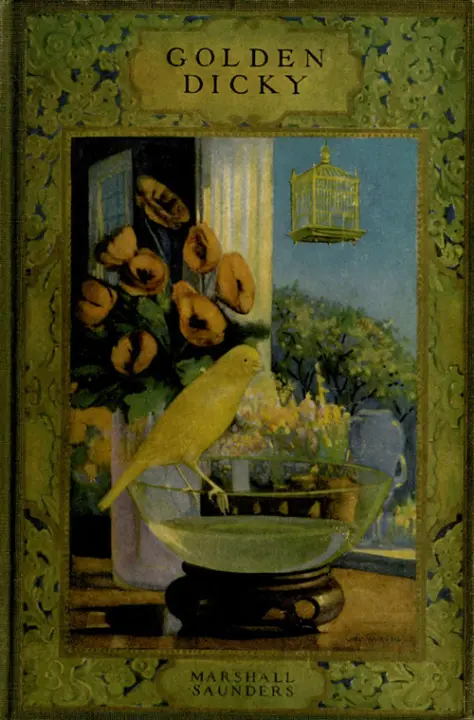
Marshall Saunders
BEHIND THE BOOK
This eBook is for the use of anyone anywhere in the United States and most other parts of the world at no cost and with almost no restrictions whatsoever. You may copy it, give it away or re-use it under the terms of the Project Gutenberg License included with this eBook or online at www.gutenberg.org. If you are not located in the United States, you will have to check the laws of the country where you are located before using this eBook. Read the source licence.
The original source file, including credits and licence, is retained by this library. Request an original-format copy at no charge. Please include the book title and Project Gutenberg identifier #52783.
KEEP YOUR CURIOSITY GOING
Coulson Kernahan

Maurice Baring
Frances Wright
Cécile Tormay

Frederic Jesup Stimson

W. H. P. (William Henry Pope) Jarvis