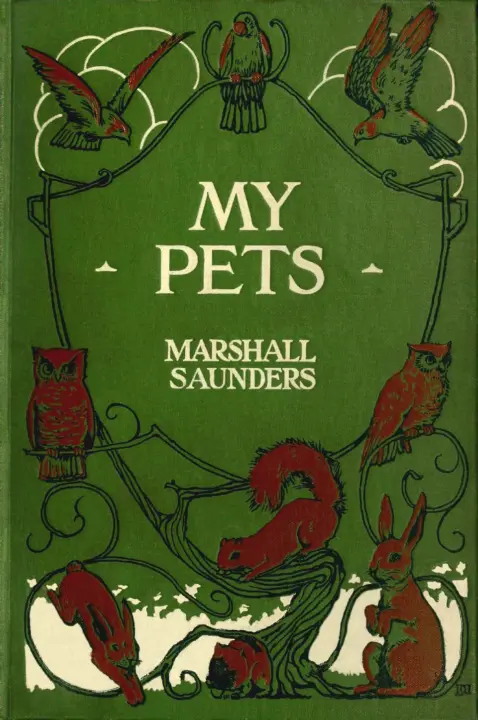
My pets
Marshall Saunders
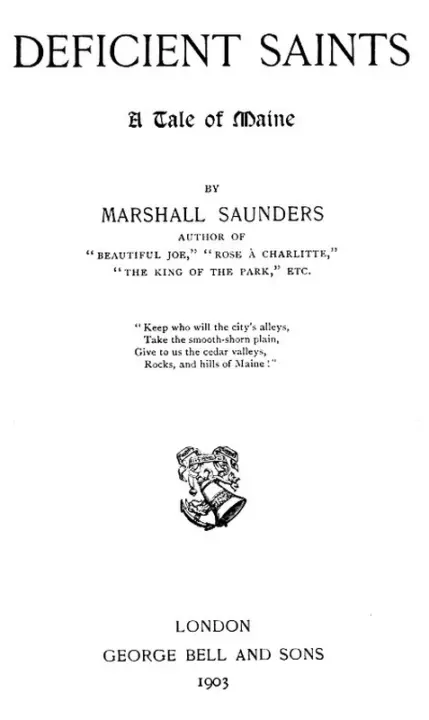
THE CLASSIC COLLECTION · 1899
"Deficient Saints: A Tale of Maine" by Marshall Saunders is a novel written in the early 20th century. Set in the quaint town of Rossignol, Maine, the story revolves around Mrs. Hippolyta Prymmer, a somewhat eccentric widow obsessively maintaining a 'death-book' that catalogs deceased acquaintances. As she navigates her life among other townsfolk, including her newly-returned son Justin and his unexpected wife Derrice, the narrative explores themes of family, societal expectations, and the peculiarities of life in a close-knit community. The beginning of the story introduces Mrs. Prymmer engrossed in her death-book as she muses about her past marriages. We learn about her son, Justin, who surprises her by returning home with his new wife, Derrice, causing considerable upheaval in her life. Their interactions highlight the generational and ideological clash between Mrs. Prymmer and her modern daughter-in-law, who represents a break from traditional expectations. The opener sets a comedic yet poignant tone, drawing readers into the dynamics of family relationships while hinting at the complexities and challenges ahead.
Introduction adapted from the source catalogue; source summaries may be automatically generated.
Free to read · English · 88,409 words · No account needed
MAKE TIME FOR A GOOD BOOK
On by default. Untick to stop anonymous reading totals. Each page counts after 10 seconds in view. How this works.
Anonymous counting is on unless you have switched it off.
"She likes a romp," said Mrs. Negus. "She was pretty young to be married." Then following the law of association she turned to Chelda. "My dear girl, I am thinking of that poor boy shut up in his study. He must have one of his gloomy fits on him. Would you think it a liberty if I asked you to take up a supper-tray? He would not be vexed with you, for he likes you."
"I should not mind it at all," said Chelda, graciously, and she
followed her to the kitchen.
A minute later, Mrs. Negus, after giving some directions, hurried back to Miss Gastonguay, and Chelda stood gazing at the black woman who was phlegmatically disposing of the remnants of the beef and potatoes.
"Mrs. Mercer comes here pretty often, I suppose," said the young lady.
"Oh, law, yes, miss,--every day an' mos' evenin's, an' I'm always ponderin' an' ponderin' about her."
"What are you pondering?"
"'Cause she's the moral image of a lady I onct knowed."
"Where?"
"In Boston city. Yo know, miss, I was onct a housemaid thar in a boarding-house on Beacon Hill. Law me, them houses roun' about was a sight to see at meal-times. People comin' out of 'em like rats out of holes. Every room plum full."
"Who was the lady?"
"German born, American married. Her husband warn't no good,--he
favoured Cap'en White somewhat."
Chelda's face did not alter, but her questions did. They had been prompted by a subtle wish to acquaint herself with every detail of life in the house of the man she loved. Now she was reminded of the conversation between her aunt and Derrice that she had overheard a few hours before, and she at once became keenly interested, and asked, sharply, "What do you mean by no good?"
"I dunno, miss. I jus' heard his wife goin' for him one day."
"Didn't she say what he had done?"
"I jus' misremember."
Chelda drew a dollar bill from her purse, rolled it up and tucked it between some dishes on the dresser.
Rebecca's thick lips moved greedily. "I'll tell you all I know, miss, but I ain't got no more memory nor a badger. She was a German an' her hair was so light it was mos' white. She was pretty, too, and w'en her husban' used to stay out late she'd cry an' talk, but I never heard what she said; but I knew she was good, an' if she cried he mus' be bad."
"Have you told Mrs. Mercer this?"
"Law, no. I asked her what her name was before marriage, an' she said somethin' different. Lan--Lan--"
"Lancaster?"
Your reading position is saved on this browser. Take it to another device with a library code. Reading pages adapt to text, rather than matching a printed edition.
Marshall Saunders
Marshall Saunders
Marshall Saunders
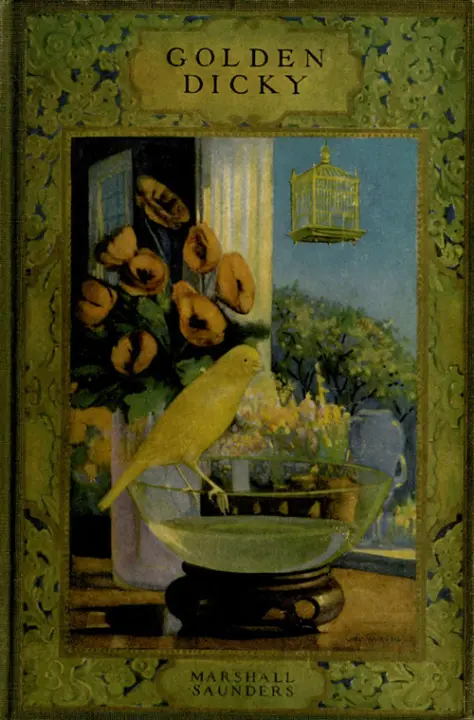
Marshall Saunders
BEHIND THE BOOK
This eBook is for the use of anyone anywhere in the United States and most other parts of the world at no cost and with almost no restrictions whatsoever. You may copy it, give it away or re-use it under the terms of the Project Gutenberg License included with this eBook or online at www.gutenberg.org. If you are not located in the United States, you will have to check the laws of the country where you are located before using this eBook. Read the source licence.
The original source file, including credits and licence, is retained by this library. Request an original-format copy at no charge. Please include the book title and Project Gutenberg identifier #52783.
KEEP YOUR CURIOSITY GOING
Coulson Kernahan

Maurice Baring
Frances Wright
Cécile Tormay

Frederic Jesup Stimson

W. H. P. (William Henry Pope) Jarvis