THE CLASSIC COLLECTION✦The Little French GirlCLASSIC FREE BOOKS
The Little French Girl
Anne Douglas Sedgwick
THE CLASSIC COLLECTION · 1929
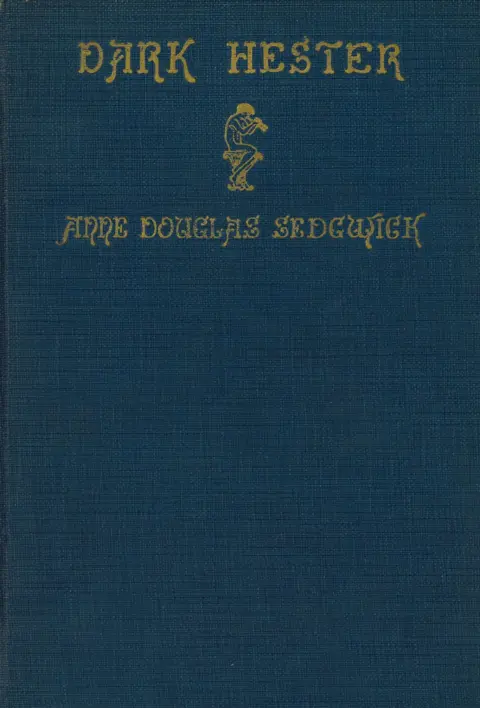
"Dark Hester" by Anne Douglas Sedgwick is a novel written in the early 20th century. It is a psychologically observant domestic drama centered on Monica Wilmott, a fiercely devoted mother unsettled by her son Clive’s marriage to the assured, modern-minded Hester Blakeston. The story probes postwar fragility, generational and cultural clashes, and the strain between tradition and avant-garde London circles, with Clive’s small son Robin and the gentle violinist Celia Bowen forming a poignant counterpoint.
The opening of the novel follows Monica living alone in Essex, thinking back to how Hester entered Clive’s life and to the first, subtle contest of wills that began with an Easter trip, a registrar’s-office wedding, and Celia’s quiet grace in defeat. We see Monica’s loneliness after she retreats from Chelsea’s modern set, her dislike of Hester’s circle, and her lingering sense that Clive has grown remote. A surprise visit brings Hester and Robin—Hester coolly diagnosing the goldfish and then announcing that she and Clive have bought The Crofts nearby—news that fills Monica with joy and dread in equal measure. Monica then visits Celia and Norah, meets Norah’s formidable uncle Captain Ingpen, and hears Norah’s fear that proximity will reopen Celia’s wounds. During a day of planning at The Crofts with Hester’s artistic friends, Monica walks with Clive and learns that the move was orchestrated—and should be credited—to Hester, a revelation that stings even as it proves their unity. At tea afterward, Hester’s set descends on Monica’s old-fashioned room; talk ranges from psychoanalysis to Chartres, while Hester’s dry dismissals and Clive’s protective tact reveal their settled bond. The section closes with Celia noting, gently but firmly, that Clive and Hester’s marriage is a true success, even as Monica feels herself shut out.
Introduction adapted from the source catalogue; source summaries may be automatically generated.
Free to read · English · 65,818 words · No account needed
MAKE TIME FOR A GOOD BOOK
On by default. Untick to stop anonymous reading totals. Each page counts after 10 seconds in view. How this works.
Anonymous counting is on unless you have switched it off.
‘And you never found him?’ Monica asked, after another pause, in which she wondered whether there were some symbolic intention in this reminiscence.
‘Yes. I found him. The heat was terrific and he had run all day, half demented I suppose. And he had been stoned to death. They thought he was mad. A West Highland terrier he was; such a pretty little fellow. They spoiled him horribly.’
Suddenly, while he spoke, thus dryly, Monica saw that strange hot tears had sprung to his eyes. She put her hands before her face, ‘Oh. Don’t.—Don’t.’ She did not know what it was she begged him not to do. ‘I can’t bear it,’ she murmured. ‘There can’t be anything worse.’
‘No; there can’t, can there?’ said Ingpen. ‘And I ought to have had him on a lead. It happened twenty years ago, but I wake up in the night and think of it.—Well, good-bye.’
He was gone and she had not uncovered her face. Trembling suddenly, spent, she went to her writing-bureau, sank on the chair and leant her forehead on her hands. What did it mean? What was she to do? Must their friendship be stoned to death? She sat there, for how long? motionless, except that from time to time she moved the papers on her desk—glancing at them from under her hand: Edith’s letter about the invalid child;—she must answer that; it had to be sent to the sea: the coal bill;—it must be cut down; the kitchen range was very wasteful; it might save money to get a new one: the tickets for the English Association lecture and the long envelope from the Bank with the certificates to be signed.
But was it possible, really possible, that for all these years Hester had lived a lie? Must she choose between stoning the poor lost dog and tacitly sheltering Hester and her former lover, assenting to the deception, making part of it? She, too, to lie to Clive and keep him in his fool’s paradise? Oh, loathsome, hateful girl, creeping surreptitiously into their lives like a hidden fire, sitting there in her black cloak, extraordinarily quiet—like an octopus in the dark, holding its prey. And as the memory came, half suffocating her with the horrible old sense of hatred, it lighted a sudden shape unseen till then, yet evident, substantial, once made visible. How far did the betrayal go? Was it not only in the past but in the present too? Was the contempt, the hostility displayed by Hester towards Ingpen and expressed to Clive, merely a blind and subterfuge, merely part of the murky artifice? Was it all planned and plotted between them? His coming, and theirs, at the same time?—Their coming down Hester’s idea, as Clive had assured her.—How impossible, now that she saw it, to think otherwise;—though the thought tore at her heart as she saw it sweeping Ingpen, too, into the murk and foulness.—Oh, this could not be borne! This was too much to bear! And it might still not be true; for there was Aunt Harriet and, her arms laid out before her on the desk, her hands clenched, Monica stared at Aunt Harriet—the racy old lady with grey side curls and stiffly flowered silk dress. Even if Aunt Harriet were fiction—even if she were fiction, he would be justified in dexterity to shield a friendship innocent, passionate and shattered. ‘It still may not be true,’ Monica muttered, rising to her feet. ‘They may have been friends, great friends.’ And she stared out of the window and saw now, not the nebulous figure of Aunt Harriet, but Ingpen’s eyes fixed upon her, measuring her suspicion, measuring her knowledge, asking himself: ‘Has she read the inscription?’ Oh, no! No! The ring had its history. 1918. During the war. What did the phrase bring back? Chartres and the muffled windows; Ingpen’s head bent to the engravings in the hall; Hester’s repudiating, sullen eyes as she said it was like a skull. They had been at Chartres together and Ingpen, ten years ago, would have been engaged in no platonic friendship with a girl of twenty-two, a girl who could look as Hester looked the other night;—and she flashed on Monica’s eye naked and silver and rose, in the new dress chosen for the old lover. How wonderfully they had acted. How marvellously. She was a loathsome girl, and she had known it from the first; and he a conscienceless, a crafty man; and she had known that from the first;—although he had smiled at her over little Robin’s head, with the released fountain shining above them;—although the strange, hot tears had come to his eyes in telling of his little dog.—‘It’s not to stone him.—What did he mean by that?—It’s not to stone him—if I must see the truth.’ She pressed her hand to her forehead standing in the sunlight that flowed warmly about her.—‘I must see the truth: because of Clive. Then I can judge. If they are here together—betraying Clive—they must go; they must both go.’ And still the tearing was at her heart, and she remembered his tears and saw, not his dog now but her own little Jeremy, who had died so quietly with his head laid in her hand.—Was that not all that he had asked of her?
Your reading position is saved on this browser. Take it to another device with a library code. Reading pages adapt to text, rather than matching a printed edition.
Anne Douglas Sedgwick
Anne Douglas Sedgwick

Anne Douglas Sedgwick
Anne Douglas Sedgwick
BEHIND THE BOOK
This eBook is for the use of anyone anywhere in the United States and most other parts of the world at no cost and with almost no restrictions whatsoever. You may copy it, give it away or re-use it under the terms of the Project Gutenberg License included with this eBook or online at www.gutenberg.org. If you are not located in the United States, you will have to check the laws of the country where you are located before using this eBook. Read the source licence.
The original source file, including credits and licence, is retained by this library. Request an original-format copy at no charge. Please include the book title and Project Gutenberg identifier #78779.
KEEP YOUR CURIOSITY GOING
Coulson Kernahan

Maurice Baring
Frances Wright
Cécile Tormay

Frederic Jesup Stimson

W. H. P. (William Henry Pope) Jarvis