THE CLASSIC COLLECTION✦The Little French GirlCLASSIC FREE BOOKS
The Little French Girl
Anne Douglas Sedgwick
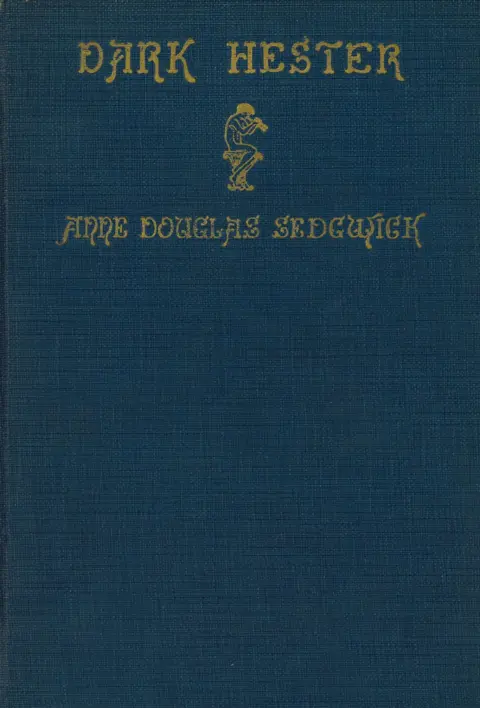
THE CLASSIC COLLECTION · 1929
"Dark Hester" by Anne Douglas Sedgwick is a novel written in the early 20th century. It is a psychologically observant domestic drama centered on Monica Wilmott, a fiercely devoted mother unsettled by her son Clive’s marriage to the assured, modern-minded Hester Blakeston. The story probes postwar fragility, generational and cultural clashes, and the strain between tradition and avant-garde London circles, with Clive’s small son Robin and the gentle violinist Celia Bowen forming a poignant counterpoint.
The opening of the novel follows Monica living alone in Essex, thinking back to how Hester entered Clive’s life and to the first, subtle contest of wills that began with an Easter trip, a registrar’s-office wedding, and Celia’s quiet grace in defeat. We see Monica’s loneliness after she retreats from Chelsea’s modern set, her dislike of Hester’s circle, and her lingering sense that Clive has grown remote. A surprise visit brings Hester and Robin—Hester coolly diagnosing the goldfish and then announcing that she and Clive have bought The Crofts nearby—news that fills Monica with joy and dread in equal measure. Monica then visits Celia and Norah, meets Norah’s formidable uncle Captain Ingpen, and hears Norah’s fear that proximity will reopen Celia’s wounds. During a day of planning at The Crofts with Hester’s artistic friends, Monica walks with Clive and learns that the move was orchestrated—and should be credited—to Hester, a revelation that stings even as it proves their unity. At tea afterward, Hester’s set descends on Monica’s old-fashioned room; talk ranges from psychoanalysis to Chartres, while Hester’s dry dismissals and Clive’s protective tact reveal their settled bond. The section closes with Celia noting, gently but firmly, that Clive and Hester’s marriage is a true success, even as Monica feels herself shut out.
Introduction adapted from the source catalogue; source summaries may be automatically generated.
Free to read · English · 65,818 words · No account needed
MAKE TIME FOR A GOOD BOOK
On by default. Untick to stop anonymous reading totals. Each page counts after 10 seconds in view. How this works.
Anonymous counting is on unless you have switched it off.
No one cared if old hearts broke. Monica lay, on her awaking next morning, and almost smiled as the girlish self-pity of the thought returned to her. Until last night she had, perhaps, still been a girl and she lay now knowing that age brought acquiescence. He was not to die with his head in her hand, like Jeremy:—but he was not a lost dog; not stoned. He was lonely, yet loved and cherished; and as long as he lived the thought of her would keep alive the hope that had brushed them with its wing, as the thought of him would keep it alive in her. He was dear to her; very dear; but the sacrament of which they had partaken meant more, perhaps, than any personal relation could have done, and united them more really.
When, a little later, a note was brought to her she lay for a moment looking in a sort of bewilderment at her name written in Hester’s small, scholarly hand. Last night seemed far away; but how much farther the afternoon and her own suicidal self. She had almost forgotten the world of youth; almost forgotten Clive. Yet, as she opened Hester’s letter she knew that he was not less dear for having been forgotten. Her heart was no longer shut in on its solitary love, and a shared heart is a heart enfranchised. It would be happier for Clive to be loved by an enfranchised heart.
She opened the letter. Hester’s firm dark script closely filled the
sheets.
‘DEAR MONICA, Frank Jessup has for some time been suggesting that I should go to Russia again and write a series of articles for the “Enquirer” on developments there, and it seems the moment to close with the offer. So I am going up to London by the 12.40 and shall stay with Frank and Marcia for a day or two and then be off. If I could have foreseen this on Thursday, I wouldn’t have asked Godfrey to go and perhaps you know where he is and could tell him to come back. But perhaps you and Clive will like to stay on at Oddley, and in that case it is necessary that Godfrey should be kept away; Clive could never stand seeing him. My going off on the same day as he does will make some gossip, I imagine; but I like to be quite frank with you and hope you will go on understanding—as you did yesterday—if I say that gossip about me will be all to the good, where Clive is concerned. You see, I found him and Celia up here, on the hill, the other evening, when I came back from London, and saw then what I had never realized before—purblind fool that I have been—how deeply Clive cared for her; how he depended on her—or could depend on her again. And I know, though the less said about it the better, that if they could come together it would be far the happiest thing for everyone concerned. At the same time I would like you to know that I should never go back to Godfrey—even if he wanted me to, which he doesn’t—though he and I might agree to fix up appearances so that Clive and Celia can marry. Clive is opposed to my decision, and I couldn’t leave him in the state he is in unless you were here; so this is really to ask you to come over and see after him as soon as I am gone. The sooner I go the better. I merely tear him to pieces by staying on, now that the decision is really taken. He thinks me incredibly cruel and hard; but I believe you will understand. You won’t forget what I said to you about him yesterday. Wives can get to feel about their husbands what mothers feel, after a time, though at the first it would have seemed impossible;—I mean being really able to think of their happiness apart from one’s own. I have sent Robin up to London for the day with Nurse so that he shall be well out of the way. He will be very happy, I feel sure, with you and Celia. He has taken a great fancy to her already, and she to him, and you know that he has always really liked being with you rather than with me. You can tell him all the fairy-tales you like now, Monica! I was a beast that night.—Though it’s quite true that I don’t think they are good for him. As to the future, I shall never make any conditions about being allowed to see him and all that sort of sentimentality because I think it really dislocates a child’s life—having to adjust itself to two centres and care for two mothers.’ Here came a sentence that had been scratched out; but it could still be deciphered: ‘All the same I hope I shall see him sometimes,’ but, after this repented lapse into maternal weakness the letter resumed its steady course. ‘I don’t really think I am a maternal woman. I don’t understand children instinctively. It made me frightfully angry when I saw that you thought my book great rot, but I’m inclined now to believe that you were right; at least, that one needs more than a knowledge of psychology—and even more than being a mother—to write a book like that. Of course Robin doesn’t know that I am going; and it’s best that he should only realize, little by little, like the rest of the world, that I’m not coming back. I think I said yesterday the things that most needed saying and I am glad you know me better and that I know you. It is really—if you will forgive my saying so—because I begin to know you at last, and Celia, that I feel I can go away and leave Clive to you. I should have been conceited enough to have thought that no one else could do for him what I could. But I was mistaken about that—as about so many things. So, wishing you the best of luck, dear Monica,
Your reading position is saved on this browser. Take it to another device with a library code. Reading pages adapt to text, rather than matching a printed edition.
Anne Douglas Sedgwick
Anne Douglas Sedgwick

Anne Douglas Sedgwick
Anne Douglas Sedgwick
BEHIND THE BOOK
This eBook is for the use of anyone anywhere in the United States and most other parts of the world at no cost and with almost no restrictions whatsoever. You may copy it, give it away or re-use it under the terms of the Project Gutenberg License included with this eBook or online at www.gutenberg.org. If you are not located in the United States, you will have to check the laws of the country where you are located before using this eBook. Read the source licence.
The original source file, including credits and licence, is retained by this library. Request an original-format copy at no charge. Please include the book title and Project Gutenberg identifier #78779.
KEEP YOUR CURIOSITY GOING
Coulson Kernahan

Maurice Baring
Frances Wright
Cécile Tormay

Frederic Jesup Stimson

W. H. P. (William Henry Pope) Jarvis