THE CLASSIC COLLECTION✦The Little French GirlCLASSIC FREE BOOKS
The Little French Girl
Anne Douglas Sedgwick
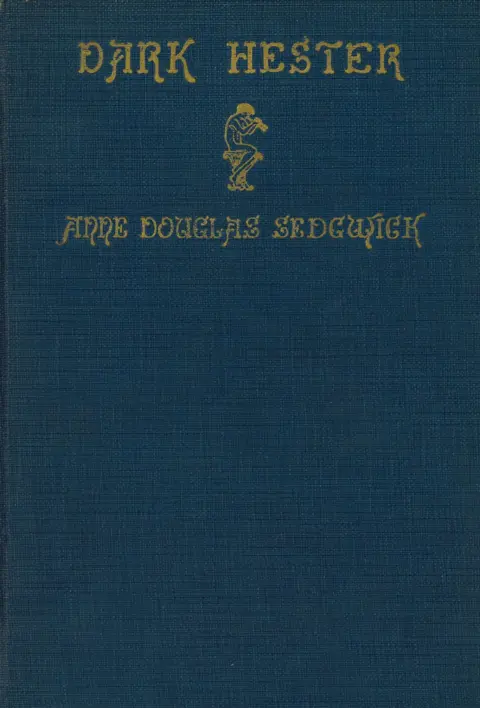
THE CLASSIC COLLECTION · 1929
"Dark Hester" by Anne Douglas Sedgwick is a novel written in the early 20th century. It is a psychologically observant domestic drama centered on Monica Wilmott, a fiercely devoted mother unsettled by her son Clive’s marriage to the assured, modern-minded Hester Blakeston. The story probes postwar fragility, generational and cultural clashes, and the strain between tradition and avant-garde London circles, with Clive’s small son Robin and the gentle violinist Celia Bowen forming a poignant counterpoint.
The opening of the novel follows Monica living alone in Essex, thinking back to how Hester entered Clive’s life and to the first, subtle contest of wills that began with an Easter trip, a registrar’s-office wedding, and Celia’s quiet grace in defeat. We see Monica’s loneliness after she retreats from Chelsea’s modern set, her dislike of Hester’s circle, and her lingering sense that Clive has grown remote. A surprise visit brings Hester and Robin—Hester coolly diagnosing the goldfish and then announcing that she and Clive have bought The Crofts nearby—news that fills Monica with joy and dread in equal measure. Monica then visits Celia and Norah, meets Norah’s formidable uncle Captain Ingpen, and hears Norah’s fear that proximity will reopen Celia’s wounds. During a day of planning at The Crofts with Hester’s artistic friends, Monica walks with Clive and learns that the move was orchestrated—and should be credited—to Hester, a revelation that stings even as it proves their unity. At tea afterward, Hester’s set descends on Monica’s old-fashioned room; talk ranges from psychoanalysis to Chartres, while Hester’s dry dismissals and Clive’s protective tact reveal their settled bond. The section closes with Celia noting, gently but firmly, that Clive and Hester’s marriage is a true success, even as Monica feels herself shut out.
Introduction adapted from the source catalogue; source summaries may be automatically generated.
Free to read · English · 65,818 words · No account needed
MAKE TIME FOR A GOOD BOOK
On by default. Untick to stop anonymous reading totals. Each page counts after 10 seconds in view. How this works.
Anonymous counting is on unless you have switched it off.
She, too, smiled; but hers was the forced smile that seemed to reach down within her and wring her heart-strings as she felt its falsity. There was nothing forced or false about Hester; helping herself to bread and butter she replied:
‘I don’t ask to be justified. Other people’s beliefs don’t concern me. If it would offend you to come, you know, Clive and I could slip out quietly some morning and have it done without troubling anybody.’
‘Oh—no; no,’ Monica had muttered, feeling her pale cheeks burn suddenly. ‘I must come to my son’s wedding.’
She had not dared look at Clive or Celia. She knew that she was worsted. She knew that they were unhappy and that only Hester preserved the guise of imperturbability. She and Hester had met and their rapiers had clashed, in the presence of terribly interested witnesses; but it was she who had fallen back; her rapier that was splintered.
Afterwards, when she and Celia were left alone, desperate tears had risen and she could not conceal them. Celia came to her and put her arms around her.
‘But, you know—I do see what she means,’ she had said gently.
‘So do I!’ Monica rejoined with intense bitterness.
‘It is to make a wedding-cake out of a church—if you don’t believe anything,’ Celia said.
‘Then why refuse to have mere wedding-cake—if it pleases your foolish
mother-in-law?’
‘Because she wants to be straight. I do see that about her, Monica.—She wants to be straight, more than anything.—Please don’t start wrong; it will make Clive so miserable;—already he’s afraid,’ Celia murmured while Monica now wept openly.
She turned now from the fire and went back to the window-seat and again looked out at the driving rain. Her mind travelled over the past five years and saw Hester always the same, imperturbably pursuing her own way and making it Clive’s; but there was no injury to recall, no fault to record. If Clive’s friends had not cared for his wife and had tended to fall away, that was not Hester’s fault. If Clive looked a little dimmed and dumb and out of the picture that Hester put him in, he never looked unhappy. He never looked unhappy when he was with Hester; it was only with her, his mother, that Clive was, gently, silently, ill at ease. It was her relationship with her son that was ruined, or almost ruined; because she could not like his wife. She had tried to; faithfully, if desperately. She recalled the parties she had gone to, in the little Chelsea house that had been her wedding-gift to Clive. Hester and her friends had furnished it; her own taste and help had not been requested and she soon observed that the lovely bits of glass, of china, the one or two really good engravings that she bestowed upon the young ménage were exiled, in order that they might not disturb a unity of design with which they jarred. How she disliked Hester’s drawing-room!—so gaunt, so glaring, so unadjusted to human needs and frailties, so cut off from all complicity with the past. It seemed to challenge you to disagree with it as you entered, to nudge you maliciously on its angular chairs, to suffocate you surreptitiously with the many cushions of its enormous divan. On the walls, the perspective of the few pictures slanted dizzily towards you; you wanted to push the knife, the mug, the herring and the apple back to equilibrium. On the mantelpiece stood three small sculptured animals, menacing in their solid, misshapen vitality. The batik curtains of a dramatic purple shade seemed inappropriate as a background to afternoon tea and London gossip. In Hester’s drawing-room she had felt herself an anachronism, a half-absurd survival. But Hester’s friends went well with it. They were often drab and dusty and often picturesque and brightly coloured, but whether they lounged on the divan or sat bolt upright on the chairs they were terribly intelligent. Their laughter ripped up ancient faiths; their gravity undermined stalwart policies. They seemed to believe in none of the creeds one had ever heard of, but they held creeds of their own with a fierce intolerance and could become very angry with each other. Monica enjoyed seeing them quarrel. She disliked them all intensely and when she saw that they took Clive lightly she hated them. ‘Hester’s amber cigarette-holder’ she had heard him called one evening by a jibing young couple who did not see her on the stairs above them. And indeed Clive moved among them all, against Mrs. Jessup’s batik curtains, a background figure. He did not look in the least oppressed—or impressed; neither did he look ironic. He talked to anyone who seemed to be neglected and passed the claret-cup and sandwiches.
Your reading position is saved on this browser. Take it to another device with a library code. Reading pages adapt to text, rather than matching a printed edition.
Anne Douglas Sedgwick
Anne Douglas Sedgwick

Anne Douglas Sedgwick
Anne Douglas Sedgwick
BEHIND THE BOOK
This eBook is for the use of anyone anywhere in the United States and most other parts of the world at no cost and with almost no restrictions whatsoever. You may copy it, give it away or re-use it under the terms of the Project Gutenberg License included with this eBook or online at www.gutenberg.org. If you are not located in the United States, you will have to check the laws of the country where you are located before using this eBook. Read the source licence.
The original source file, including credits and licence, is retained by this library. Request an original-format copy at no charge. Please include the book title and Project Gutenberg identifier #78779.
KEEP YOUR CURIOSITY GOING
Coulson Kernahan

Maurice Baring
Frances Wright
Cécile Tormay

Frederic Jesup Stimson

W. H. P. (William Henry Pope) Jarvis