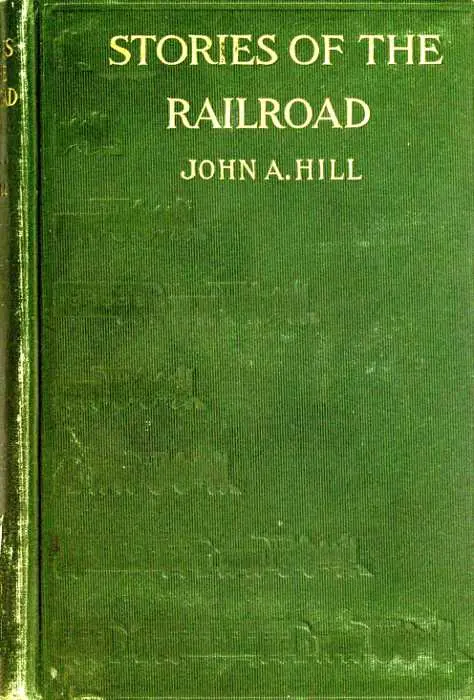
Stories of the Railroad
John A. (John Alexander) Hill
THE CLASSIC COLLECTION · 1898
"Danger Signals" by John A. Hill and Jasper Ewing Brady is a collection of remarkable and exciting accounts showcasing the bravery and resilience of railroad dispatchers and engineers, written in the early 20th century. This work vividly recounts tales of men who faced perilous situations with indomitable courage, emphasizing both the personal and professional stakes involved in their line of work. Through a series of engaging stories, the authors highlight the themes of heroism and teamwork in the face of adversity. The opening of "Danger Signals" introduces the character Jim Wainright, who reminisces about his experiences in the railroad industry. He recalls a poignant conversation with an old acquaintance, Jim Wainright, about a young fireman who was deeply connected to his life on the rails. As Wainright narrates his tale, he brings to life the spirit of camaraderie among crew members and the challenges they faced, including mentorship, loyalty, and unexpected tragedies. The narrative sets a gripping tone for the collection, inviting readers to delve deeper into the stories of courage that unfold throughout the book.
Introduction adapted from the source catalogue; source summaries may be automatically generated.
Free to read · English · 108,306 words · No account needed
MAKE TIME FOR A GOOD BOOK
On by default. Untick to stop anonymous reading totals. Each page counts after 10 seconds in view. How this works.
Anonymous counting is on unless you have switched it off.
"And you might have been shot," said "mother," getting up close.
"I tried my darndest to be. That's why I got promoted so fast."
"Oh, James!" and her arms were around his neck again.
"And I sent that saber home myself, never intending to come back."
"Oh, James, how could you!"
"Mother, how can you forgive me?"
"Mother," was still for a minute, looking at the fire in the grate. "James, it is late in life to apply such tests, but love is like gold; ours will be better now--the dross has been burned away in the fire. I did what I did for love of you, and you did what you did for love of me; let us all commence to live again in the old way," and those arms of hers could not keep away from his neck.
Ed went out with tears in his eyes, and I beckoned the daughter to follow me. We passed into the parlor, drew the curtain over the doorway--and there was nothing but that rag between us and heaven.
When I first went firing, down in my native district, where Bean is King, there was a man on the road pulling a mixed train, by the name of Clark--'Lige Clark.
Being only a fireman, and a new one at that, I did not come very much in contact with Clark, or any of the other engineers, excepting my own--James Dillon.
'Lige Clark was a character on the road; everybody knew "old 'Lige;" he was liked and respected, but not loved; he was thought puritanical, or religious, or cranky, by some, yet no one hated him, or even had a strong dislike for him.
His honesty and straightforwardness were proverbial. He was always in charge of the funds of every order he belonged to, as well as of the Sunday-school and church.
He was truthful to a fault, but above all, just.
"'Cause 'tain't right, that's why," was his way of refusing to do a thing, and his argument against others doing it.
After I got to running, I saw and knew more of 'Lige, and I think, perhaps, I was as much of a friend as he ever had. We never were chums. I never went to his house, and he never went to mine; we were simply roundhouse acquaintances; used to talk engine a little, but usually talked about children--'Lige had four, and always spoke about "doing the right thing by them."
Your reading position is saved on this browser. Take it to another device with a library code. Reading pages adapt to text, rather than matching a printed edition.
John A. (John Alexander) Hill
BEHIND THE BOOK
This eBook is for the use of anyone anywhere in the United States and most other parts of the world at no cost and with almost no restrictions whatsoever. You may copy it, give it away or re-use it under the terms of the Project Gutenberg License included with this eBook or online at www.gutenberg.org. If you are not located in the United States, you will have to check the laws of the country where you are located before using this eBook. Read the source licence.
The original source file, including credits and licence, is retained by this library. Request an original-format copy at no charge. Please include the book title and Project Gutenberg identifier #19007.
KEEP YOUR CURIOSITY GOING

Fanny Van de Grift Stevenson

Isabel Anderson
Charles King
Henry Vizetelly
Randall Parrish
James De Mille