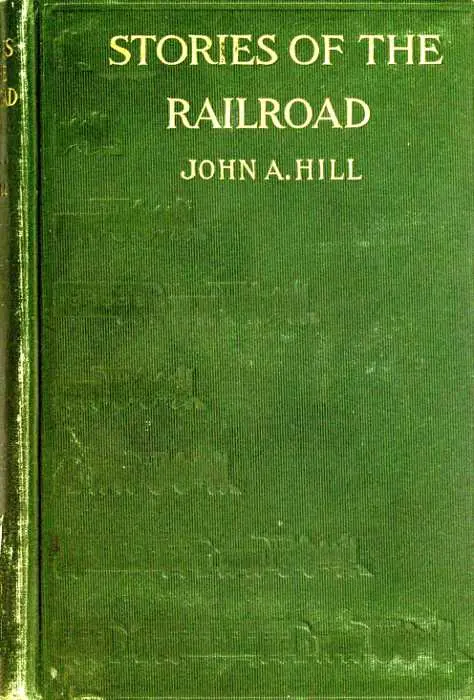
Stories of the Railroad
John A. (John Alexander) Hill
THE CLASSIC COLLECTION · 1898
"Danger Signals" by John A. Hill and Jasper Ewing Brady is a collection of remarkable and exciting accounts showcasing the bravery and resilience of railroad dispatchers and engineers, written in the early 20th century. This work vividly recounts tales of men who faced perilous situations with indomitable courage, emphasizing both the personal and professional stakes involved in their line of work. Through a series of engaging stories, the authors highlight the themes of heroism and teamwork in the face of adversity. The opening of "Danger Signals" introduces the character Jim Wainright, who reminisces about his experiences in the railroad industry. He recalls a poignant conversation with an old acquaintance, Jim Wainright, about a young fireman who was deeply connected to his life on the rails. As Wainright narrates his tale, he brings to life the spirit of camaraderie among crew members and the challenges they faced, including mentorship, loyalty, and unexpected tragedies. The narrative sets a gripping tone for the collection, inviting readers to delve deeper into the stories of courage that unfold throughout the book.
Introduction adapted from the source catalogue; source summaries may be automatically generated.
Free to read · English · 108,306 words · No account needed
MAKE TIME FOR A GOOD BOOK
On by default. Untick to stop anonymous reading totals. Each page counts after 10 seconds in view. How this works.
Anonymous counting is on unless you have switched it off.
"Widow thought too much of Jim for that."
"No!"
"Yes."
"Er--what became of the young man that they--er--adopted?"
"Lives with 'em yet."
"So!"
Just then we struck the suburbs of M----, and, as we passed the cemetery, I pointed to a high shaft, and said: "Dillon's monument."
"Why, how's that?"
"Killed at Five Forks. Widow put up monument."
He shaded his eyes with his hand, and peered through the moonlight for a
minute.
"That's clever," was all he said.
I insisted that he go home with me. Ed took the Black Maria to the house, and we took the street cars for it to the end of the line, and then walked. As we cleaned our feet at the door, I said: "Let me see, I did not hear your name?"
"James," said he, "Mr. James."
I opened the sitting-room door, and ushered the stranger in.
"Well, boys," said "mother," slowly getting up from before the fire and hurriedly taking a few extra stitches in her knitting before laying it down to look up at us, "you're early."
She looked up, not ten feet from the stranger, as he took off his slouched hat and brushed back the white hair. In another minute her arms were around his neck, and she was murmuring "James" in his ear, and I, like a dumb fool, wondered who told her his name.
Well, to make a long story short, it was James Dillon himself, and the daughter came in, and Ed came, and between the three they nearly smothered the old fellow.
You may think it funny he didn't know me, but don't forget that I had been running for three years--that takes the fresh off a fellow; then, when I had the typhoid, my hair laid off, and was never reinstated, and when I got well, the whiskers--that had always refused to grow--came on with a rush, and they were red. And again, I had tried to switch with an old hook-motion in the night and forgot to take out the starting-bar, and she threw it at me, knocking out some teeth; and taking it altogether, I was a changed man.
"Where's John?" he said finally.
"Here," said I.
"No!"
"Yes."
He took my hand, and said, "John, I left all that was dear to me once, because I was jealous of you. I never knew how you came to have that money or why, and don't want to. Forgive me."
"That is the first time I ever heard of that," said "mother."
"I had it to buy this farm for you--a Christmas present--if you had
waited," said I.
"That is the first time I ever heard of that," said he.
Your reading position is saved on this browser. Take it to another device with a library code. Reading pages adapt to text, rather than matching a printed edition.
John A. (John Alexander) Hill
BEHIND THE BOOK
This eBook is for the use of anyone anywhere in the United States and most other parts of the world at no cost and with almost no restrictions whatsoever. You may copy it, give it away or re-use it under the terms of the Project Gutenberg License included with this eBook or online at www.gutenberg.org. If you are not located in the United States, you will have to check the laws of the country where you are located before using this eBook. Read the source licence.
The original source file, including credits and licence, is retained by this library. Request an original-format copy at no charge. Please include the book title and Project Gutenberg identifier #19007.
KEEP YOUR CURIOSITY GOING

Fanny Van de Grift Stevenson

Isabel Anderson
Charles King
Henry Vizetelly
Randall Parrish
James De Mille