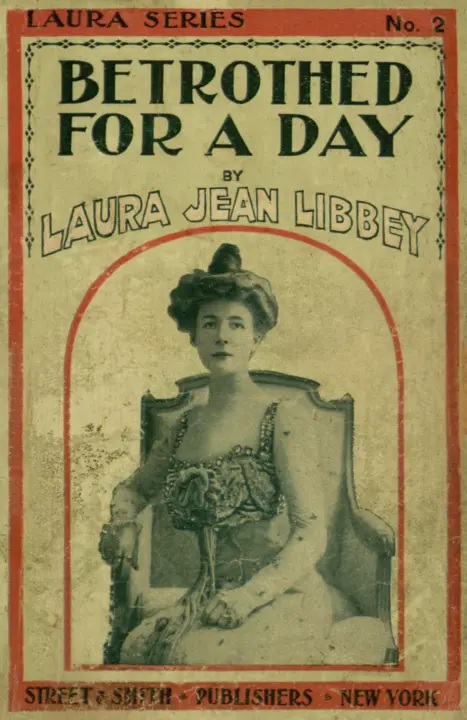
Betrothed for a day: Or, Queenie Trevalyn’s love test
Laura Jean Libbey
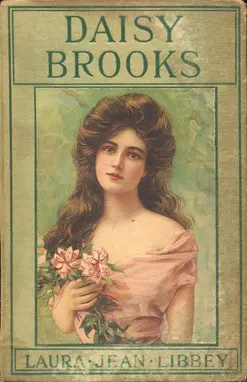
THE CLASSIC COLLECTION · 1883
"Daisy Brooks; Or, A Perilous Love" by Laura Jean Libbey is a romantic novel written in the late 19th century. The story revolves around Daisy Brooks, a young girl with a humble background, and her tumultuous relationship with Rex Lyon, a wealthy young man, intertwined with themes of class disparity, jealousy, and love. As the characters navigate their challenges, the narrative showcases the trials faced by Daisy, especially from the haughty heiress Pluma Hurlhurst, whose relationship with Rex complicates matters. The opening of the novel sets an anxious tone, introducing the return of Basil Hurlhurst with his new bride on a stormy night at Whitestone Hall. Tension mounts as his daughter, Pluma, exhibits a fierce and rebellious nature towards her father's new wife—hinting at future conflicts. Meanwhile, Daisy Brooks is introduced as a hardworking girl living under the care of her Uncle John and Aunt Septima. The narrative quickly transitions to Daisy's first encounter with Rex, which blossoms despite the looming external pressures and social hierarchies that threaten their budding romance. The dramatic backdrop of both characters' circumstances foreshadows a struggle for love in the face of societal expectations and personal ambitions.
Introduction adapted from the source catalogue; source summaries may be automatically generated.
Free to read · English · 84,755 words · No account needed
MAKE TIME FOR A GOOD BOOK
On by default. Untick to stop anonymous reading totals. Each page counts after 10 seconds in view. How this works.
Anonymous counting is on unless you have switched it off.
In the beautiful drawing-room at Whitestone Hall sat Pluma Hurlhurst, running her white, jeweled fingers lightly over the keyboard of a grand piano, but the music evidently failed to charm her. She arose listlessly and walked toward the window, which opened out upon the wide, cool, rose-embowered porch.
The sunshine glimmered on her amber satin robe, and the white frost-work of lace at her throat, and upon the dark, rich beauty of her southern face.
"Miss Pluma," called Mrs. Corliss, the housekeeper, entering the room, "there is a person down-stairs who wishes to see you. I have told her repeatedly it is an utter impossibility--you would not see her; but she declares she will not go away until she does see you."
Pluma turns from the window with cold disdain.
"You should know better than to deliver a message of this kind to me. How dare the impertinent, presuming beggar insist upon seeing me! Order the servants to put her out of the house at once."
"She is not young," said the venerable housekeeper, "and I thought, if
you only would--"
"Your opinion was not called for, Mrs. Corliss," returned the heiress, pointing toward the door haughtily.
"I beg your pardon," the housekeeper made answer, "but the poor
creature begged so hard to see you I did feel a little sorry for
her."
"This does not interest me, Mrs. Corliss," said Pluma, turning toward
the window, indicating the conversation was at an end--"not in the
least."
"The Lord pity you, you stony-hearted creature!" murmured the sympathetic old lady to herself as the door closed between them. "One word wouldn't have cost you much, Heaven knows, it's mightly little comfort poor old master takes with you! You are no more like the bonny race of Hurlhursts than a raven is like a white dove!" And the poor old lady walked slowly back to the dark-robed figure in the hall, so eagerly awaiting her.
"There was no use in my going to my young mistress; I knew she would not see you. But I suppose you are more satisfied now."
"She utterly refuses to see me, does she," asked the woman, in an agitated voice, "when you told her I wished to see her particularly?"
The housekeeper shook her head.
"When Miss Pluma once makes up her mind to a thing, no power on earth could change her mind," she said; "and she is determined she won't see you, so you may as well consider that the end of it."
Without another word the stranger turned and walked slowly down the path and away from Whitestone Hall.
Your reading position is saved on this browser. Take it to another device with a library code. Reading pages adapt to text, rather than matching a printed edition.
Laura Jean Libbey
Laura Jean Libbey
Laura Jean Libbey
Laura Jean Libbey
BEHIND THE BOOK
This eBook is for the use of anyone anywhere in the United States and most other parts of the world at no cost and with almost no restrictions whatsoever. You may copy it, give it away or re-use it under the terms of the Project Gutenberg License included with this eBook or online at www.gutenberg.org. If you are not located in the United States, you will have to check the laws of the country where you are located before using this eBook. Read the source licence.
The original source file, including credits and licence, is retained by this library. Request an original-format copy at no charge. Please include the book title and Project Gutenberg identifier #30137.
KEEP YOUR CURIOSITY GOING
Coulson Kernahan

Maurice Baring
Frances Wright
Cécile Tormay

Frederic Jesup Stimson

W. H. P. (William Henry Pope) Jarvis