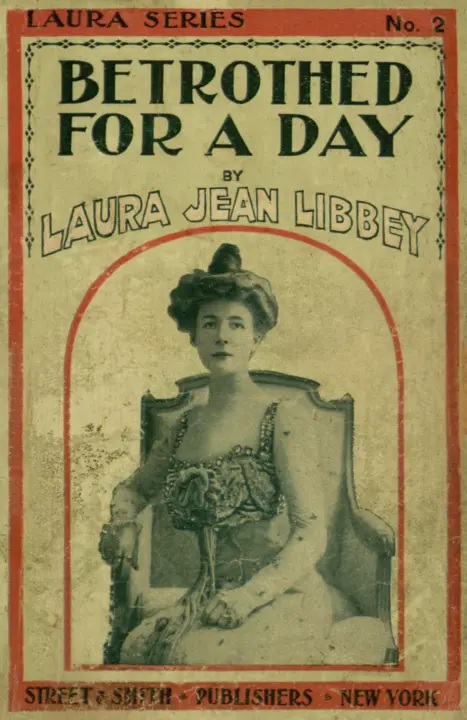
Betrothed for a day: Or, Queenie Trevalyn’s love test
Laura Jean Libbey
THE CLASSIC COLLECTION · 1883
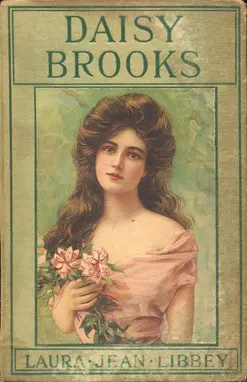
"Daisy Brooks; Or, A Perilous Love" by Laura Jean Libbey is a romantic novel written in the late 19th century. The story revolves around Daisy Brooks, a young girl with a humble background, and her tumultuous relationship with Rex Lyon, a wealthy young man, intertwined with themes of class disparity, jealousy, and love. As the characters navigate their challenges, the narrative showcases the trials faced by Daisy, especially from the haughty heiress Pluma Hurlhurst, whose relationship with Rex complicates matters. The opening of the novel sets an anxious tone, introducing the return of Basil Hurlhurst with his new bride on a stormy night at Whitestone Hall. Tension mounts as his daughter, Pluma, exhibits a fierce and rebellious nature towards her father's new wife—hinting at future conflicts. Meanwhile, Daisy Brooks is introduced as a hardworking girl living under the care of her Uncle John and Aunt Septima. The narrative quickly transitions to Daisy's first encounter with Rex, which blossoms despite the looming external pressures and social hierarchies that threaten their budding romance. The dramatic backdrop of both characters' circumstances foreshadows a struggle for love in the face of societal expectations and personal ambitions.
Introduction adapted from the source catalogue; source summaries may be automatically generated.
Free to read · English · 84,755 words · No account needed
MAKE TIME FOR A GOOD BOOK
On by default. Untick to stop anonymous reading totals. Each page counts after 10 seconds in view. How this works.
Anonymous counting is on unless you have switched it off.
"Pardon me," he said, deferentially raising his cap from his glossy curls, "that basket is too heavy for your slender arms. Allow me to assist you."
In a moment the young girl stood up, and made the prettiest and most graceful of courtesies as she raised to his a face he never forgot. Involuntarily he raised his cap again in homage to her youth, and her shy sweet beauty.
"No; I thank you, sir, I have not far to carry the basket," she replied, in a voice sweet as the chiming of silver bells--a voice that thrilled him, he could not tell why.
A sudden desire possessed Rex to know who she was and from whence she
came.
"Do you live at the Hall?" he asked.
"No," she replied, "I am Daisy Brooks, the overseer's niece."
"Daisy Brooks," said Rex, musingly. "What a pretty name! how well it
suits you!"
He watched the crimson blushes that dyed her fair young face--she never once raised her dark-blue eyes to his. The more Rex looked at her the more he admired this coy, bewitching, pretty little maiden. She made a fair picture under the boughs of the magnolia-tree, thick with odorous pink-and-white tinted blossoms, the sunbeams falling on her golden hair.
The sunshine or the gentle southern wind brought Rex no warning he was forging the first links of a dreadful tragedy. He thought only of the shy blushing beauty and coy grace of the young girl--he never dreamed of the hour when he should look back to that moment, wondering at his own blind folly, with a curse on his lips.
Again from over the trees came the sound of the great bell from the
Hall.
"It is eight o'clock," cried Daisy, in alarm. "Miss Pluma will be so
angry with me."
"Angry!" said Rex; "angry with you! For what?"
"She is waiting for the mull dresses," replied Daisy.
It was a strange idea to him that any one should dare be angry with
this pretty gentle Daisy.
"You will at least permit me to carry your basket as far as the gate," he said, shouldering her burden without waiting for a reply. Daisy had no choice but to follow him. "There," said Rex, setting the basket down by the plantation gate, which they had reached all too soon, "you must go, I suppose. It seems hard to leave the bright sunshine to go indoors."
"I--I shall soon return," said Daisy, with innocent frankness.
"Shall you?" cried Rex. "Will you return home by the same path?"
"Yes," she replied, "if Miss Pluma does not need me."
"Good-bye, Daisy," he said. "I shall see you again."
Your reading position is saved on this browser. Take it to another device with a library code. Reading pages adapt to text, rather than matching a printed edition.
Laura Jean Libbey
Laura Jean Libbey
Laura Jean Libbey
Laura Jean Libbey
BEHIND THE BOOK
This eBook is for the use of anyone anywhere in the United States and most other parts of the world at no cost and with almost no restrictions whatsoever. You may copy it, give it away or re-use it under the terms of the Project Gutenberg License included with this eBook or online at www.gutenberg.org. If you are not located in the United States, you will have to check the laws of the country where you are located before using this eBook. Read the source licence.
The original source file, including credits and licence, is retained by this library. Request an original-format copy at no charge. Please include the book title and Project Gutenberg identifier #30137.
KEEP YOUR CURIOSITY GOING
Coulson Kernahan

Maurice Baring
Frances Wright
Cécile Tormay

Frederic Jesup Stimson

W. H. P. (William Henry Pope) Jarvis