
A Son of Ishmael: A Novel
L. T. Meade
THE CLASSIC COLLECTION · 1900
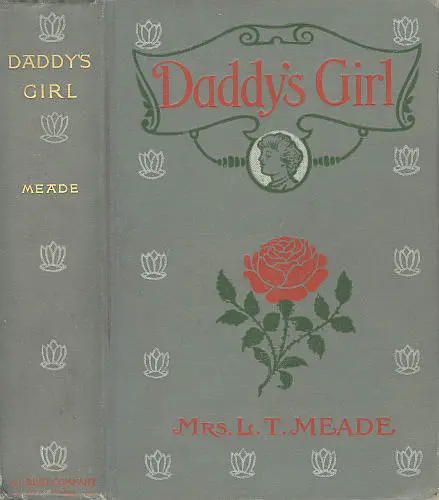
"Daddy's Girl" by L. T. Meade is a novel written during the late 19th century. The story revolves around an eight-year-old girl named Sibyl Ogilvie, affectionately referred to as "the Angel," who navigates the complexities of her family dynamics, including her quarrelling parents and her own understanding of love, beauty, and perfection. The book explores themes of innocence, the longing for parental approval, and the perceived perfection of childhood versus the reality of adult relationships. At the start of the novel, we are introduced to young Sibyl, who remains blissfully unaware of the discord between her parents, Philip and Mildred Ogilvie. While her father seems to cherish her without any conditions, her mother only doles out affection when Sibyl presents herself as pretty, leading the child to reflect deeply on relationships and her own self-worth. As Sibyl prepares for an important occasion, her innocent thoughts are colored by the stark realities of her parents’ marriage, setting the stage for a narrative rich in emotional complexity and the exploration of familial love.
Introduction adapted from the source catalogue; source summaries may be automatically generated.
Free to read · English · 75,662 words · No account needed
MAKE TIME FOR A GOOD BOOK
On by default. Untick to stop anonymous reading totals. Each page counts after 10 seconds in view. How this works.
Anonymous counting is on unless you have switched it off.
She enjoyed her rides on the brisk little pony's back. She was rapidly becoming a good horsewoman. When her mother did not accompany her the redoubtable Watson followed his little mistress, and the exercise did the child good, and helped to bring a faint color to her cheeks.
Now she and Miss Winstead walked slowly down the shady side of the street. Sibyl was pondering over many things.
"It is very hot this morning," said the governess.
"Oh, that don't matter," replied Sibyl. "Miss Winstead, is your head sometimes so full that it seems as if it would burst?"
"No," answered Miss Winstead, "I cannot say it is."
"Full of thoughts, you know."
"No," replied the governess again. "Don't turn in your toes, Sibyl, walk straight, turn your toes out a little, so; keep step with me. Little ladies ought to walk properly."
Sibyl took great pains to follow Miss Winstead's instructions. She was always taking great pains now. A wonderful lot of her naughtiness and daringness had left her. She was trying to be good. It was extremely irksome, but when she succeeded she felt a great glow of pleasure, for she believed herself near to her father.
"Miss Winstead," she said suddenly, "I have been thinking of something. It is most terribly 'portant. Would you greatly mind if we went to see the Holmans before we go back?"
"We shan't have time," replied Miss Winstead.
"Oh, but I want to go," said Sibyl, knitting her brows, "don't let us go into the stupid Park, do come to the Holmans."
"I cannot do it, Sibyl, it is impossible. We must be back rather early for lunch to-day, as your mother is going into the country this afternoon."
"Mother going into the country, what for?"
"I cannot tell you, it is not my affair."
"That means that you know, but you won't tell."
"You can put it in that way if you like. I won't tell. Now come into
the Park, we can sit on one of the chairs under the trees and keep
cool."
Sibyl obeyed unwillingly. She felt, as she said afterwards, as if Miss Winstead had rubbed her the wrong way.
"I am like a pussy-cat when its fur is rubbed quite the wrong side up," thought the little girl. "I don't like it, not a bit."
Presently she slipped her hand through her governess's arm, and said
in a coaxing voice--
"Do come home through Greek Street; I do want just to say one word to Mr. Holman, you can't think how 'portant it is."
"I cannot, Sibyl; you must not ask me again." Here Miss Winstead took
out her watch.
Your reading position is saved on this browser. Take it to another device with a library code. Reading pages adapt to text, rather than matching a printed edition.
BEHIND THE BOOK
This eBook is for the use of anyone anywhere in the United States and most other parts of the world at no cost and with almost no restrictions whatsoever. You may copy it, give it away or re-use it under the terms of the Project Gutenberg License included with this eBook or online at www.gutenberg.org. If you are not located in the United States, you will have to check the laws of the country where you are located before using this eBook. Read the source licence.
The original source file, including credits and licence, is retained by this library. Request an original-format copy at no charge. Please include the book title and Project Gutenberg identifier #30333.
KEEP YOUR CURIOSITY GOING
Coulson Kernahan

Maurice Baring
Frances Wright
Cécile Tormay

Frederic Jesup Stimson

W. H. P. (William Henry Pope) Jarvis


