
A Son of Ishmael: A Novel
L. T. Meade
THE CLASSIC COLLECTION · 1900
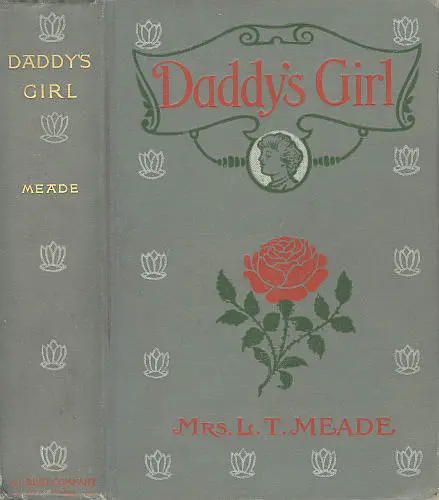
"Daddy's Girl" by L. T. Meade is a novel written during the late 19th century. The story revolves around an eight-year-old girl named Sibyl Ogilvie, affectionately referred to as "the Angel," who navigates the complexities of her family dynamics, including her quarrelling parents and her own understanding of love, beauty, and perfection. The book explores themes of innocence, the longing for parental approval, and the perceived perfection of childhood versus the reality of adult relationships. At the start of the novel, we are introduced to young Sibyl, who remains blissfully unaware of the discord between her parents, Philip and Mildred Ogilvie. While her father seems to cherish her without any conditions, her mother only doles out affection when Sibyl presents herself as pretty, leading the child to reflect deeply on relationships and her own self-worth. As Sibyl prepares for an important occasion, her innocent thoughts are colored by the stark realities of her parents’ marriage, setting the stage for a narrative rich in emotional complexity and the exploration of familial love.
Introduction adapted from the source catalogue; source summaries may be automatically generated.
Free to read · English · 75,662 words · No account needed
MAKE TIME FOR A GOOD BOOK
On by default. Untick to stop anonymous reading totals. Each page counts after 10 seconds in view. How this works.
Anonymous counting is on unless you have switched it off.
"I hope I am what a man most likes in a woman, agreeable, charming, and fairly amiable; but I am no saint, and I don't want to be. Sibyl's attitude towards me is therefore most irritating, and I am doing my utmost----"
"You are doing what?" said Lord Grayleigh. He rose, and stood by the
summer-house door.
"To open her eyes."
"I would not if I were you," he said, gravely; "it is not often that a child has her faith. To shake it means a great deal."
"What are you talking about now?"
"I don't often read my Bible," he continued, "but, of course, I did as a boy--most boys do. My mother was a good woman. I am thinking of something said in that Holy Book."
"You are quite serious; I never knew you in this mood before."
"I must tell it to you. 'Whosoever shall offend one of these little ones, it were better that a millstone were hanged about his neck, and he were cast into the depths of the sea.'"
"How unpleasant," said Mrs. Ogilvie, after a pause, "and I rather fail to see the connection. Shall we change the subject?"
"With pleasure."
"What arrangement did you make with Philip yesterday?"
"I made no absolute arrangement, but I think he will do according to
your wishes."
"Then he will assay the mine, act as the engineer to the company?"
"Precisely."
"Has he promised?"
"Not yet, but my impression is that he will do it."
"What does assaying the mine mean?"
Mrs. Ogilvie knitted her pretty dark brows, and looked as inquisitive and childish at that moment as Sibyl herself.
"To assay a mine means to find out accurately what it contains," said Lord Grayleigh. Once again his eyes turned away from his questioner. He had very little respect for Mrs. Ogilvie's conscience, but he did not want to meet anyone's gaze at that instant.
"Nevertheless," he continued, after a pause, "your husband has not definitely promised, and it is on the cards that he may refuse."
"He will be a madman if he does," cried Mrs. Ogilvie, and she stamped her pretty foot impatiently.
"According to Sibyl's light, he will be the reverse of that; but then, Sibyl, and your husband also, believe in such a thing as conscience."
"Philip's conscience!" said the wife, with a sneer; "what next?"
"It appears to me," said Lord Grayleigh, "that he has an active one."
"It has come to life very quickly, then. This is mere humbug."
"Let me speak. To be frank with you, I respect your husband's conscience; and, perhaps, if you respected it more----"
Your reading position is saved on this browser. Take it to another device with a library code. Reading pages adapt to text, rather than matching a printed edition.
BEHIND THE BOOK
This eBook is for the use of anyone anywhere in the United States and most other parts of the world at no cost and with almost no restrictions whatsoever. You may copy it, give it away or re-use it under the terms of the Project Gutenberg License included with this eBook or online at www.gutenberg.org. If you are not located in the United States, you will have to check the laws of the country where you are located before using this eBook. Read the source licence.
The original source file, including credits and licence, is retained by this library. Request an original-format copy at no charge. Please include the book title and Project Gutenberg identifier #30333.
KEEP YOUR CURIOSITY GOING
Coulson Kernahan

Maurice Baring
Frances Wright
Cécile Tormay

Frederic Jesup Stimson

W. H. P. (William Henry Pope) Jarvis


