
A Son of Ishmael: A Novel
L. T. Meade
THE CLASSIC COLLECTION · 1900
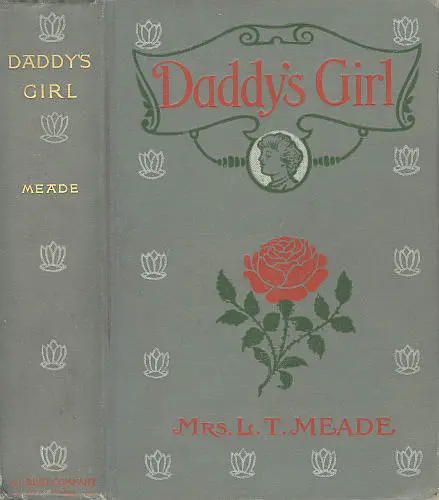
"Daddy's Girl" by L. T. Meade is a novel written during the late 19th century. The story revolves around an eight-year-old girl named Sibyl Ogilvie, affectionately referred to as "the Angel," who navigates the complexities of her family dynamics, including her quarrelling parents and her own understanding of love, beauty, and perfection. The book explores themes of innocence, the longing for parental approval, and the perceived perfection of childhood versus the reality of adult relationships. At the start of the novel, we are introduced to young Sibyl, who remains blissfully unaware of the discord between her parents, Philip and Mildred Ogilvie. While her father seems to cherish her without any conditions, her mother only doles out affection when Sibyl presents herself as pretty, leading the child to reflect deeply on relationships and her own self-worth. As Sibyl prepares for an important occasion, her innocent thoughts are colored by the stark realities of her parents’ marriage, setting the stage for a narrative rich in emotional complexity and the exploration of familial love.
Introduction adapted from the source catalogue; source summaries may be automatically generated.
Free to read · English · 75,662 words · No account needed
MAKE TIME FOR A GOOD BOOK
On by default. Untick to stop anonymous reading totals. Each page counts after 10 seconds in view. How this works.
Anonymous counting is on unless you have switched it off.
"I did worse," said the man. He stood up, folded his arms across his chest, and looked down at her. "I did worse, and to tell you is my punishment. I not only sent that cablegram, but I wrote an account of the mine, a false account, false as my false heart was, Sibyl, and I signed it with my name, for the gold I said was in the mine was not there."
"Why did you do it, father?"
"Because I was a scoundrel."
"What's that?" asked Sibyl.
"A bad man."
"No," said the child, "no, you was always my most perfect----"
"You thought so, darling; you were wrong. Even when I went to Queensland I was far from that. I could not bid you good-by before I went, because of the sin which I was about to commit. I committed the sin, I dropped away from honor, I let goodness go. I did that which could never, never, under any circumstances, be worth doing, for there is nothing worth evil, there is nothing worth sin, I see it now."
"Then you are sorry?"
"I have repented," he cried; "my God, I have repented," and he fell on his knees and covered his face. For the child's sake he kept back the sobs which rose to his throat.
Sibyl looked at the bent head, at the dark hair already sprinkled with gray. She lay quite still, there was not the slightest doubt that the shock was great. Ogilvie waited, longing, wondering if the little hand would touch his head, if the child would forgive him.
"She is so holy, so heavenly herself," he murmured; "is it possible that she can forgive? It must be a cruel shock to her."
The little, white hand did not touch him. There was complete stillness in the room. At last he raised his eyes and looked at her. She looked steadily back at him.
"And so you was never perfect?" she said.
"Never."
"And was mother never perfect?"
"Not as you think of perfection, Sibyl, but we need not talk of her
now. I have sinned far more deeply than your poor mother has ever
done."
The puzzled expression grew deeper on Sibyl's face. An old memory of her mother returned to her. She saw again the scene, and recalled her mother's words, the words she had overheard, and which the mother had denied. She was quite still for a full moment, the little clock on the mantelpiece ticked loudly, then she said slowly:
"And Lord Jesus, isn't He perfect?"
Ogilvie started when he heard her words.
Your reading position is saved on this browser. Take it to another device with a library code. Reading pages adapt to text, rather than matching a printed edition.
BEHIND THE BOOK
This eBook is for the use of anyone anywhere in the United States and most other parts of the world at no cost and with almost no restrictions whatsoever. You may copy it, give it away or re-use it under the terms of the Project Gutenberg License included with this eBook or online at www.gutenberg.org. If you are not located in the United States, you will have to check the laws of the country where you are located before using this eBook. Read the source licence.
The original source file, including credits and licence, is retained by this library. Request an original-format copy at no charge. Please include the book title and Project Gutenberg identifier #30333.
KEEP YOUR CURIOSITY GOING
Coulson Kernahan

Maurice Baring
Frances Wright
Cécile Tormay

Frederic Jesup Stimson

W. H. P. (William Henry Pope) Jarvis


