
A Son of Ishmael: A Novel
L. T. Meade
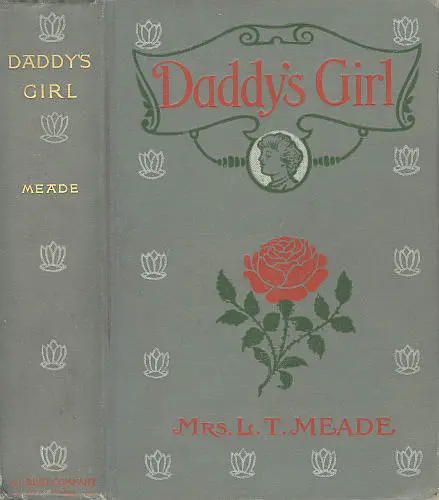
THE CLASSIC COLLECTION · 1900
"Daddy's Girl" by L. T. Meade is a novel written during the late 19th century. The story revolves around an eight-year-old girl named Sibyl Ogilvie, affectionately referred to as "the Angel," who navigates the complexities of her family dynamics, including her quarrelling parents and her own understanding of love, beauty, and perfection. The book explores themes of innocence, the longing for parental approval, and the perceived perfection of childhood versus the reality of adult relationships. At the start of the novel, we are introduced to young Sibyl, who remains blissfully unaware of the discord between her parents, Philip and Mildred Ogilvie. While her father seems to cherish her without any conditions, her mother only doles out affection when Sibyl presents herself as pretty, leading the child to reflect deeply on relationships and her own self-worth. As Sibyl prepares for an important occasion, her innocent thoughts are colored by the stark realities of her parents’ marriage, setting the stage for a narrative rich in emotional complexity and the exploration of familial love.
Introduction adapted from the source catalogue; source summaries may be automatically generated.
Free to read · English · 75,662 words · No account needed
MAKE TIME FOR A GOOD BOOK
On by default. Untick to stop anonymous reading totals. Each page counts after 10 seconds in view. How this works.
Anonymous counting is on unless you have switched it off.
"You can do so, of course," replied Acland. "I shall receive the money in full sooner or later from the other purchaser, and then you can have it back."
"It would be a satisfaction to me, however, to pay you the deposit you
lent my wife at once."
"Very well."
Ogilvie filled in a cheque for two thousand pounds.
"You had better see Mrs. Ogilvie with regard to this," he said, as he stood up. "You transacted the business with her, and you must break to her what I have already done, but what I fear she fails to believe, that the purchase cannot possibly go on. It will not be in my power, Acland, to complete it, even if I should be alive at the time."
"I know another man only too anxious to purchase," said Acland; "but I am deeply sorry for you--your child so ill, your own mission to Queensland a failure."
"Yes, quite a failure. I won't detain you any longer now. I may need your services again presently."
Ogilvie went from the lawyer's house straight to his own in Belgrave Square. It was in the hands of a caretaker. A seedy-looking man in a rusty black coat opened the door. He did not know Ogilvie.
"I am the master," said Ogilvie; "let me in, please."
The man stood aside.
"Has a telegram come for me?"
"Yes, sir, five minutes ago."
Ogilvie tore it open, and read the contents.
"Meeting of directors at one o'clock to-morrow, at Cannon Street Hotel. Not necessary for you to be present unless you wish. GRAYLEIGH."
Ogilvie crushed up the telegram, and turned to the man.
"I shall sleep here to-night," Ogilvie said, "and shall be back in the
course of the evening."
He then went to his bank. It was within half-an-hour of closing. He saw one of the managers who happened to be a friend of his. The manager welcomed him back with effusion, and then made the usual remark about his changed appearance.
Ogilvie put his troublesome questions aside.
"I had an interview with you just before I went to Queensland," he said, "and I then placed, with a special note for your instructions in case anything happened to me, a sum of money in the bank."
"A large sum, Ogilvie--ten thousand pounds."
"Yes, ten thousand pounds," repeated Ogilvie. "I want to withdraw the
money."
"It is a considerable sum to withdraw at once, but as it is not on
deposit you can have it."
"I thought it only fair to give you a few hours' notice. I shall call for it to-morrow about ten o'clock."
"Do you wish to take it in a cheque?"
Your reading position is saved on this browser. Take it to another device with a library code. Reading pages adapt to text, rather than matching a printed edition.
BEHIND THE BOOK
This eBook is for the use of anyone anywhere in the United States and most other parts of the world at no cost and with almost no restrictions whatsoever. You may copy it, give it away or re-use it under the terms of the Project Gutenberg License included with this eBook or online at www.gutenberg.org. If you are not located in the United States, you will have to check the laws of the country where you are located before using this eBook. Read the source licence.
The original source file, including credits and licence, is retained by this library. Request an original-format copy at no charge. Please include the book title and Project Gutenberg identifier #30333.
KEEP YOUR CURIOSITY GOING
Coulson Kernahan

Maurice Baring
Frances Wright
Cécile Tormay

Frederic Jesup Stimson

W. H. P. (William Henry Pope) Jarvis


