
A Son of Ishmael: A Novel
L. T. Meade
THE CLASSIC COLLECTION · 1900
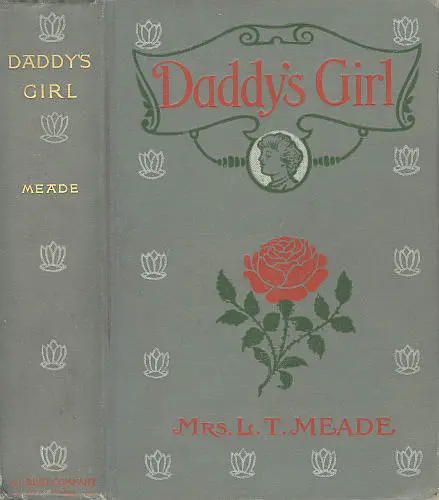
"Daddy's Girl" by L. T. Meade is a novel written during the late 19th century. The story revolves around an eight-year-old girl named Sibyl Ogilvie, affectionately referred to as "the Angel," who navigates the complexities of her family dynamics, including her quarrelling parents and her own understanding of love, beauty, and perfection. The book explores themes of innocence, the longing for parental approval, and the perceived perfection of childhood versus the reality of adult relationships. At the start of the novel, we are introduced to young Sibyl, who remains blissfully unaware of the discord between her parents, Philip and Mildred Ogilvie. While her father seems to cherish her without any conditions, her mother only doles out affection when Sibyl presents herself as pretty, leading the child to reflect deeply on relationships and her own self-worth. As Sibyl prepares for an important occasion, her innocent thoughts are colored by the stark realities of her parents’ marriage, setting the stage for a narrative rich in emotional complexity and the exploration of familial love.
Introduction adapted from the source catalogue; source summaries may be automatically generated.
Free to read · English · 75,662 words · No account needed
MAKE TIME FOR A GOOD BOOK
On by default. Untick to stop anonymous reading totals. Each page counts after 10 seconds in view. How this works.
Anonymous counting is on unless you have switched it off.
He sauntered across the grounds, and Sibyl, after a moment's hesitation, followed him. A boat was soon procured, and they all found themselves on the shining silver Thames.
"Is that why our house is called Silverbel?" asked Sibyl. "Is it 'cos we can see the silver shine of the river, and 'cos it is belle, French for beautiful?"
"Perhaps so," answered the mother with a smile.
The evening came on, the heat of the day was over, the sun faded.
"What a pity we must go back to London," said Sibyl. "I don't think I ever had such a lovely day before."
"We shall soon be back here," replied Mrs. Ogilvie. "I shall see about furnishing next week at the latest, and we can come down whenever we are tired of town."
"That will be lovely," said Sibyl. "Oh, won't my pony love cantering
over the roads here!"
When they landed at the little quay just outside the inn, the landlord came down to meet them. He held a telegram in his hand.
"This came for you, madam, in your absence," he said, and he gave the telegram to Mrs. Ogilvie. She tore it open. It was from her lawyer, Mr. Acland, and ran as follows:
"Ominous rumors with regard to Lombard Deeps have reached me. Better not go any further at present with the purchase of Silverbel."
Mrs. Ogilvie's face turned pale. She looked up and met the fixed stare of her little daughter and of Rochester. Lady Helen had turned away. She was leaning over the rails of the little garden and looking down into the swiftly flowing river.
Mrs. Ogilvie's face grew hard. She crushed up the telegram in her
hand.
"I hope there is nothing wrong?" asked Rochester.
"Nothing at all," she replied. "Yes, we will come here next week. Sibyl, don't stare in that rude way."
The return journey was not as lively as that happy one in the morning.
Sibyl felt through her sensitive little frame that her mother was worried about something. Rochester also looked anxious. Lady Helen alone seemed unconscious and distrait. When the child nestled up to her she put her arm round her waist.
"Are you sad about anything, darling Lady Helen?" whispered Sibyl.
"No, Sibyl; I am quite happy."
"Then you are thinking very hard?"
"I often think."
"I do so want you to be awfully happy."
"I know you do, and I think I shall be."
"Then that is right. Twelve he marries. Wasn't it sweet of the marguerite daisy to give Mr. Rochester just the right petal at the end; wasn't it luck?"
"Yes; but hush, don't talk so loud."
Your reading position is saved on this browser. Take it to another device with a library code. Reading pages adapt to text, rather than matching a printed edition.
BEHIND THE BOOK
This eBook is for the use of anyone anywhere in the United States and most other parts of the world at no cost and with almost no restrictions whatsoever. You may copy it, give it away or re-use it under the terms of the Project Gutenberg License included with this eBook or online at www.gutenberg.org. If you are not located in the United States, you will have to check the laws of the country where you are located before using this eBook. Read the source licence.
The original source file, including credits and licence, is retained by this library. Request an original-format copy at no charge. Please include the book title and Project Gutenberg identifier #30333.
KEEP YOUR CURIOSITY GOING
Coulson Kernahan

Maurice Baring
Frances Wright
Cécile Tormay

Frederic Jesup Stimson

W. H. P. (William Henry Pope) Jarvis


