
A Son of Ishmael: A Novel
L. T. Meade
THE CLASSIC COLLECTION · 1900
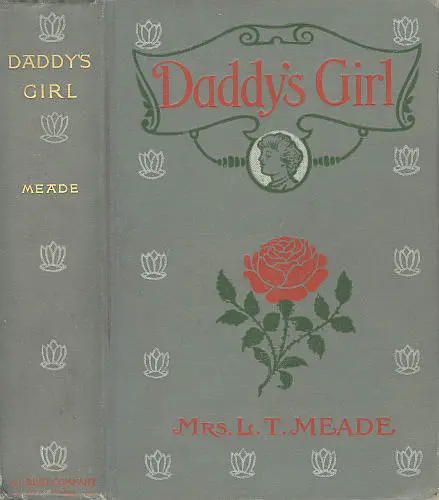
"Daddy's Girl" by L. T. Meade is a novel written during the late 19th century. The story revolves around an eight-year-old girl named Sibyl Ogilvie, affectionately referred to as "the Angel," who navigates the complexities of her family dynamics, including her quarrelling parents and her own understanding of love, beauty, and perfection. The book explores themes of innocence, the longing for parental approval, and the perceived perfection of childhood versus the reality of adult relationships. At the start of the novel, we are introduced to young Sibyl, who remains blissfully unaware of the discord between her parents, Philip and Mildred Ogilvie. While her father seems to cherish her without any conditions, her mother only doles out affection when Sibyl presents herself as pretty, leading the child to reflect deeply on relationships and her own self-worth. As Sibyl prepares for an important occasion, her innocent thoughts are colored by the stark realities of her parents’ marriage, setting the stage for a narrative rich in emotional complexity and the exploration of familial love.
Introduction adapted from the source catalogue; source summaries may be automatically generated.
Free to read · English · 75,662 words · No account needed
MAKE TIME FOR A GOOD BOOK
On by default. Untick to stop anonymous reading totals. Each page counts after 10 seconds in view. How this works.
Anonymous counting is on unless you have switched it off.
They soon arrived at Richmond, and got into the carriage which was waiting for them, and drove to Silverbel. They had lunch at the inn as arranged, and then they wandered about the grounds, and presently Sibyl had her wish, for Rochester and Lady Helen strolled away from her mother and herself, and walked down a shady path to the right of the house.
"There they go!" cried the child.
"There who go, Sibyl?" asked Mrs. Ogilvie.
"The one who wants to marry the other," replied Sibyl. "Hush, mother,
we are not to know, we are to be quite blind. Aren't you awfully
incited?"
"You are a very silly, rude little girl," replied the mother. "You must not make the sort of remarks you are always making to Mr. Rochester and Lady Helen. Such remarks are in very bad form. Now, don't take even the slightest notice when they return."
"Aren't I to speak to them?" asked Sibyl, raising her eyes in wonder.
"Of course, but you are not to say anything special."
"Oh, nothing special. Am I to talk about the weather?"
"No; don't be such a little goose."
"I always notice," replied Sibyl, softly, "that when quite strangers meet, they talk about the weather. I thought that was why. Can't I say anything more--more as if they were my very dear old friends? I thought they'd like it. I thought they'd like to know that there was one here who understanded all about it."
"About it?"
"Their love, mother, their love for--for each other."
"Who may the one be who is supposed to understand?"
"Me, mother," said Sibyl.
Mrs. Ogilvie burst into a ringing laugh.
"You are a most ridiculous little girl," she said. "Now, listen; you are not to take any notice when they come back. They are not engaged; perhaps they never will be. Anyhow, you will make yourself an intensely disagreeable child if you make such remarks as you have already made. Do you understand?"
"You has put it plain, mother," replied Sibyl. "I think I do. Now,
let's look at the flowers."
"I have ordered the landlord of the inn to serve tea on the lawn," continued Mrs. Ogilvie. "Is it not nice to feel that we are going to have tea on our own lawn, Sibyl?"
"It's lovely!" replied Sibyl.
"I am devoted to the country," continued the mother; "there is no place like the country for me."
"So I think, too," replied Sibyl. "I love the country. We'll have all the very poorest people down here, won't we, mother?"
"What do you mean?"
Your reading position is saved on this browser. Take it to another device with a library code. Reading pages adapt to text, rather than matching a printed edition.
BEHIND THE BOOK
This eBook is for the use of anyone anywhere in the United States and most other parts of the world at no cost and with almost no restrictions whatsoever. You may copy it, give it away or re-use it under the terms of the Project Gutenberg License included with this eBook or online at www.gutenberg.org. If you are not located in the United States, you will have to check the laws of the country where you are located before using this eBook. Read the source licence.
The original source file, including credits and licence, is retained by this library. Request an original-format copy at no charge. Please include the book title and Project Gutenberg identifier #30333.
KEEP YOUR CURIOSITY GOING
Coulson Kernahan

Maurice Baring
Frances Wright
Cécile Tormay

Frederic Jesup Stimson

W. H. P. (William Henry Pope) Jarvis


