THE CLASSIC COLLECTION✦An outlaw’s diary: the CommuneCLASSIC FREE BOOKS
An outlaw’s diary: the Commune
Cécile Tormay
THE CLASSIC COLLECTION · 1908
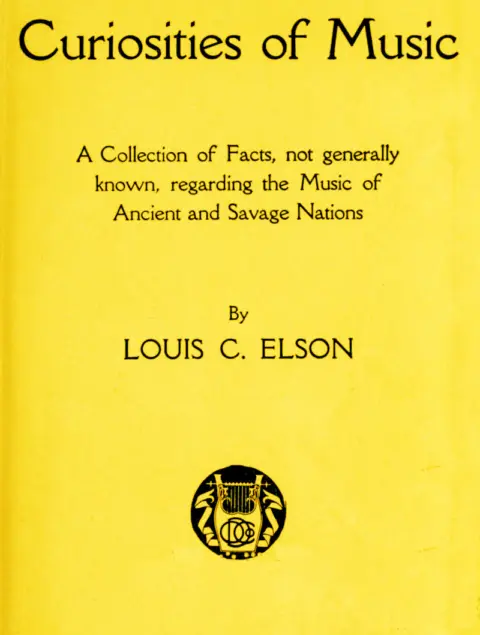
"Curiosities of Music: A Collection of Facts not Generally Known, Regarding the Music of Ancient and Savage Nations" by Louis C. Elson is a non-fiction work written in the late 19th century. This book explores lesser-known facts and insights into the music traditions of various cultures, particularly ancient civilizations and indigenous societies. It aims to shed light on the significant yet rarely discussed aspects of musical heritage across different regions. The opening portion of this collection sets the stage for a deep exploration of music's historical and cultural relevance. It begins with a broad definition of music and discusses its innate presence in human nature, suggesting that the emotional impact of music is universal. The text moves on to specifically examine Hindu musical traditions, detailing their ancient philosophical views on music, its divine origins, and the mythological implications that intertwine with their cultural practices. This initial chapter serves as an introduction to how Elson will navigate through diverse musical traditions, combining factual analysis with elements of storytelling and mythology.
Introduction adapted from the source catalogue; source summaries may be automatically generated.
Free to read · English · 86,094 words · No account needed
MAKE TIME FOR A GOOD BOOK
On by default. Untick to stop anonymous reading totals. Each page counts after 10 seconds in view. How this works.
Anonymous counting is on unless you have switched it off.
The dances of Greece were of considerable variety, and seem to have been both refined and coarse in their character. The earliest were probable merely military manœuvres, which were performed to songs, or to accompaniment of flute or kithara: or festival dances at the Bacchanalian or Dionysian revels. The chief dances may be classed as the Pyrrhic, the Cordax, and the Emmeleia.
The chorus itself, in very early times, was, in some parts of Greece
only used to heighten the effect of a solo song, by its pantomimic
dancing.
In Crete, youths and maidens joined hands and danced in a circle; in the centre of such a circle sat the musician, who sang to the accompaniment of a kithara, while the chorus expressed by their actions, not by singing, the various emotions which he chanted.
The Pyrrhic, or war dance, was the pride of all Greece, and all young
men studied it.
In Sparta there was a law that all parents should send their sons, above the age of five years, to the public place, to have them instructed in the armed dance; on these occasions they were led by the teachers who made them sing hymns, etc., as they danced. The Pyrrhic was in fact, a mock battle, in four parts, representing the pursuit, overtaking, combat, and capture of the enemy, and was used as drill, to make young men proficient in the use of their weapons; it was accompanied by flute, which instrument was the one which the Greeks thought aroused the energies most.
The origin of the Pyrrhic is given as follows,—When Zeus, (Jupiter) was born, his father Kronos, (Saturn) knowing that he should be dethroned by him sought his life; he was hidden by the Corybantes, who on Kronos’ coming near, fearing that the child would be discovered by its crying, began to dance about, and clashed their swords and shields, thus drowning its voice and saving its life.
Dancing was equal, and often combined, with singing, and was held in the highest estimation by the upper classes, and even the philosophers of ancient Greece; though of course only in its higher branches, the lower being usually abandoned to paid performers, as we to-day draw a wide distinction between a fashionable ball-room dance, and a ballet, though both are called dancing.
Skill in dancing, was a most envied accomplishment, for it meant both grace, and the talent of expressing all emotions without words.
Lucian[55] says the real art of the dance is to express an action, and gives a long list of mythological and historical deeds which were suited to representation. “The dancer” he says “must understand history, mythology, rhetoric,” etc.
Your reading position is saved on this browser. Take it to another device with a library code. Reading pages adapt to text, rather than matching a printed edition.
BEHIND THE BOOK
This eBook is for the use of anyone anywhere in the United States and most other parts of the world at no cost and with almost no restrictions whatsoever. You may copy it, give it away or re-use it under the terms of the Project Gutenberg License included with this eBook or online at www.gutenberg.org. If you are not located in the United States, you will have to check the laws of the country where you are located before using this eBook. Read the source licence.
The original source file, including credits and licence, is retained by this library. Request an original-format copy at no charge. Please include the book title and Project Gutenberg identifier #66216.
KEEP YOUR CURIOSITY GOING
Cécile Tormay

Moritz Busch
John L. Ransom

Maurice Baring
Frances Wright
Cécile Tormay