THE CLASSIC COLLECTION✦An outlaw’s diary: the CommuneCLASSIC FREE BOOKS
An outlaw’s diary: the Commune
Cécile Tormay
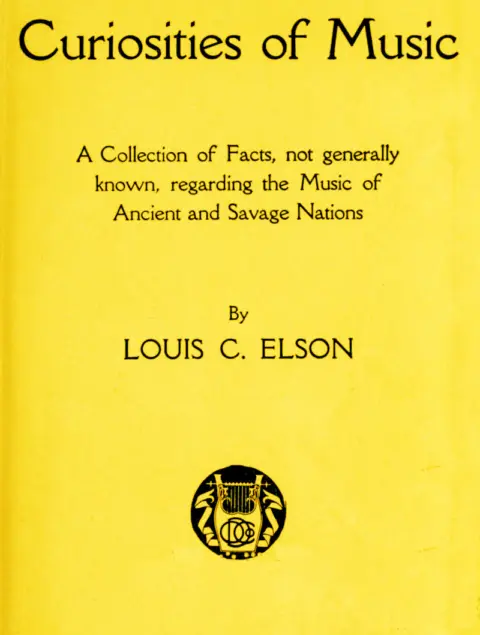
THE CLASSIC COLLECTION · 1908
"Curiosities of Music: A Collection of Facts not Generally Known, Regarding the Music of Ancient and Savage Nations" by Louis C. Elson is a non-fiction work written in the late 19th century. This book explores lesser-known facts and insights into the music traditions of various cultures, particularly ancient civilizations and indigenous societies. It aims to shed light on the significant yet rarely discussed aspects of musical heritage across different regions. The opening portion of this collection sets the stage for a deep exploration of music's historical and cultural relevance. It begins with a broad definition of music and discusses its innate presence in human nature, suggesting that the emotional impact of music is universal. The text moves on to specifically examine Hindu musical traditions, detailing their ancient philosophical views on music, its divine origins, and the mythological implications that intertwine with their cultural practices. This initial chapter serves as an introduction to how Elson will navigate through diverse musical traditions, combining factual analysis with elements of storytelling and mythology.
Introduction adapted from the source catalogue; source summaries may be automatically generated.
Free to read · English · 86,094 words · No account needed
MAKE TIME FOR A GOOD BOOK
On by default. Untick to stop anonymous reading totals. Each page counts after 10 seconds in view. How this works.
Anonymous counting is on unless you have switched it off.
In France it was not known till much later plays “with songs” were known however, and one of these, “in the Italian style,” was performed in Paris, before the King and Royal family, on the occasion of the victory of the Duke of Guise at Calais, 1558.
The chief representations for years after, lay rather in the direction of ballets, than of operas. Religious plays also still were given at Paris, but after the ordinance, of 1548, that no Catholic ceremony should be represented on the stage, they disappeared.[281]
The theatres, that is those which were public, were at this time very poorly appointed, but through the constant festivities of the court, many inventions came into use.
The Court of France had always a penchant for music, the drama, and dancing. Henry IV., was very fond of the latter.
Louis XIII., cultivated music with much success, he composed many airs, and several motets which he had performed in his Chapel. Music was his ordinary recreation when he could not go hunting. At the siege of La Rochelle, there being no musicians or singers with the army, he himself wrote out the vespers for Pentecost, that they might be ready in time. Three weeks before his death, and after he had received the extreme unction, feeling himself somewhat better, he begged Nyert, his first valet de garderobe to sing a paraphrase of David, which he had set to music, to give thanks to God.
Saint-Martin and Campeforte who were present, each sang a part, and thus made a concerted piece which they sang around the bed, the king from time to time joining in with his own voice.
He also wrote a “de Profundis,” which was sung over him after his death.[282] The words still exist which were written by him for his now well-known “Amaryllis;” they were written for Madame de Hauteforte, and one of the verses runs:—
Tu crois, o beau soleil!
Q’ua ton eclat rien n’est pareil;
Mais quoi! tu palis
Auprès d’Amaryllis.[283]
Tallement speaks of a concert given once where one of his songs was sung four times, the king beating the measure. To these gatherings he would admit none who were not musical, and no women whatever, “for” said he, “they cannot keep silent."[284]
Under Louis XIV., the opera became well known in France, nor was it any longer a borrowed spectacle, for Lulli in 1664 associated himself with Moliere in writing; the latter furnishing the libretti, which were in themselves of the best order. In 1672 he built a permanent opera house, (Academie Royale de Musique) and thus gave to France, what it had never before possessed,—a national opera.
Your reading position is saved on this browser. Take it to another device with a library code. Reading pages adapt to text, rather than matching a printed edition.
BEHIND THE BOOK
This eBook is for the use of anyone anywhere in the United States and most other parts of the world at no cost and with almost no restrictions whatsoever. You may copy it, give it away or re-use it under the terms of the Project Gutenberg License included with this eBook or online at www.gutenberg.org. If you are not located in the United States, you will have to check the laws of the country where you are located before using this eBook. Read the source licence.
The original source file, including credits and licence, is retained by this library. Request an original-format copy at no charge. Please include the book title and Project Gutenberg identifier #66216.
KEEP YOUR CURIOSITY GOING
Cécile Tormay

Moritz Busch
John L. Ransom

Maurice Baring
Frances Wright
Cécile Tormay