THE CLASSIC COLLECTION✦An outlaw’s diary: the CommuneCLASSIC FREE BOOKS
An outlaw’s diary: the Commune
Cécile Tormay
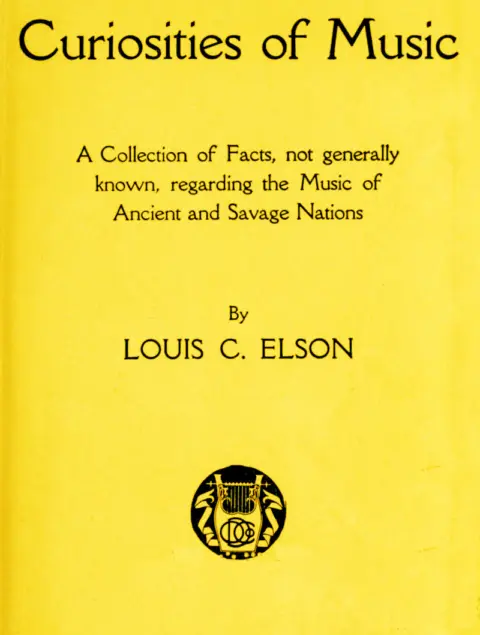
THE CLASSIC COLLECTION · 1908
"Curiosities of Music: A Collection of Facts not Generally Known, Regarding the Music of Ancient and Savage Nations" by Louis C. Elson is a non-fiction work written in the late 19th century. This book explores lesser-known facts and insights into the music traditions of various cultures, particularly ancient civilizations and indigenous societies. It aims to shed light on the significant yet rarely discussed aspects of musical heritage across different regions. The opening portion of this collection sets the stage for a deep exploration of music's historical and cultural relevance. It begins with a broad definition of music and discusses its innate presence in human nature, suggesting that the emotional impact of music is universal. The text moves on to specifically examine Hindu musical traditions, detailing their ancient philosophical views on music, its divine origins, and the mythological implications that intertwine with their cultural practices. This initial chapter serves as an introduction to how Elson will navigate through diverse musical traditions, combining factual analysis with elements of storytelling and mythology.
Introduction adapted from the source catalogue; source summaries may be automatically generated.
Free to read · English · 86,094 words · No account needed
MAKE TIME FOR A GOOD BOOK
On by default. Untick to stop anonymous reading totals. Each page counts after 10 seconds in view. How this works.
Anonymous counting is on unless you have switched it off.
Sir Samuel Baker also once used music for quite a different purpose. He was quartered near the town of Masindi, where dwelt Kabba Rega, King of the Unyori, when one evening, he noticed a most unusual stillness in the town, where ordinarily drunken songs and horn-blowing were the rule. Suddenly there sounded the deep tones of a nogara, or drum. This ceased in a moment; and then came a burst of terrific noise, which caused every man in camp to rush to his post. It was a din, caused by many thousands yelling and shrieking like maniacs. At least a thousand drums were beating; horns, whistles, and every instrument which could add to the confusion, was blowing and sounding, yet no human being was visible.
The dragoman, on being questioned by the commander, laughed, and said it was “to make him afraid, and exhibit the large number of people collected in the town.”
Gen. Baker on ascertaining this determined to act as though it were a compliment which he felt bound to return. He ordered the regimental band to strike up, and play their loudest. This nonchalance had its effect, for, after a short time, the bugles, drums, and clashing cymbals of his own band, were the only sounds heard; the tumult in Masindi had subsided, and soon Gen. Baker ordered his own musicians to cease playing, and all was again perfectly still.[227]
We close this account of the music of some of the savage tribes of the earth, with a description of a farewell dance, given to Stanley, by the Wanyamwezi of Singiri, which is well worthy of a place, as showing the powers of improvisation of the Africans.
“It was a wild dance, with lively music, four drums giving the sonorous accompaniment, being beaten with tremendous energy and strength. Everyone (even Stanley himself) danced with great fervor, and combined excited gesticulations, with their saltatory efforts. But after the close of this war-like music, came a total change; all dropped on their knees, and in sorrowful accents sang a slow and solemn refrain, of which the following is a literal translation,—
Solo:—‘Oh, oh, oh! the white man is going home.
Chorus:—Oh, oh, oh! going home! going home! oh, oh, oh!
Solo:—To the happy island on the sea,
Where the beads are plenty, oh, oh, oh!
Chorus:—Where the beads, etc.
Solo:—While Singiri has kept us, oh, very long From our homes, very long, oh, oh, oh!
Chorus:—From our homes, etc.
Solo:—And we have had no food for very long, We are half-starved, oh, for so long Bana Singiri.
Chorus:—For so very long, oh, oh, oh! Bana Singiri, Singiri, Singiri! Oh! Singiri!
Your reading position is saved on this browser. Take it to another device with a library code. Reading pages adapt to text, rather than matching a printed edition.
BEHIND THE BOOK
This eBook is for the use of anyone anywhere in the United States and most other parts of the world at no cost and with almost no restrictions whatsoever. You may copy it, give it away or re-use it under the terms of the Project Gutenberg License included with this eBook or online at www.gutenberg.org. If you are not located in the United States, you will have to check the laws of the country where you are located before using this eBook. Read the source licence.
The original source file, including credits and licence, is retained by this library. Request an original-format copy at no charge. Please include the book title and Project Gutenberg identifier #66216.
KEEP YOUR CURIOSITY GOING
Cécile Tormay

Moritz Busch
John L. Ransom

Maurice Baring
Frances Wright
Cécile Tormay