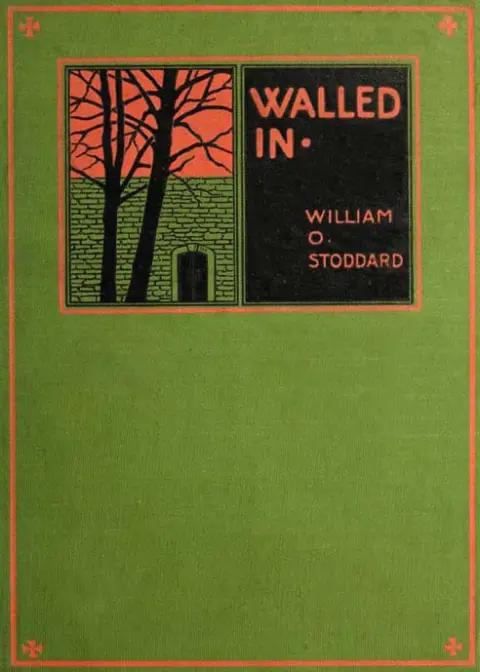
Walled In: A True Story of Randall’s Island
William O. Stoddard
THE CLASSIC COLLECTION · 1890
"Crowded Out o' Crofield; or, The Boy who made his Way" by William O. Stoddard is a novel written in the late 19th century. The story centers around a young boy, Jack Ogden, who dreams of escaping the confines of his small village, Crofield, to seek adventure and opportunity in the city. Through a series of daring escapades, including saving runaway horses and fishing exploits, Jack illustrates the spirit of determination and resourcefulness emblematic of youth. At the start of the tale, Jack stands at the door of the blacksmith shop, fueled by aspirations of adventure as he contemplates his small-town existence. The narrative introduces Jack's character as he faces the challenges of home life, expresses his desire to explore the wider world, and showcases his bravery when he intervenes to stop a runaway wagon. Additionally, the story hints at the budding romantic connection with his sister Mary, who also yearns for a life beyond their small town. The opening sets the stage for Jack’s journey from the constraints of Crofield to the possibilities of the city, filled with hope and youthful determination.
Introduction adapted from the source catalogue; source summaries may be automatically generated.
Free to read · English · 57,042 words · No account needed
MAKE TIME FOR A GOOD BOOK
On by default. Untick to stop anonymous reading totals. Each page counts after 10 seconds in view. How this works.
Anonymous counting is on unless you have switched it off.
"Perhaps I can," said Jack. "A boy who's learned the blacksmith's trade ought to be able to put it to rights."
Without another word, Jack went to work.
"Nothing wrong here, Mr. Gifford," he said in a minute. "Where are the screw-driver, and the monkey-wrench, and an oil-can?"
"Well, well!" exclaimed Mr. Gifford, as he sent a man for the tools. "Do you think you can do it?"
Jack said nothing aloud, but he told himself:
"Why, it's a smaller size but like the one in the Eagle office. They get out of order easily, but then it's easy to regulate them."
"You do know something," said Mr. Gifford, laughing, a few minutes
later, when Jack said to him:
"She'll do now."
"She won't do very well," added Mr. Gifford, shaking his head. "That engine never was exactly the thing. It lacks power."
"It may be the pulley-belt's too loose," said Jack, after studying the
mechanism for a moment.
"I'll send for a man to fix it, then."
"No, you needn't," said Jack. "I can tighten it so she'll run all the machinery you have. May I have an awl?"
"Of course," said Mr. Gifford. "Put it to rights. There's plenty of coffee waiting to be ground."
Jack went to work at the loose belt.
"He's a bright fellow," said Mr. Gifford to his head-clerk. "If we wanted another boy--but we don't."
"Too many now," was the short, decisive reply.
It was not long before the machinery began to move.
"Good!" said Mr. Gifford. "I almost wish I had something more for you to do, but I really haven't. If you could run that good-for-nothing old printing-press--"
"Printing-press?" exclaimed Jack.
"Over in the other window," said Mr. Gifford. "We thought of printing all our own circulars, cards, and paper bags. But it's a failure, unless we should hire a regular printer. We shall have to, I suppose. If you were a printer, now."
"I've worked at a press," said Jack. "I'm something of a printer. I'm sure I can do that work. It's like a press I used to run when I worked in that business."
Jack at once went to the show-window.
"An 'Alligator' press," he said, "like the one in the Standard office. It ought to be oiled, though. It needs adjusting, too. No wonder it would not work. I can make it go."
The business of the store was beginning. Steam was up in the engine, and the coffee-mills were grinding merrily. Mr. Gifford and all his clerks were busied with other matters, and Jack was left to tinker away at the Alligator press. "She's ready to run. I'll start her," he said at last.
Your reading position is saved on this browser. Take it to another device with a library code. Reading pages adapt to text, rather than matching a printed edition.
William O. Stoddard
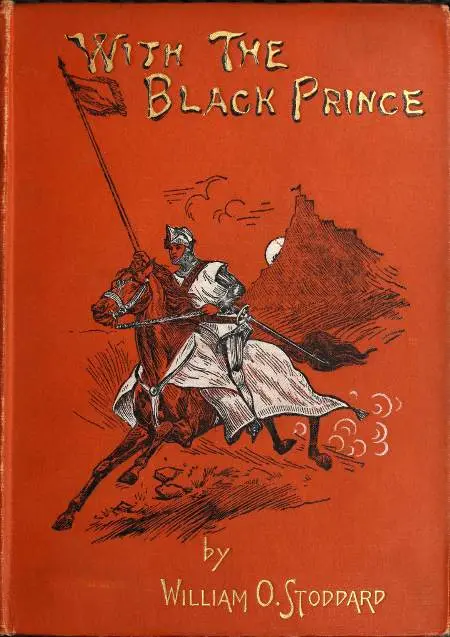
William O. Stoddard
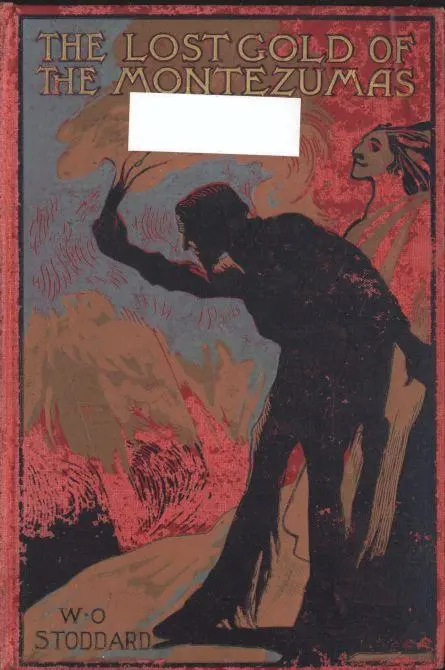
William O. Stoddard
William O. Stoddard
BEHIND THE BOOK
This eBook is for the use of anyone anywhere in the United States and most other parts of the world at no cost and with almost no restrictions whatsoever. You may copy it, give it away or re-use it under the terms of the Project Gutenberg License included with this eBook or online at www.gutenberg.org. If you are not located in the United States, you will have to check the laws of the country where you are located before using this eBook. Read the source licence.
The original source file, including credits and licence, is retained by this library. Request an original-format copy at no charge. Please include the book title and Project Gutenberg identifier #21846.
KEEP YOUR CURIOSITY GOING
Coulson Kernahan

Maurice Baring
Frances Wright
Cécile Tormay

Frederic Jesup Stimson

W. H. P. (William Henry Pope) Jarvis