Round the Sofa; vol. 2
Elizabeth Cleghorn Gaskell
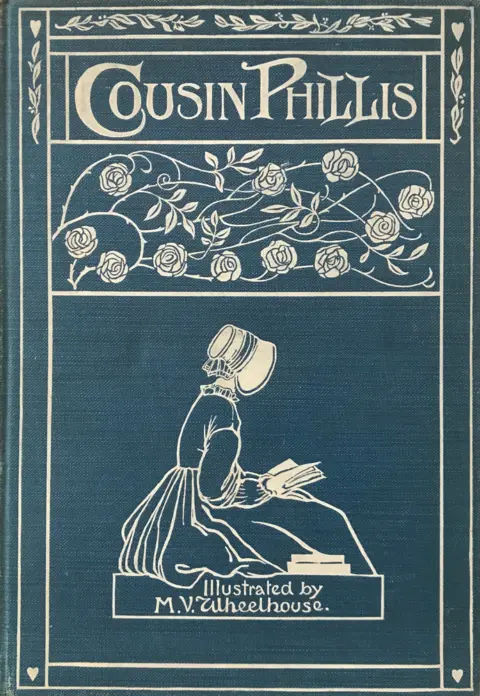
THE CLASSIC COLLECTION · 1865
"Cousin Phillis" by Elizabeth Cleghorn Gaskell is a novella published between 1863 and 1864. Nineteen-year-old Paul Manning moves to the country and befriends his mother's family, including his cousin Phillis Holman, a young woman standing at the threshold of adulthood. Set in the 1840s, this story explores social change in an isolated rural community through uncomplicated events told with masterful development. Critics consider it Gaskell's greatest achievement in short fiction and a fitting prelude to her acclaimed final novel.
Introduction adapted from the source catalogue; source summaries may be automatically generated.
Free to read · English · 40,848 words · No account needed
MAKE TIME FOR A GOOD BOOK
On by default. Untick to stop anonymous reading totals. Each page counts after 10 seconds in view. How this works.
Anonymous counting is on unless you have switched it off.
When I went over on Easter Day I heard the chapel-gossips complimenting cousin Holman on her daughter’s blooming looks, quite forgetful of their sinister prophecies three months before. And I looked at Phillis, and did not wonder at their words. I had not seen her since the day after Christmas Day. I had left the Hope Farm only a few hours after I had told her the news which had quickened her heart into renewed life and vigour. The remembrance of our conversation in the cow-house was vividly in my mind as I looked at her when her bright healthy appearance was remarked upon. As her eyes met mine our mutual recollections flashed intelligence from one to the other. She turned away, her colour heightening as she did so. She seemed to be shy of me for the first few hours after our meeting, and I felt rather vexed with her for her conscious avoidance of me after my long absence. I had stepped a little out of my usual line in telling her what I did; not that I had received any charge of secrecy, or given even the slightest promise to Holdsworth that I would not repeat his words. But I had an uneasy feeling sometimes when I thought of what I had done in the excitement of seeing Phillis so ill and in so much trouble. I meant to have told Holdsworth when I wrote next to him; but when I had my half-finished letter before me I sate with my pen in my hand hesitating. I had more scruple in revealing what I had found out or guessed at of Phillis’s secret than in repeating to her his spoken words. I did not think I had any right to say out to him what I believed—namely, that she loved him dearly, and had felt his absence even to the injury of her health. Yet to explain what I had done in telling her how he had spoken about her that last night, it would be necessary to give my reasons, so I had settled within myself to leave it alone. As she had told me she should like to hear all the details and fuller particulars and more explicit declarations first from him, so he should have the pleasure of extracting the delicious tender secret from her maidenly lips. I would not betray my guesses, my surmises, my all but certain knowledge of the state of her heart. I had received two letters from him after he had settled to his business; they were full of life and energy; but in each there had been a message to the family at the Hope Farm of more than common regard; and a slight but distinct mention of Phillis herself, showing that she stood single and alone in his memory. These letters I had sent on to the minister, for he was sure to care for them, even supposing he had been unacquainted with their writer, because they were so clever and so picturesquely worded that they brought, as it were, a whiff of foreign atmosphere into his circumscribed life. I used to wonder what was the trade or business in which the minister would not have thriven, mentally I mean, if it had so happened that he had been called into that state. He would have made a capital engineer, that I know; and he had a fancy for the sea, like many other land-locked men to whom the great deep is a mystery and a fascination. He read law-books with relish; and, once happening to borrow De Lolme on the British Constitution (or some such title), he talked about jurisprudence till he was far beyond my depth. But to return to Holdsworth’s letters. When the minister sent them back he also wrote out a list of questions suggested by their perusal, which I was to pass on in my answers to Holdsworth, until I thought of suggesting direct correspondence between the two. That was the state of things as regarded the absent one when I went to the farm for my Easter visit, and when I found Phillis in that state of shy reserve towards me which I have named before. I thought she was ungrateful; for I was not quite sure if I had done wisely in having told her what I did. I had committed a fault, or a folly, perhaps, and all for her sake; and here was she, less friends with me than she had even been before. This little estrangement only lasted a few hours. I think that as soon as she felt pretty sure of there being no recurrence, either by word, look, or allusion, to the one subject that was predominant in her mind, she came back to her old sisterly ways with me. She had much to tell me of her own familiar interests; how Rover had been ill, and how anxious they had all of them been, and how, after some little discussion between her father and her, both equally grieved by the sufferings of the old dog, he had been remembered in the household prayers’, and how he had begun to get better only the very next day, and then she would have led me into a conversation on the right ends of prayer, and on special providences, and I know not what; only I “jibbed” like their old cart-horse, and refused to stir a step in that direction. Then we talked about the different broods of chickens, and she showed me the hens that were good mothers, and told me the characters of all the poultry with the utmost good faith; and in all good faith I listened, for I believe there was a good deal of truth in all she said. And then we strolled on into the wood beyond the ash-meadow, and both of us sought for early primroses, and the fresh green crinkled leaves. She was not afraid of being alone with me after the first day. I never saw her so lovely, or so happy. I think she hardly knew why she was so happy all the time. I can see her now, standing under the budding branches of the grey trees, over which a tinge of green seemed to be deepening day after day, her sun-bonnet fallen back on her neck, her hands full of delicate wood-flowers, quite unconscious of my gaze, but intent on sweet mockery of some bird in neighbouring bush or tree. She had the art of warbling, and replying to the notes of different birds, and knew their song, their habits and ways, more accurately than any one else I ever knew. She had often done it at my request the spring before; but this year she really gurgled, and whistled, and warbled just as they did, out of the very fulness and joy of her heart. She was more than ever the very apple of her father’s eye; her mother gave her both her own share of love, and that of the dead child who had died in infancy. I have heard cousin Holman murmur, after a long dreamy look at Phillis, and tell herself how like she was growing to Johnnie, and soothe herself with plaintive inarticulate sounds, and many gentle shakes of the head, for the aching sense of loss she would never get over in this world. The old servants about the place had the dumb loyal attachment to the child of the land, common to most agricultural labourers; not often stirred into activity or expression. My cousin Phillis was like a rose that had come to full bloom on the sunny side of a lonely house, sheltered from storms. I have read in some book of poetry,—
Your reading position is saved on this browser. Take it to another device with a library code. Reading pages adapt to text, rather than matching a printed edition.
Elizabeth Cleghorn Gaskell
Elizabeth Cleghorn Gaskell
Elizabeth Cleghorn Gaskell
Elizabeth Cleghorn Gaskell
BEHIND THE BOOK
This eBook is for the use of anyone anywhere in the United States and most other parts of the world at no cost and with almost no restrictions whatsoever. You may copy it, give it away or re-use it under the terms of the Project Gutenberg License included with this eBook or online at www.gutenberg.org. If you are not located in the United States, you will have to check the laws of the country where you are located before using this eBook. Read the source licence.
The original source file, including credits and licence, is retained by this library. Request an original-format copy at no charge. Please include the book title and Project Gutenberg identifier #4268.
KEEP YOUR CURIOSITY GOING
Coulson Kernahan

Maurice Baring
Frances Wright
Cécile Tormay

Frederic Jesup Stimson

W. H. P. (William Henry Pope) Jarvis